Meta-Analysis
. 2022 Aug;48(4):3357-3372.
doi: 10.1007/s00068-022-01941-y. Epub 2022 Mar 25.

Prehospital traumatic cardiac arrest: a systematic review and meta-analysis

Affiliations
Meta-Analysis

Prehospital traumatic cardiac arrest: a systematic review and meta-analysis

Niek Johannes Vianen et al. Eur J Trauma Emerg Surg. 2022 Aug.

Erratum in

Abstract

Background: Circulatory arrest after trauma is a life-threatening situation that mandates urgent action. The aims of this systematic review and meta-analysis on prehospital traumatic cardiac arrest (TCA) were to provide an updated pooled mortality rate for prehospital TCA, to investigate the impact of the time of patient inclusion and the type of prehospital trauma system on TCA mortality rates and neurological outcome, and to investigate which pre- and intra-arrest factors are prognostic for prehospital TCA mortality.

Methods: This review was conducted in accordance with the PRISMA and CHARMS guidelines. Databases were searched for primary studies published about prehospital TCA patients (1995-2020). Studies were divided into various EMS-system categories. Data were analyzed using MedCalc, Review Manager, Microsoft Excel, and Shinyapps Meta Power Calculator software.

Results: Thirty-six studies involving 51.722 patients were included. Overall mortality for TCA was 96.2% and a favorable neurological outcome was seen in 43.5% of the survivors. Mortality rates were 97.2% in studies including prehospital deaths and 92.3% in studies excluding prehospital deaths. Favorable neurological outcome rates were 35.8% in studies including prehospital deaths and 49.5% in studies excluding prehospital deaths. Mortality rates were 97.6% if no physician was available at the prehospital scene and 93.9% if a physician was available. Favorable neurological outcome rates were 57.0% if a physician was available on scene and 38.0% if no physician was available. Only non-shockable rhythm was associated with a higher mortality (RR 1.12, p = 0.06).

Conclusion: Approximately 1 in 20 patients with prehospital TCA will survive; about 40% of survivors have favorable neurological outcome.

Keywords: Mortality; Neurological outcome; Organization of EMS system; Prognostic factors; Registry type; Traumatic cardiac arrest (TCA).


Conflict of interest statement

There are no conflicts of interest in the materials or subject matter dealt with the manuscript.

Figures
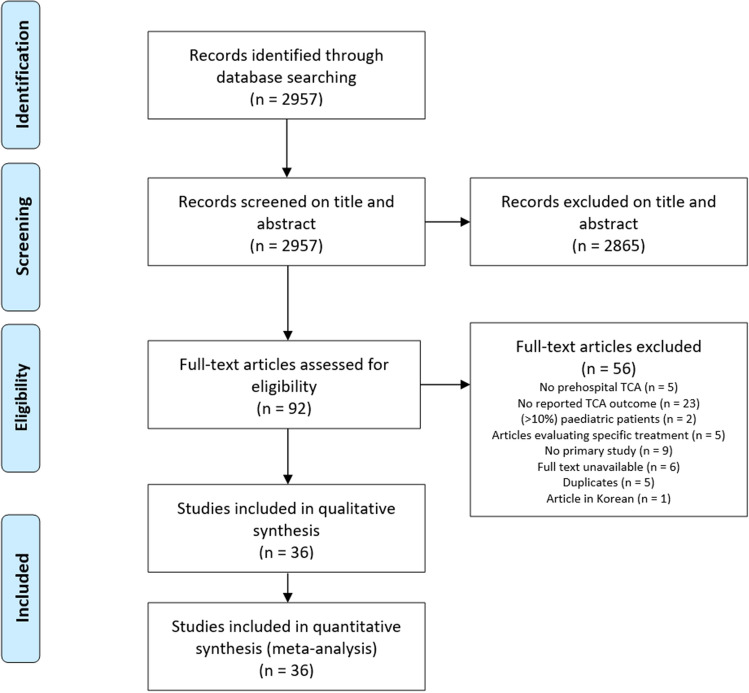
Fig. 1
Fig. 1
PRISMA flow diagram
Fig. 2
Fig. 2
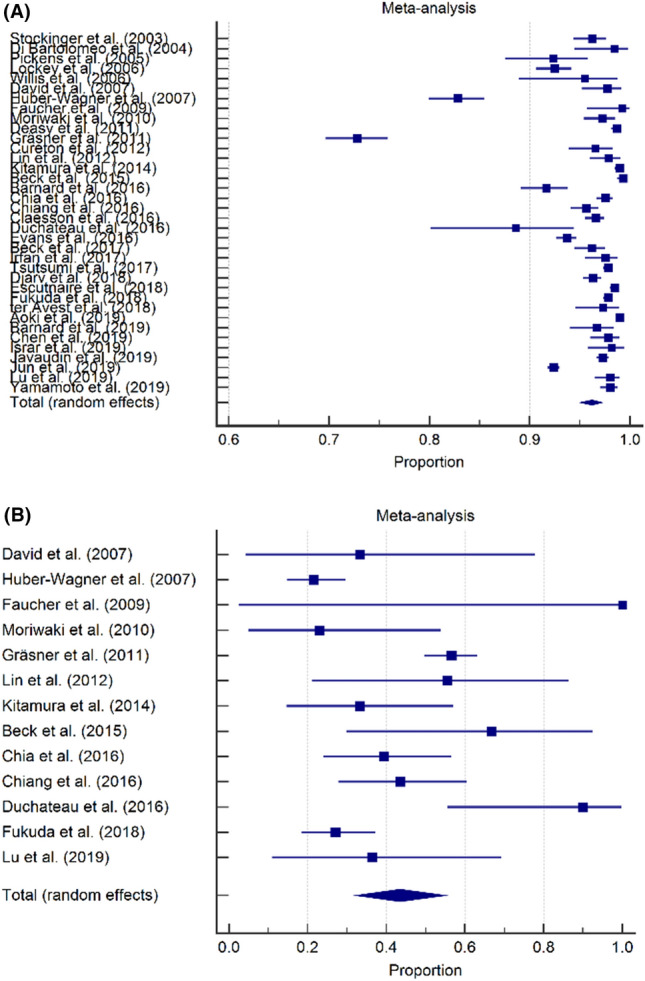
Overall TCA mortality and neurological outcome, forest plots. A Overall prehospital TCA mortality was 96.2% (95% CI 95.0–97.2). B Favorable neurological outcome was observed in 43.5% of the TCA survival patients (95% CI 32.3–55.0)
Fig. 3
Fig. 3
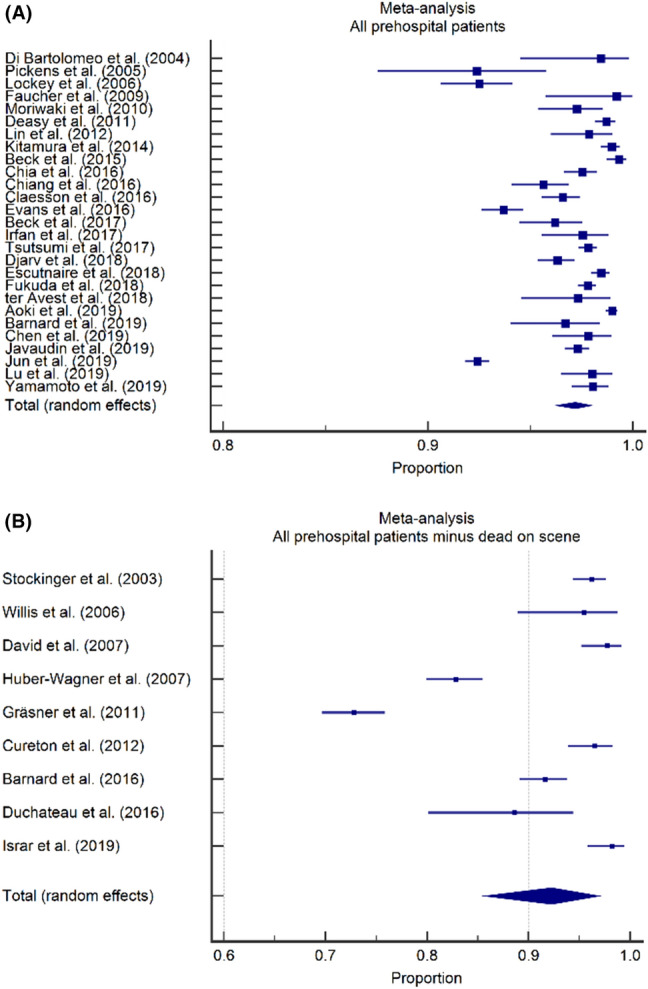
Impact of database registry type on TCA mortality, forest plots. A Overall mortality in studies including prehospital deaths was 97.2% (95% CI 96.3–98.0). B Overall mortality in studies excluding prehospital deaths was 92.3% (95% CI 85.7–96.3)
Fig. 4
Fig. 4
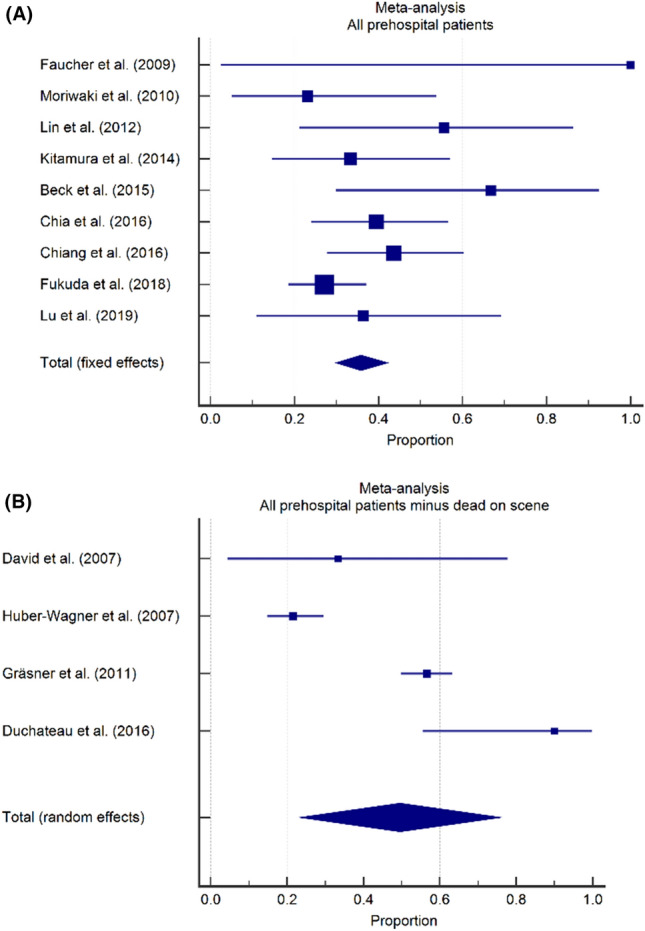
Impact of database registry type on neurological outcome, forest plots. A A favorable neurologic outcome was observed in 35.8% of survivors in studies including prehospital deaths (95% CI 29.8–42.2). B A favorable neurologic outcome was observed in 49.5% of survivors in studies excluding prehospital deaths (95% CI 23.3–75.9)
Fig. 5
Fig. 5
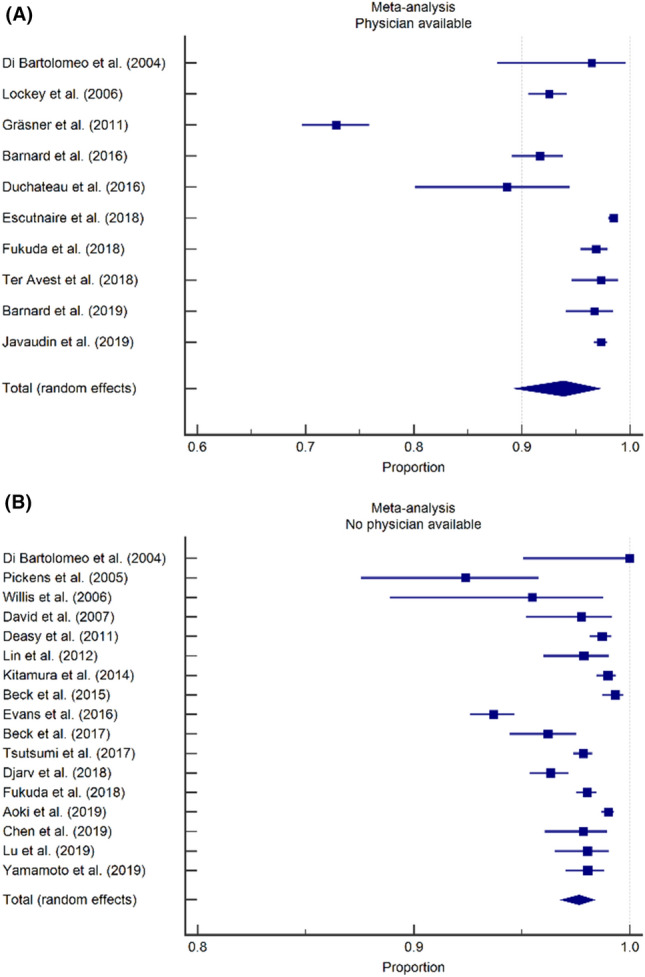
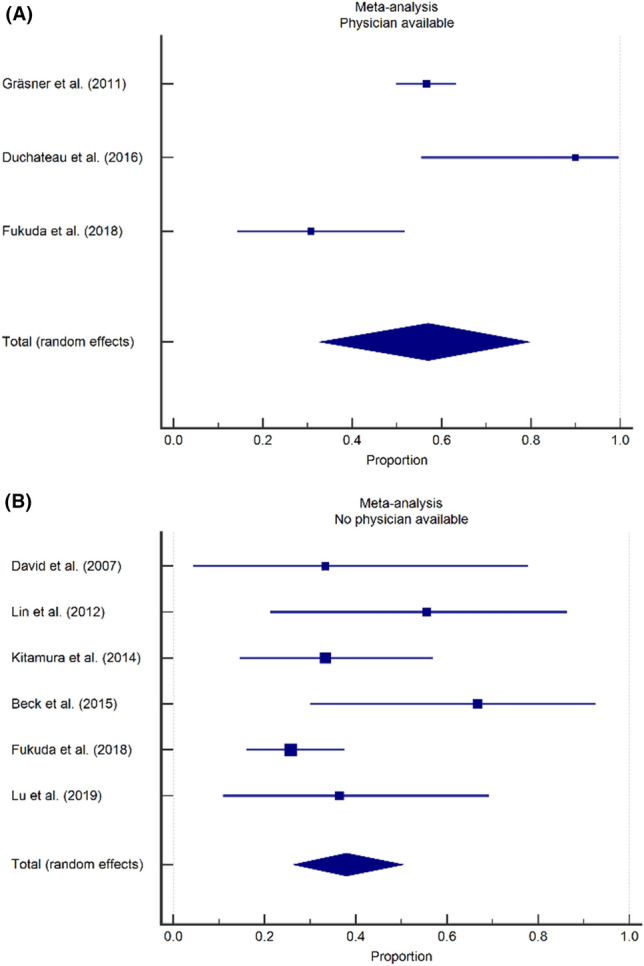
Impact of organization of EMS system on TCA mortality, forest plots. A Overall mortality in studies from countries or regions with a physician available on-scene was 93.9% (95% CI 89.3–97.2). (B) Overall mortality in studies from countries or regions without a physician available on-scene was 97.6% (95% CI 96.8–98.4)
Fig. 6
Fig. 6
Impact of organization of EMS system on neurological outcome, forest plots. A A favorable neurologic outcome was observed in 57.0% of survivors in studies from regions with a physician available on scene (95% CI 32.8–79.6). B A favorable neurologic outcome was observed in 38.0% of survivors in studies from regions without a physician available on scene (95% CI 26.4–50.3)
Fig. 7
Fig. 7
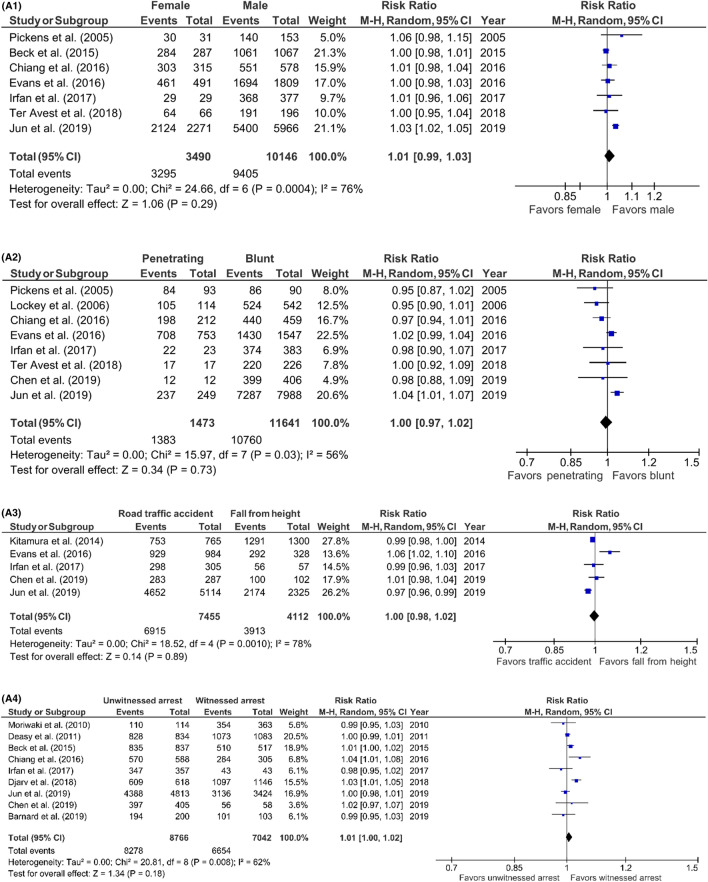
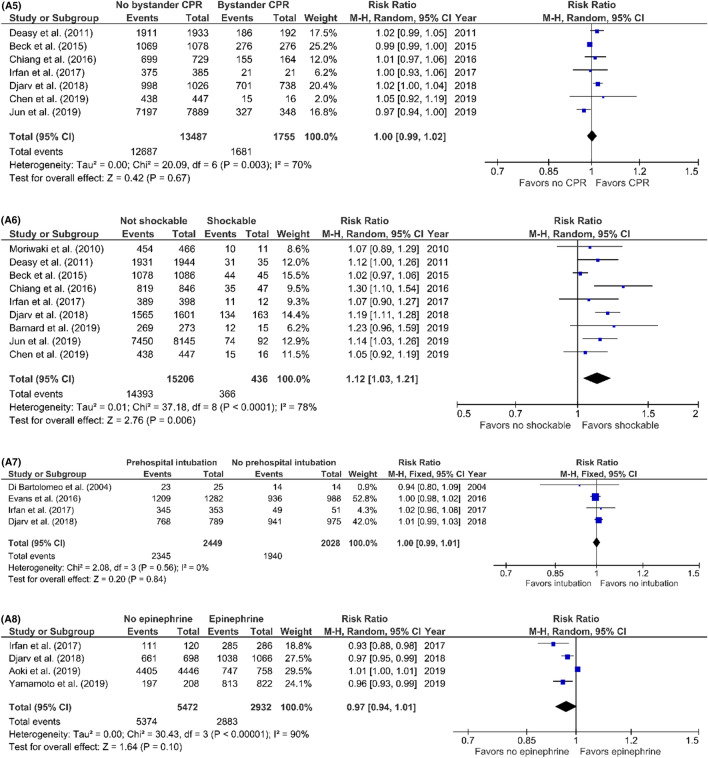
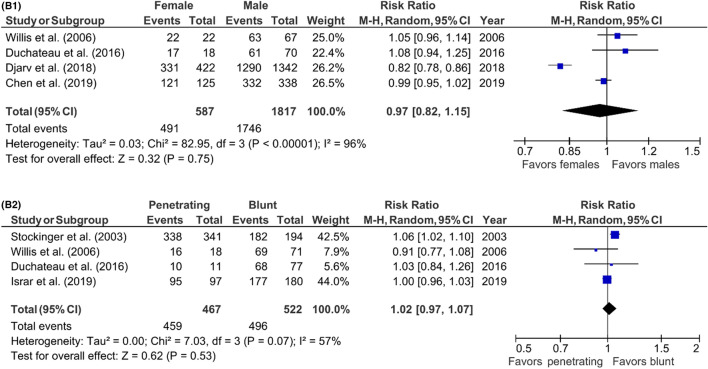
A1–7A8 Predictors of mortality after prehospital TCA in studies including prehospital deaths, forest plots (MH Mantel–Haenszel, CI confidence interval). A1 Sex (female vs. male). A2 Trauma type (penetrating vs. blunt). A3 Blunt trauma type (road traffic accident vs. fall from height). A4 Witnessed arrest (unwitnessed vs. witnessed). A5 Bystander CPR (no bystander CPR vs. bystander CPR). A6 First monitored rhythm (not shockable vs. shockable). A7 Prehospital intubation (prehospital intubation vs. no intubation). A8 Prehospital administration of epinephrine (no epinephrine vs. epinephrine). B1–7B2: predictors of mortality after prehospital TCA in studies excluding prehospital deaths, forest plots (MH Mantel–Haenszel, CI confidence interval). B1 Sex (female vs. male). B2 Trauma type (penetrating vs. blunt)
Fig. 7
Fig. 7
A1–7A8 Predictors of mortality after prehospital TCA in studies including prehospital deaths, forest plots (MH Mantel–Haenszel, CI confidence interval). A1 Sex (female vs. male). A2 Trauma type (penetrating vs. blunt). A3 Blunt trauma type (road traffic accident vs. fall from height). A4 Witnessed arrest (unwitnessed vs. witnessed). A5 Bystander CPR (no bystander CPR vs. bystander CPR). A6 First monitored rhythm (not shockable vs. shockable). A7 Prehospital intubation (prehospital intubation vs. no intubation). A8 Prehospital administration of epinephrine (no epinephrine vs. epinephrine). B1–7B2: predictors of mortality after prehospital TCA in studies excluding prehospital deaths, forest plots (MH Mantel–Haenszel, CI confidence interval). B1 Sex (female vs. male). B2 Trauma type (penetrating vs. blunt)
Fig. 7
Fig. 7
A1–7A8 Predictors of mortality after prehospital TCA in studies including prehospital deaths, forest plots (MH Mantel–Haenszel, CI confidence interval). A1 Sex (female vs. male). A2 Trauma type (penetrating vs. blunt). A3 Blunt trauma type (road traffic accident vs. fall from height). A4 Witnessed arrest (unwitnessed vs. witnessed). A5 Bystander CPR (no bystander CPR vs. bystander CPR). A6 First monitored rhythm (not shockable vs. shockable). A7 Prehospital intubation (prehospital intubation vs. no intubation). A8 Prehospital administration of epinephrine (no epinephrine vs. epinephrine). B1–7B2: predictors of mortality after prehospital TCA in studies excluding prehospital deaths, forest plots (MH Mantel–Haenszel, CI confidence interval). B1 Sex (female vs. male). B2 Trauma type (penetrating vs. blunt)

References

    1. Beck B, et al. Trends in traumatic out-of-hospital cardiac arrest in Perth, Western Australia from 1997 to 2014. Resuscitation. 2016;98:79–84. doi: 10.1016/j.resuscitation.2015.10.015. - DOI - PubMed
    1. Grasner JT, et al. Cardiopulmonary resuscitation traumatic cardiac arrest—there are survivors. An analysis of two national emergency registries. Crit Care. 2011;15(6):276. doi: 10.1186/cc10558. - DOI - PMC - PubMed
    1. Lockey D, Crewdson K, Davies G. Traumatic cardiac arrest: who are the survivors? Ann Emerg Med. 2006;48(3):240–244. doi: 10.1016/j.annemergmed.2006.03.015. - DOI - PubMed
    1. Zwingmann J, et al. Survival and neurologic outcome after traumatic out-of-hospital cardiopulmonary arrest in a pediatric and adult population: a systematic review. Crit Care. 2012;16(4):R117. doi: 10.1186/cc11410. - DOI - PMC - PubMed
    1. Tran A, et al. Pre-arrest and intra-arrest prognostic factors associated with survival following traumatic out-of-hospital cardiac arrest—a systematic review and meta-analysis. Resuscitation. 2020;153:119–135. doi: 10.1016/j.resuscitation.2020.05.052. - DOI - PubMed