


The Effectiveness of Interventions for Increasing COVID-19 Vaccine Uptake: A Systematic Review
- PMID: 35335020
- PMCID: PMC8949230
- DOI: 10.3390/vaccines10030386
The Effectiveness of Interventions for Increasing COVID-19 Vaccine Uptake: A Systematic Review
Abstract
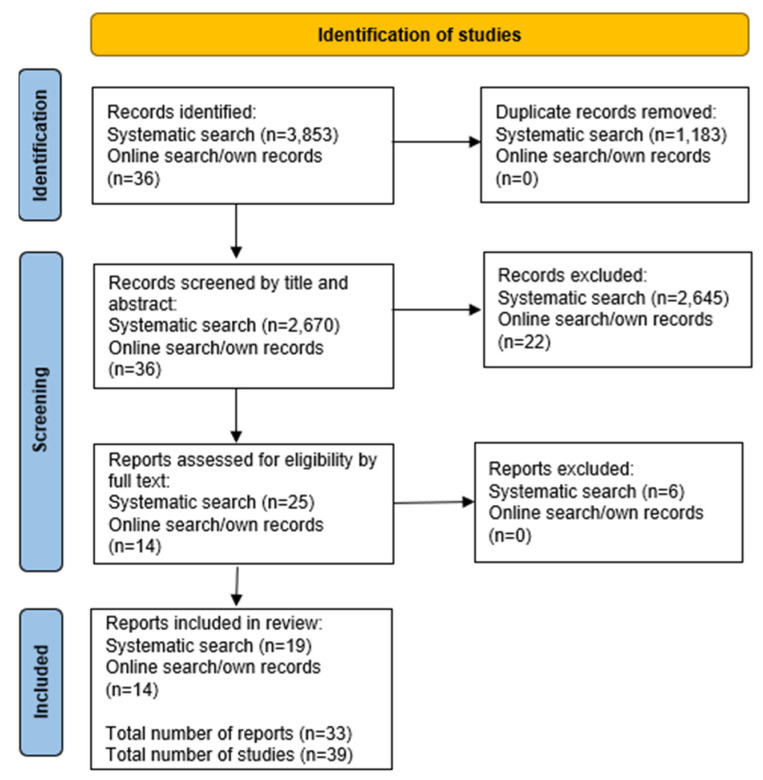
Vaccination is vital to protect the public against COVID-19. The aim of this systematic review is to identify and evaluate the effectiveness of interventions to increase COVID-19 vaccine uptake. We searched a range of databases (Embase, Medline, Psychology & Behavioral Science, PsycInfo, Web of Science and NIH Preprints Portfolio) from March 2020 to July 2021 for studies which reported primary quantitative or qualitative research on interventions to increase COVID-19 vaccine uptake. Outcome measures included vaccination uptake and reported intention to vaccinate. Reviews, position papers, conference abstracts, protocol papers and papers not in English were excluded. The NHLBI quality assessment was used to assess risk of bias. In total, 39 studies across 33 papers met the inclusion criteria. A total of 28 were assessed as good quality. They included interventions relating to communication content, communication delivery, communication presentation, policy or vaccination delivery, with 7 measuring vaccination uptake and 32 measuring vaccination intention. A narrative synthesis was conducted, which highlighted that there is reasonable evidence from studies investigating real behaviour suggesting that personalising communications and sending booking reminders via text message increases vaccine uptake. Findings on vaccination intention are mixed but suggest that communicating uncertainty about the vaccine does not decrease intention, whereas making vaccination mandatory could have a negative impact. Although much of the research used experimental designs, very few measured real behavioural outcomes. Understanding which interventions are most effective amongst vaccine-hesitant populations and in the context of booster vaccinations will be important as vaccine roll outs continue across the world.
Keywords: COVID-19; behaviour change; interventions; systematic review; vaccine uptake; vaccines.
Conflict of interest statement
The authors declare no conflict of interest. No external funding organisation had a role in the design of the study; in the collection, analyses, or interpretation of data; in the writing of the manuscript, or in the decision to publish the results.
Figures
References
-
- Our World in Data. Coronavirus (COVID-19) Vaccinations 2021. [(accessed on 21 February 2022)]. Available online: https://ourworldindata.org/covid-vaccinations.
-
- UK Government. Coronavirus (COVID-19) in the UK 2022. [(accessed on 21 February 2022)]; Available online: https://coronavirus.data.gov.uk/
-
- Hogan A.B., Wu S.L., Doohan P., Watson O.J., Winskill P., Charles G., Barnsley G., Riley E.M., Khoury D., Ferguson N.M., et al. Report 48: The Value of Vaccine Booster Doses to Mitigate the Global Impact of the Omicron SARS-CoV-2 Variant 2021. [(accessed on 13 February 2022)]. Available online: https://www.imperial.ac.uk/media/imperial-college/medicine/mrc-gida/2021....
-
- Sherman S.M., Smith L.E., Sim J., Amlôt R., Cutts M., Dasch H., Rubin G.J., Sevdalis N. COVID-19 vaccination intention in the UK: Results from the COVID-19 vaccination acceptability study (CoVAccS), a nationally representative cross-sectional survey. Hum. Vaccines Immunother. 2021;17:1612–1621. doi: 10.1080/21645515.2020.1846397. - DOI - PMC - PubMed
Publication types
LinkOut - more resources
Full Text Sources
Miscellaneous
