


An Energy Harvester Coupled with a Triboelectric Mechanism and Electrostatic Mechanism for Biomechanical Energy Harvesting
- PMID: 35335744
- PMCID: PMC8950143
- DOI: 10.3390/nano12060933
An Energy Harvester Coupled with a Triboelectric Mechanism and Electrostatic Mechanism for Biomechanical Energy Harvesting
Abstract
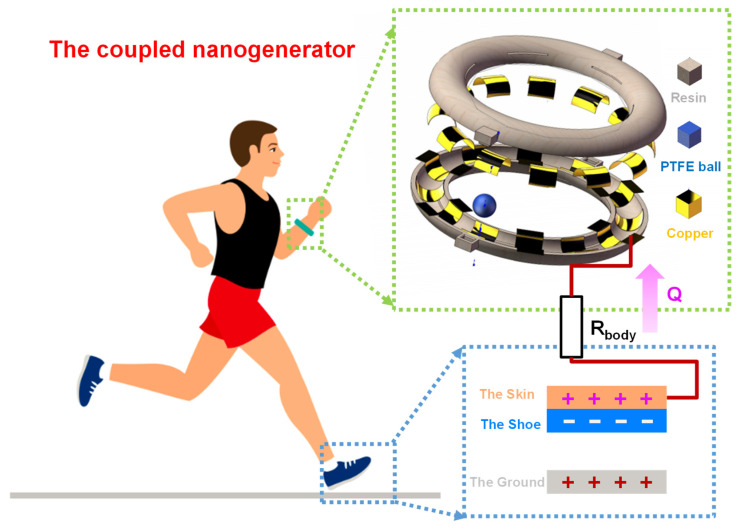
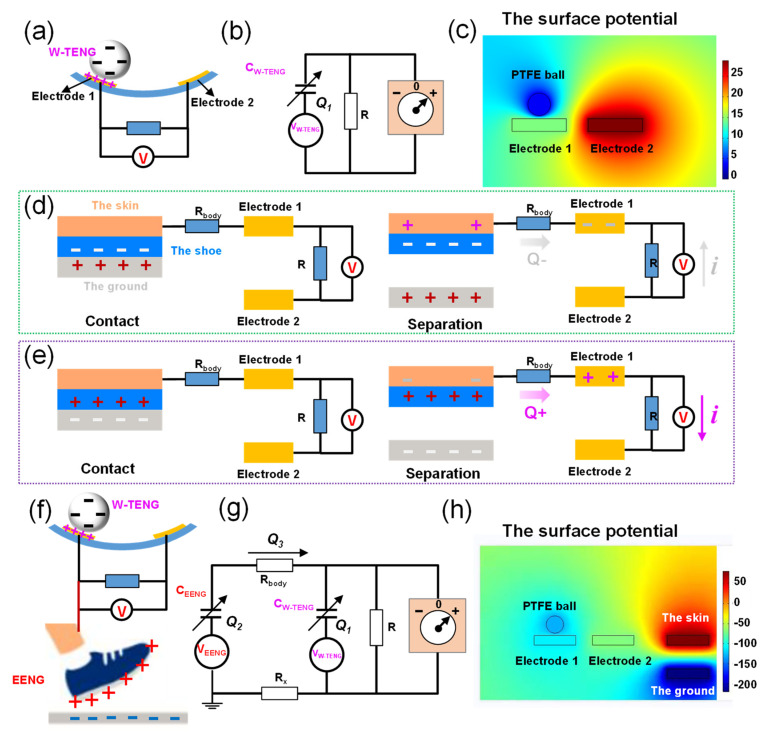
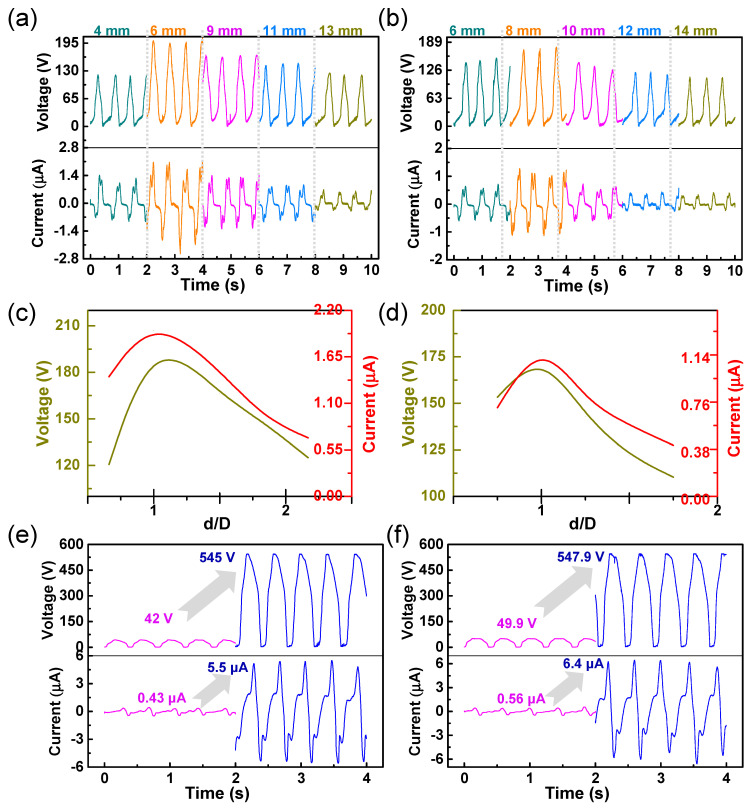
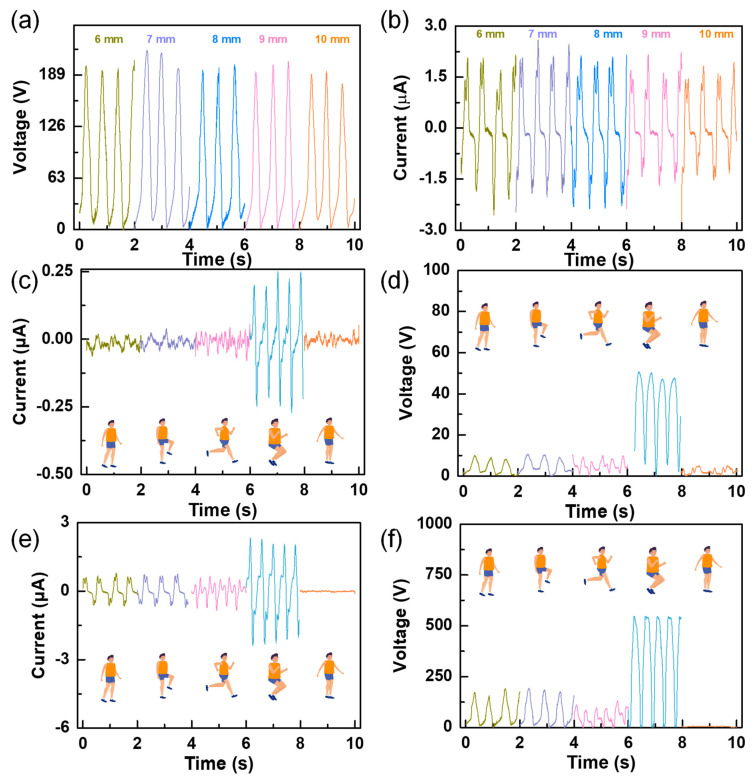
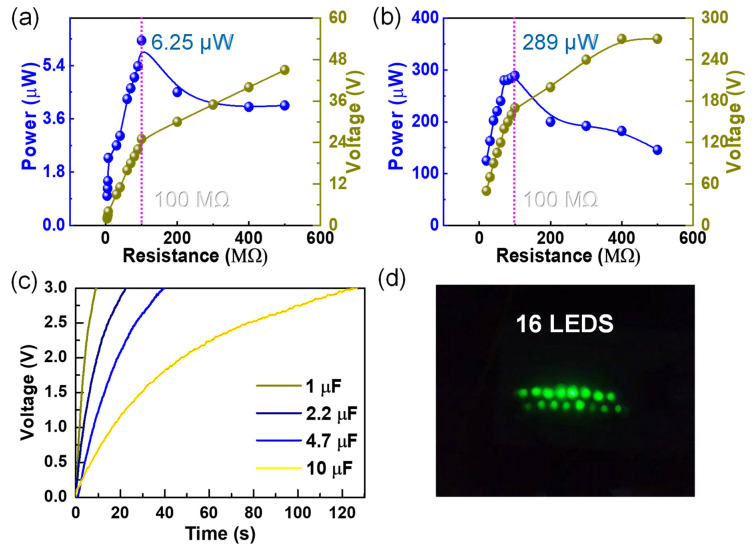
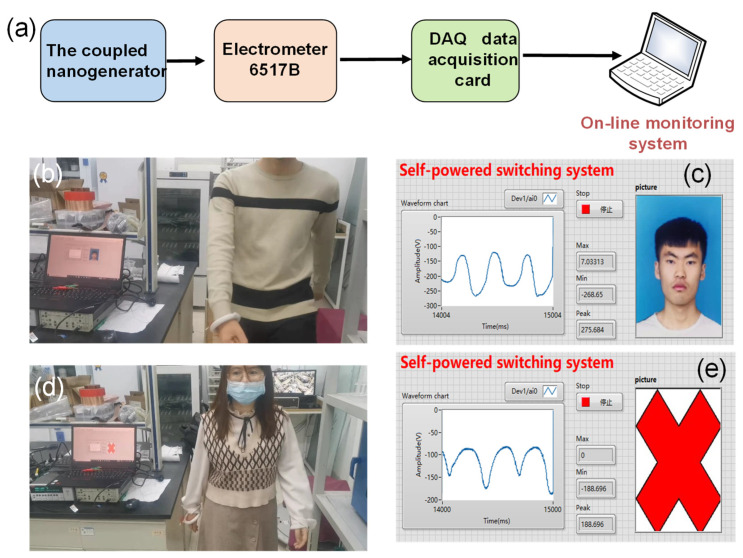
Energy-harvesting devices based on a single energy conversion mechanism generally have a low output and low conversion efficiency. To solve this problem, an energy harvester coupled with a triboelectric mechanism and electrostatic mechanism for biomechanical energy harvesting is presented. The output performances of the device coupled with a triboelectric mechanism and electrostatic mechanism were systematically studied through principle analysis, simulation, and experimental demonstration. Experiments showed that the output performance of the device was greatly improved by coupling the electrostatic induction mechanisms, and a sustainable and enhanced peak power of approximately 289 μW was produced when the external impedance was 100 MΩ, which gave over a 46-fold enhancement to the conventional single triboelectric conversion mechanism. Moreover, it showed higher resolution for motion states compared with the conventional triboelectric nanogenerator, and can precisely and constantly monitor and distinguish various motion states, including stepping, walking, running, and jumping. Furthermore, it can charge a capacitor of 10 μF to 3 V within 2 min and light up 16 LEDs. On this basis, a self-powered access control system, based on gait recognition, was successfully demonstrated. This work proposes a novel and cost-effective method for biomechanical energy harvesting, which provides a more convenient choice for human motion status monitoring and can be widely used in personnel identification systems.
Keywords: electrostatic mechanism; energy harvesting; human motion status monitoring; triboelectric mechanism.
Conflict of interest statement
The authors declare no conflict of interest.
Figures
References
-
- Wei Z., Lin S., Li Q., Song C., Wang F., Tao X.M. Fiber-based wearable electronics: A review of materials, fabrication, devices, and applications. Adv. Mater. 2014;26:5310. - PubMed
-
- Han Y.Z., Yi F., Jiang C., Dai K.R., Xu Y.C., Wang X.F., You Z. Self-powered gait pattern-based identity recognition by a soft and stretchable triboelectric band. Nano Energy. 2019;56:516–523. doi: 10.1016/j.nanoen.2018.11.078. - DOI
-
- Liu S., Yuan F., Sang M., Zhou J.Y., Zhang J.S., Wang S., Li J.S., Xuan S.H., Gong X.L. Functional sponge-based triboelectric nanogenerators with energy harvesting, oil–water separating and multi-mode sensing performance. J. Mater. Chem. A. 2021;9:6913–6923. doi: 10.1039/D0TA12359E. - DOI
-
- Lin Z.M., Wu Z.Y., Zhang B.B., Wang Y.C., Guo H.Y., Liu G.L., Chen C.Y., Chen Y.L., Yang J., Wang Z.L. A Triboelectric nanogenerator-based smart insole for multifunctional gait monitoring. Adv. Mater. Technol. 2018;4:1800360. doi: 10.1002/admt.201800360. - DOI
Grants and funding
LinkOut - more resources
Full Text Sources
