


Prevalence and Severity of Potential Drug-Drug Interactions in Patients with Multiple Sclerosis with and without Polypharmacy
- PMID: 35335968
- PMCID: PMC8949310
- DOI: 10.3390/pharmaceutics14030592
Prevalence and Severity of Potential Drug-Drug Interactions in Patients with Multiple Sclerosis with and without Polypharmacy
Abstract
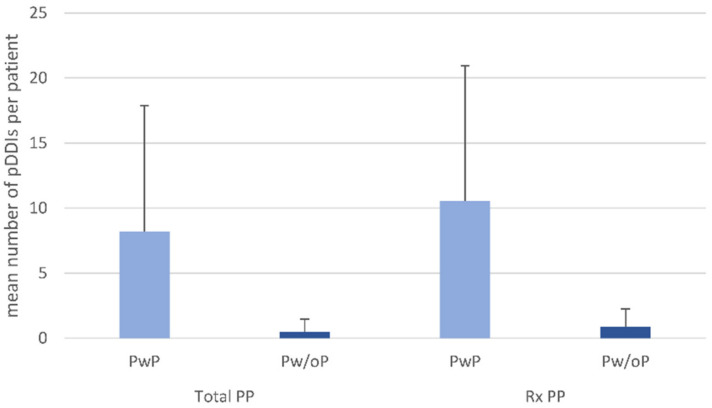
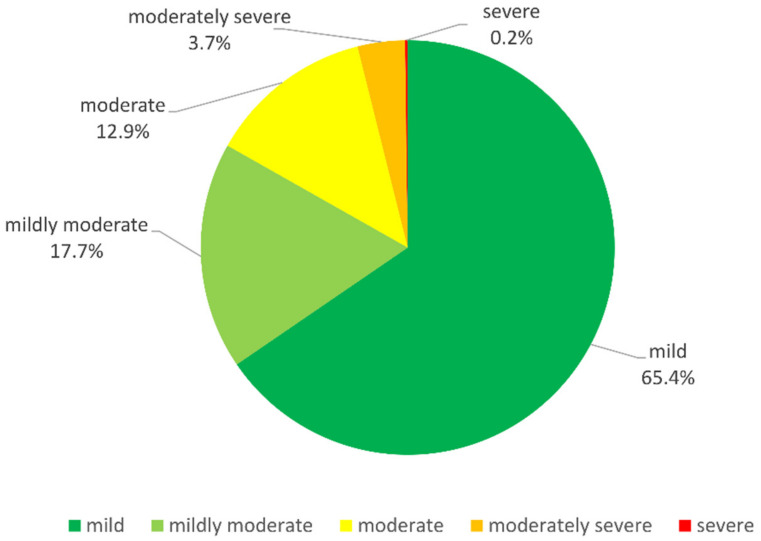
Polypharmacy (PP) is a common problem in modern medicine, especially known to affect patients with chronic diseases such as multiple sclerosis (MS). With an increasing number of drugs taken, the risk of potential drug-drug interactions (pDDIs) is rising. This study aims to assess the prevalence and clinical relevance of polypharmacy and pDDIs in patients with MS. Pharmacological data of 627 patients with MS were entered into two drug-drug-interaction databases to determine the number and severity of pDDIs for each patient. The patients were divided into those with and without PP (total PP and prescription medication PP (Rx PP)). Of the 627 patients included, 53.3% and 38.6% had total PP and Rx PP, respectively. On average, every patient took 5.3 drugs. Of all patients, 63.8% had at least one pDDI with a mean of 4.6 pDDIs per patient. Less than 4% of all pDDIs were moderately severe or severe. Medication schedules should be checked for inappropriate medication and for possible interacting drugs to prevent pDDIs. Physicians as well as pharmacists should be more sensitive towards the relevance of pDDIs and know how they can be detected and avoided.
Keywords: Rx drugs; clinical decision support software; drug–drug interactions; multiple sclerosis; over-the-counter drugs; polypharmacy.
Conflict of interest statement
P.B., J.L.D., P.M., S.E.L., B.S., J.B. and F.H. declare no conflicts of interest. NF received travel funds for research meetings from Novartis. M.H. received speaking fees and travel funds from Bayer HealthCare, Biogen, Merck Serono, Novartis and Teva. U.K.Z. received speaking fees, travel support and/or financial support for research activities from Alexion, Almirall, Bayer, Biogen, Bristol-Myers-Squibb, Janssen, Merck Serono, Novartis, Octapharm, Roche, Sanofi Genzyme, Teva as well as EU, BMBF, BMWi and DFG.
Figures
References
-
- Walton C., King R., Rechtman L., Kaye W., Leray E., Marrie R.A., Robertson N., La Rocca N., Uitdehaag B., van der Mei I., et al. Rising prevalence of multiple sclerosis worldwide: Insights from the Atlas of MS, third edition. Mult. Scler. Houndmills Basingstoke Engl. 2020;26:1816–1821. doi: 10.1177/1352458520970841. - DOI - PMC - PubMed
LinkOut - more resources
Full Text Sources
Miscellaneous
