


Study of Viral Photoinactivation by UV-C Light and Photosensitizer Using a Pseudotyped Model
- PMID: 35336059
- PMCID: PMC8955308
- DOI: 10.3390/pharmaceutics14030683
Study of Viral Photoinactivation by UV-C Light and Photosensitizer Using a Pseudotyped Model
Abstract
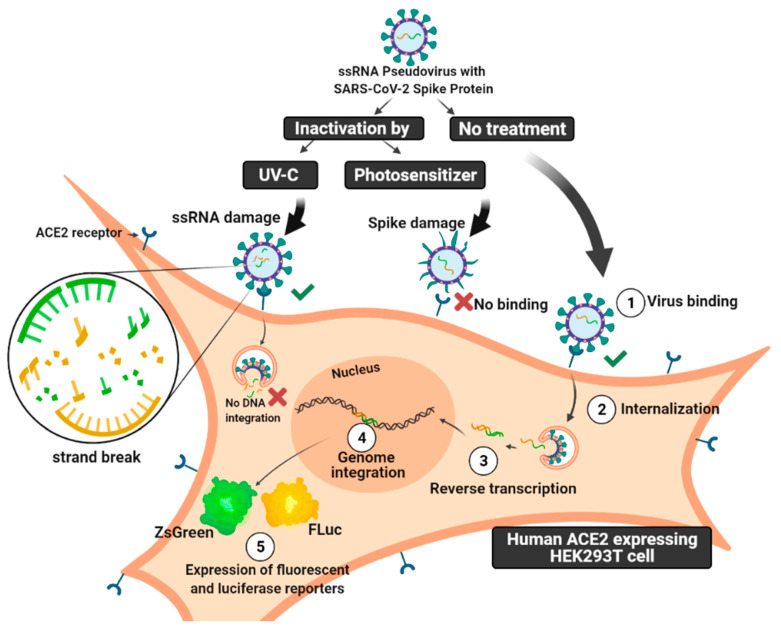
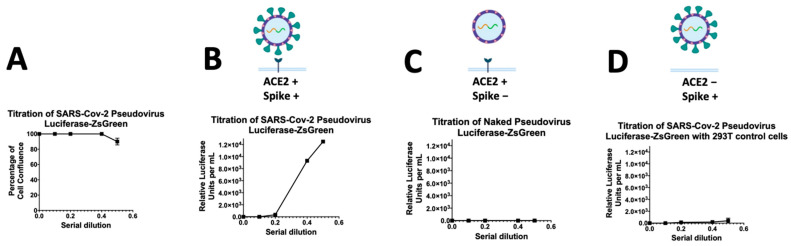
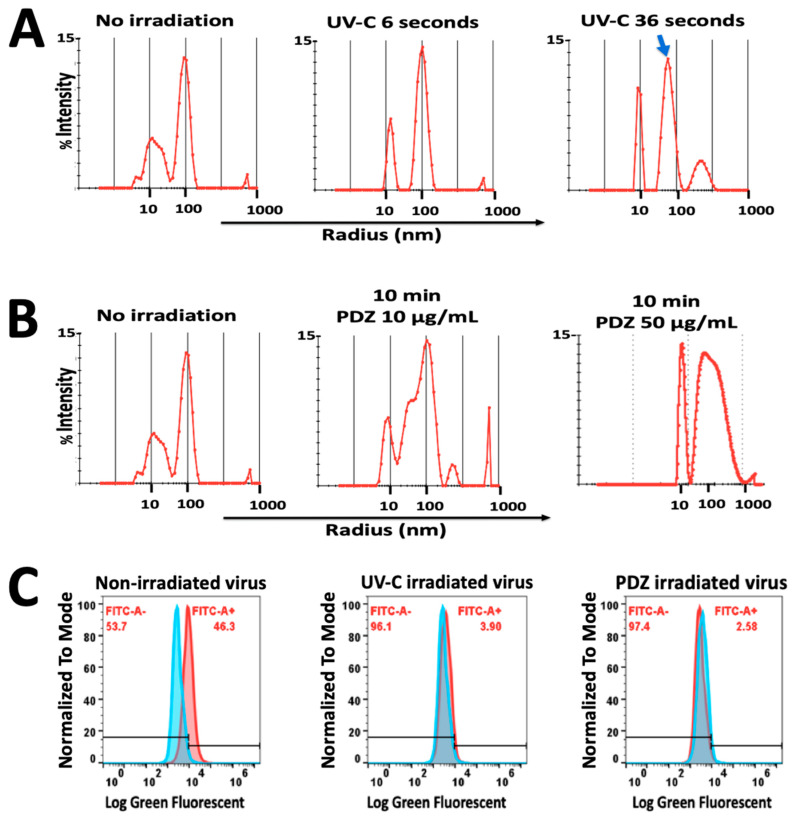
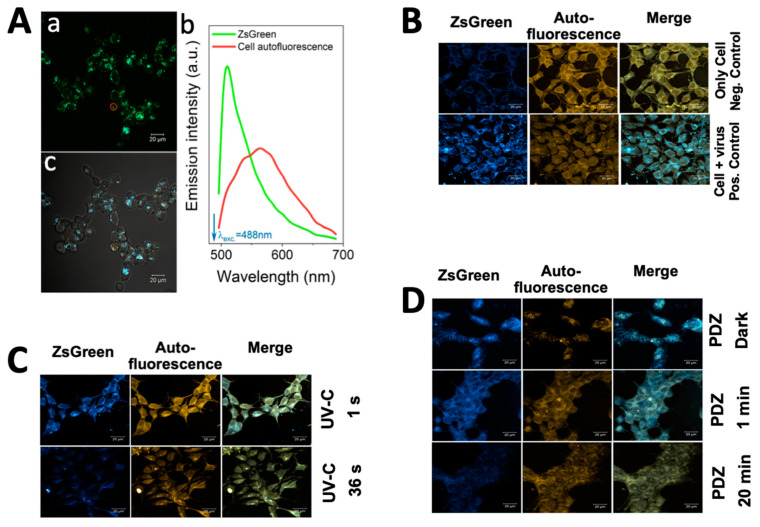
Different light-based strategies have been investigated to inactivate viruses. Herein, we developed an HIV-based pseudotyped model of SARS-CoV-2 (SC2) to study the mechanisms of virus inactivation by using two different strategies; photoinactivation (PI) by UV-C light and photodynamic inactivation (PDI) by Photodithazine photosensitizer (PDZ). We used two pseudoviral particles harboring the Luciferase-IRES-ZsGreen reporter gene with either a SC2 spike on the membrane or without a spike as a naked control pseudovirus. The mechanism of viral inactivation by UV-C and PDZ-based PDI were studied via biochemical characterizations and quantitative PCR on four levels; free-cell viral damage; viral cell entry; DNA integration; and expression of reporter genes. Both UV-C and PDZ treatments could destroy single stranded RNA (ssRNA) and the spike protein of the virus, with different ratios. However, the virus was still capable of binding and entering into the HEK 293T cells expressing angiotensin-converting enzyme 2 (ACE-2). A dose-dependent manner of UV-C irradiation mostly damages the ssRNA, while PDZ-based PDI mostly destroys the spike and viral membrane in concentration and dose-dependent manners. We observed that the cells infected by the virus and treated with either UV-C or PDZ-based PDI could not express the luciferase reporter gene, signifying the viral inactivation, despite the presence of RNA and DNA intact genes.
Keywords: SARS-CoV-2 pseudovirus; UV-C light; enveloped virus; photodynamic inactivation; photosensitizer; viral inactivation.
Conflict of interest statement
Authors declare no competing interests. Graphical figures were created with BioRender software ((
Figures


References
-
- World Health Organization Coronavirus (COVID-19) Dashboard. [(accessed on 9 January 2022)]; Available online: https://covid19.who.int/
-
- Tran H.D.M., Boivin S., Kodamatani H., Ikehata K., Fujioka T. Potential of UV-B and UV-C irradiation in disinfecting microorganisms and removing N-nitrosodimethylamine and 1,4-dioxane for potable water reuse: A review. Chemosphere. 2021;286:131682. doi: 10.1016/j.chemosphere.2021.131682. - DOI - PubMed
Grants and funding
LinkOut - more resources
Full Text Sources
Research Materials
Miscellaneous
