


Pre-Clinical Tools for Predicting Drug Efficacy in Treatment of Tuberculosis
- PMID: 35336089
- PMCID: PMC8956012
- DOI: 10.3390/microorganisms10030514
Pre-Clinical Tools for Predicting Drug Efficacy in Treatment of Tuberculosis
Abstract
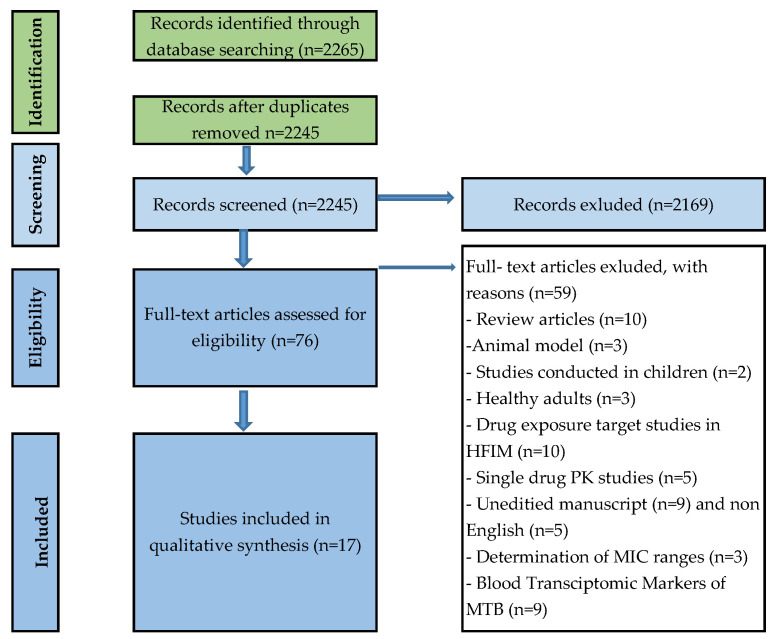
Combination therapy has, to some extent, been successful in limiting the emergence of drug-resistant tuberculosis. Drug combinations achieve this advantage by simultaneously acting on different targets and metabolic pathways. Additionally, drug combination therapies are shown to shorten the duration of therapy for tuberculosis. As new drugs are being developed, to overcome the challenge of finding new and effective drug combinations, systems biology commonly uses approaches that analyse mycobacterial cellular processes. These approaches identify the regulatory networks, metabolic pathways, and signaling programs associated with M. tuberculosis infection and survival. Different preclinical models that assess anti-tuberculosis drug activity are available, but the combination of models that is most predictive of clinical treatment efficacy remains unclear. In this structured literature review, we appraise the options to accelerate the TB drug development pipeline through the evaluation of preclinical testing assays of drug combinations.
Keywords: MDR-TB; drug activity; drug combinations; drug efficacy; high order combinations; in vitro preclinical modelling; synergism; transcriptomics; tuberculosis.
Conflict of interest statement
The authors declare no conflict of interest.
Figures
References
-
- WHO . Global Tuberculosis Report. WHO; Geneve, Switzerland: 2021.
-
- WHO . Global Tuberculosis Report. WHO; Geneve, Switzerland: 2019.
-
- WHO . Module 4: Treatment—Drug-Resistant Tuberculosis Treatment. WHO; Geneve, Switzerland: 2020.
-
- WHO . Consolidated Guidelines on Tuberculosis: Module 4: Treatment: Drug-Resistant Tuberculosis Treatment. World Health Organization; Geneve, Switzerland: 2020. - PubMed
Publication types
LinkOut - more resources
Full Text Sources
Research Materials
