


Ethical implications of epigenetics in the era of personalized medicine
- PMID: 35337378
- PMCID: PMC8953972
- DOI: 10.1186/s13148-022-01263-1
Ethical implications of epigenetics in the era of personalized medicine
Abstract
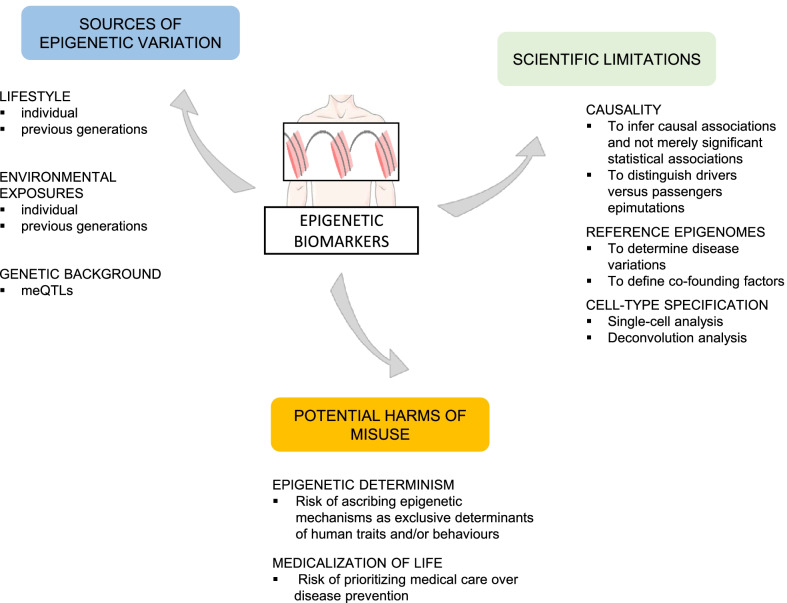
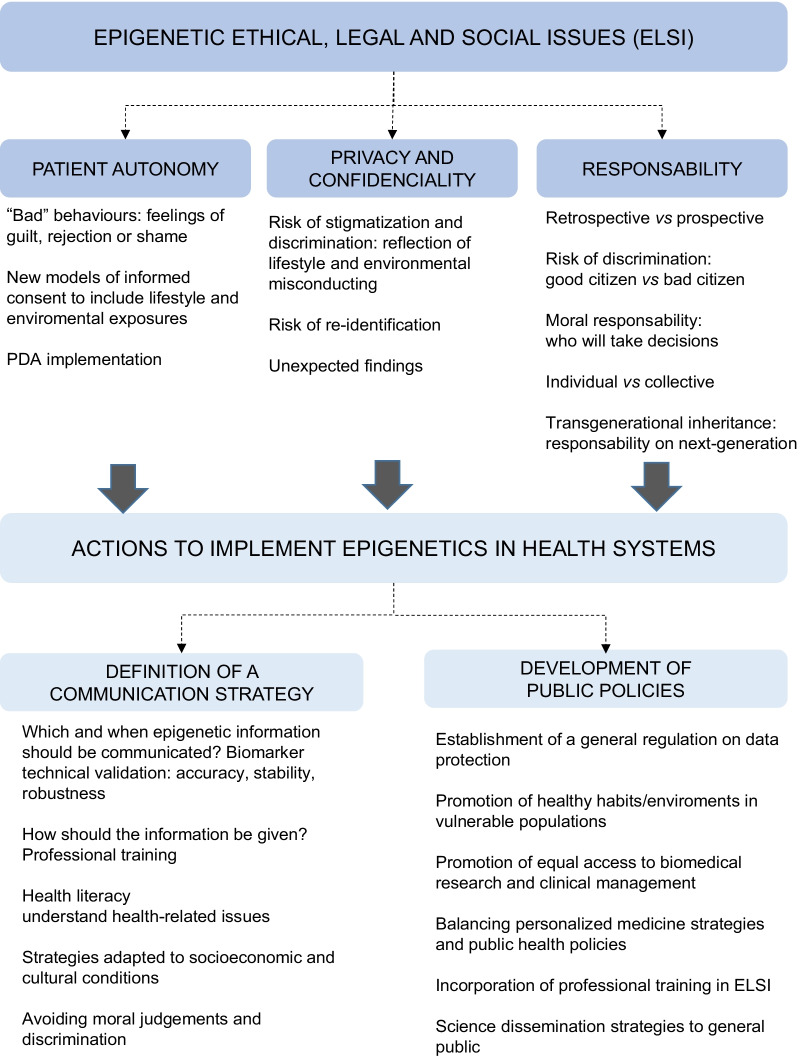
Given the increasing research activity on epigenetics to monitor human diseases and its connection with lifestyle and environmental expositions, the field of epigenetics has attracted a great deal of interest also at the ethical and societal level. In this review, we will identify and discuss current ethical, legal and social issues of epigenetics research in the context of personalized medicine. The review covers ethical aspects such as how epigenetic information should impact patient autonomy and the ability to generate an intentional and voluntary decision, the measures of data protection related to privacy and confidentiality derived from epigenome studies (e.g., risk of discrimination, patient re-identification and unexpected findings) or the debate in the distribution of responsibilities for health (i.e., personal versus public responsibilities). We pay special attention to the risk of social discrimination and stigmatization as a consequence of inferring information related to lifestyle and environmental exposures potentially contained in epigenetic data. Furthermore, as exposures to the environment and individual habits do not affect all populations equally, the violation of the principle of distributive justice in the access to the benefits of clinical epigenetics is discussed. In this regard, epigenetics represents a great opportunity for the integration of public policy measures aimed to create healthier living environments. Whether these public policies will coexist or, in contrast, compete with strategies reinforcing the personalized medicine interventions needs to be considered. The review ends with a reflection on the main challenges in epigenetic research, some of them in a technical dimension (e.g., assessing causality or establishing reference epigenomes) but also in the ethical and social sphere (e.g., risk to add an epigenetic determinism on top of the current genetic one). In sum, integration into life science investigation of social experiences such as exposure to risk, nutritional habits, prejudice and stigma, is imperative to understand epigenetic variation in disease. This pragmatic approach is required to locate clinical epigenetics out of the experimental laboratories and facilitate its implementation into society.
Keywords: Autonomy; Epigenetics; Ethics; Personalized medicine; Privacy; Responsibility; Social justice; Stigmatization.
© 2022. The Author(s).
Conflict of interest statement
The authors declare that they have no competing interests.
Figures
References
-
- Berdasco M, Esteller M. Clinical epigenetics: seizing opportunities for translation. Nat Rev Genet. 2019;20:109–127. - PubMed
-
- Cossío FP, Esteller M, Berdasco M. Towards a more precise therapy in cancer: exploring epigenetic complexity. Curr Opin Chem Biol. 2020;57:41–49. - PubMed
-
- Lamb YN, Dhillon S. Epi proColon® 2.0 CE: a blood-based screening test for colorectal cancer. Mol Diagn Ther. 2017;21:225–232. - PubMed
