. 2022:93:275-333.
doi: 10.1016/bs.apha.2021.10.006. Epub 2021 Dec 13.

Receptor mechanisms underlying the CNS effects of cannabinoids: CB1 receptor and beyond

Affiliations

Receptor mechanisms underlying the CNS effects of cannabinoids: CB1 receptor and beyond

Briana Hempel et al. Adv Pharmacol. 2022.

Abstract

Cannabis legalization continues to progress in many US states and other countries. Δ9-tetrahydrocannabinol (Δ9-THC) is the major psychoactive constituent in cannabis underlying both its abuse potential and the majority of therapeutic applications. However, the neural mechanisms underlying cannabis action are not fully understood. In this chapter, we first review recent progress in cannabinoid receptor research, and then examine the acute CNS effects of Δ9-THC or other cannabinoids (WIN55212-2) with a focus on their receptor mechanisms. In experimental animals, Δ9-THC or WIN55212-2 produces classical pharmacological effects (analgesia, catalepsy, hypothermia, hypolocomotion), biphasic changes in affect (reward vs. aversion, anxiety vs. anxiety relief), and cognitive deficits (spatial learning and memory, short-term memory). Accumulating evidence indicates that activation of CB1Rs underlies the majority of Δ9-THC or WIN55121-2's pharmacological and behavioral effects. Unexpectedly, glutamatergic CB1Rs preferentially underlie cannabis action relative to GABAergic CB1Rs. Functional roles for CB1Rs expressed on astrocytes and mitochondria have also been uncovered. In addition, Δ9-THC or WIN55212-2 is an agonist at CB2R, GPR55 and PPARγ receptors and recent studies implicate these receptors in a number of their CNS effects. Other receptors (such as serotonin, opioid, and adenosine receptors) also modulate Δ9-THC's actions and their contributions are detailed. This chapter describes the neural mechanisms underlying cannabis action, which may lead to new discoveries in cannabis-based medication development for the treatment of cannabis use disorder and other human diseases.

Keywords: Anxiety; Aversion; CB1; CB2; Cannabinoid; Cognition; GPR55; PPARγ; Reward; Tetrad; Δ(9)-THC.


Conflict of interest statement

Conflict of interest The authors have no conflicts of interest to declare.

Figures
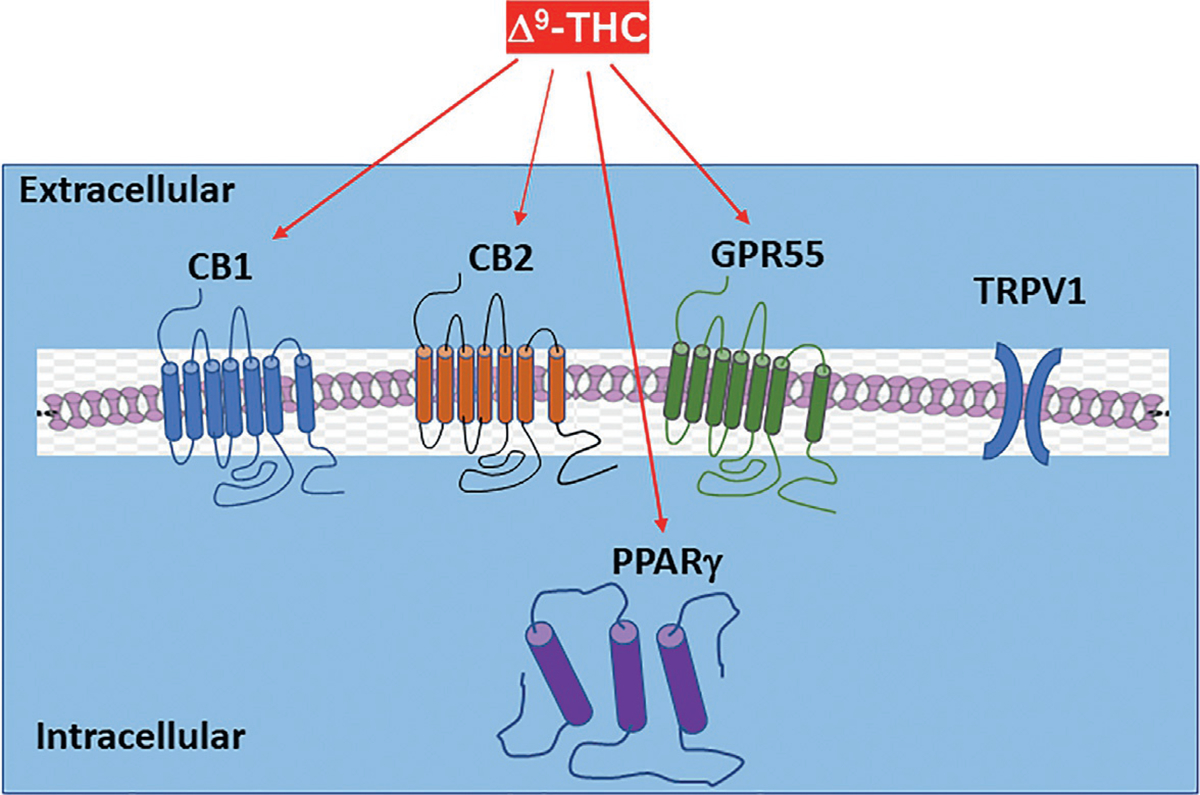
Fig. 1
Fig. 1
Major targets of Δ9-THC based on their receptor binding and functional assays as shown in Table 1.
Fig. 2
Fig. 2
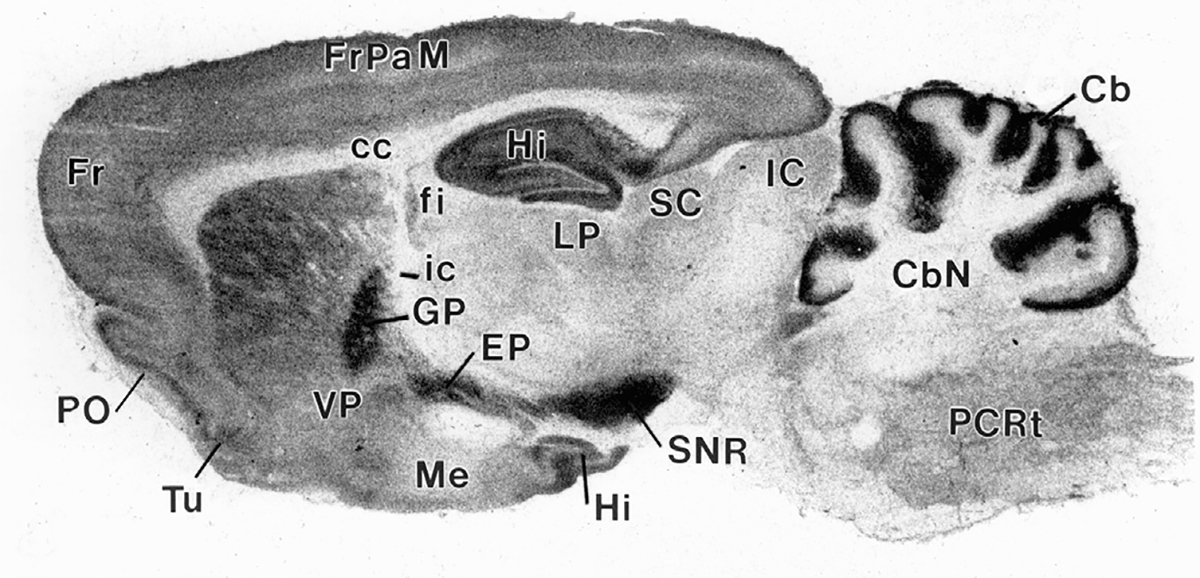
[3H]CP55,940 autoradiography demonstrating CB1R distribution in the rat brain. A high density of CB1Rs is expressed in the SNR, GP, Hi, and cerebellum. Fr, Frontal cortex; FrPaM, frontal primary motor cortex; PO, pre-olfactory bulb; Tu, olfactory tubercle; Hi, hippocampus; VP, ventral pallidum; Me, Median eminence; fi, fimbria of the hippocampus; ic, internal capsule; LP, lateral post thalamus nuclei; SC, superior colliculus; IC, inferior colliculus; Cb, cerebellum; CbN, cerebellar nuclei; CC, corpus cal losum; GP, globus pallidus; EP, entopeduncular nucleus (homolog of GPi); SNR, substantia nigra pars reticulata; PCRt, parvicellular reticular nuclei. (This image was provided by Dr. Miles Herkenham at NIMH, USA)
Fig. 3
Fig. 3
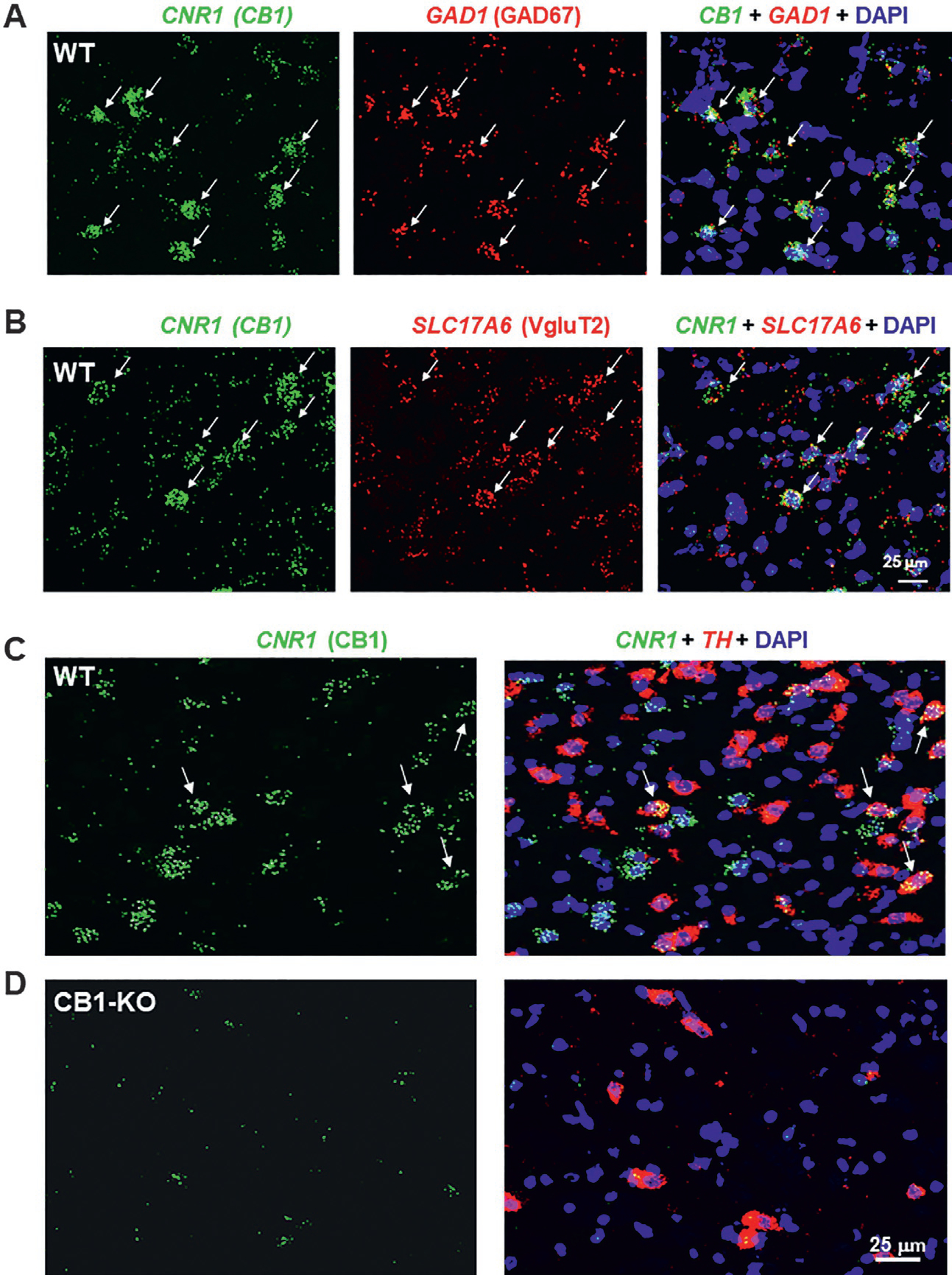
RNAscope ISH results, illustrating the cellular distributions of CB1Rs in the midbrain ventral tegmental area. CB1 mRNA was detected in GAD1-labeled GABAergic neurons (A), VgluT2-labeled glutamate neurons (B) and a small population of TH-labeled DA neurons (C) in the midbrain of WT, but not CB1-KO mice (D).
Fig. 4
Fig. 4
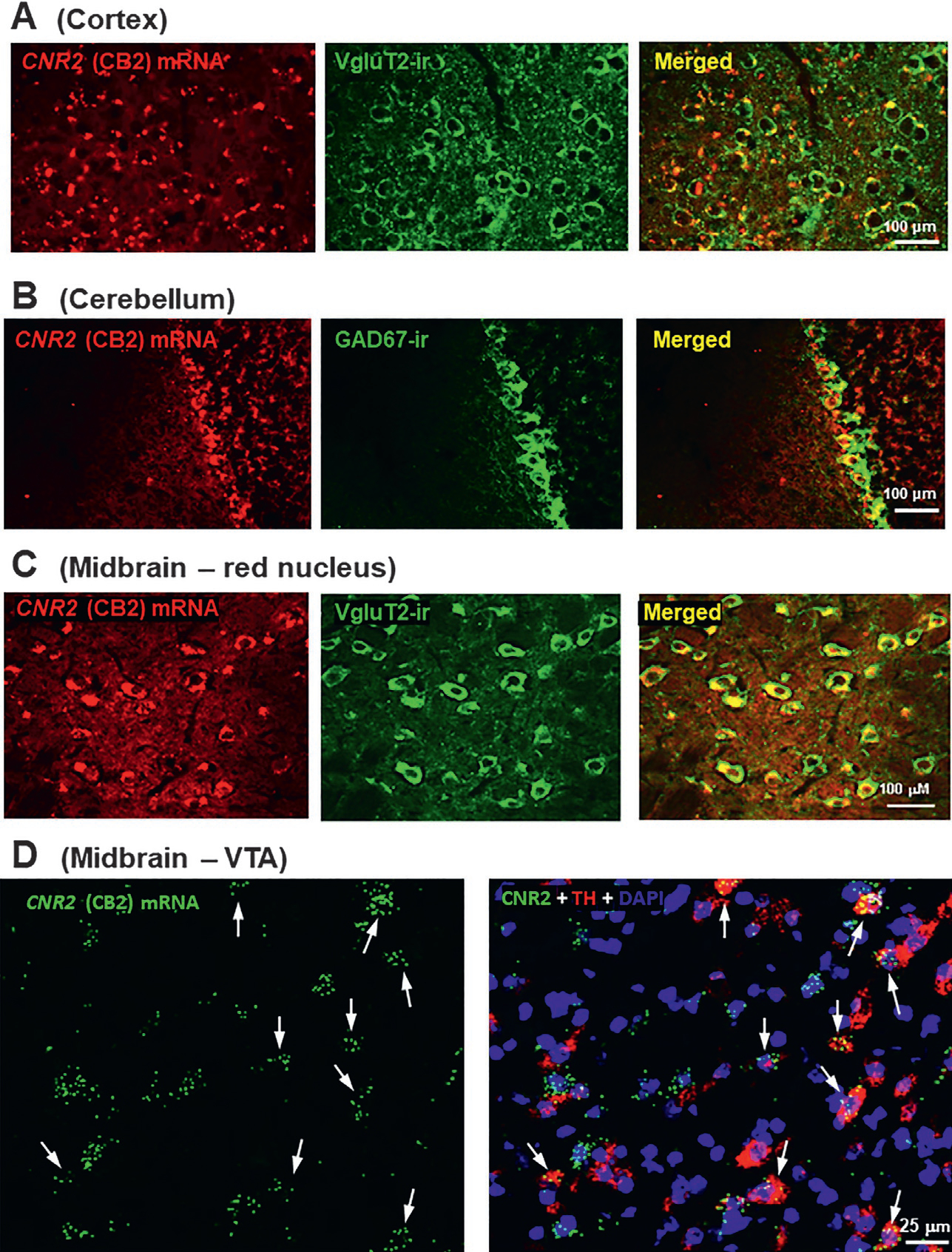
Conventional (A, B, C) and RNAscope (D) ISH results, illustrating the cellular distributions of CB2Rs in mouse brain. CB2 mRNA was detected in cortical VgluT2-labeled glutamatergic neurons (A), cerebellar GAD1-labeled GABAergic neurons (B), red nucleus VgluT2-labeled glutamatergic neurons (C), and VTA TH-labeled dopaminergic neurons (D).
Fig. 5
Fig. 5
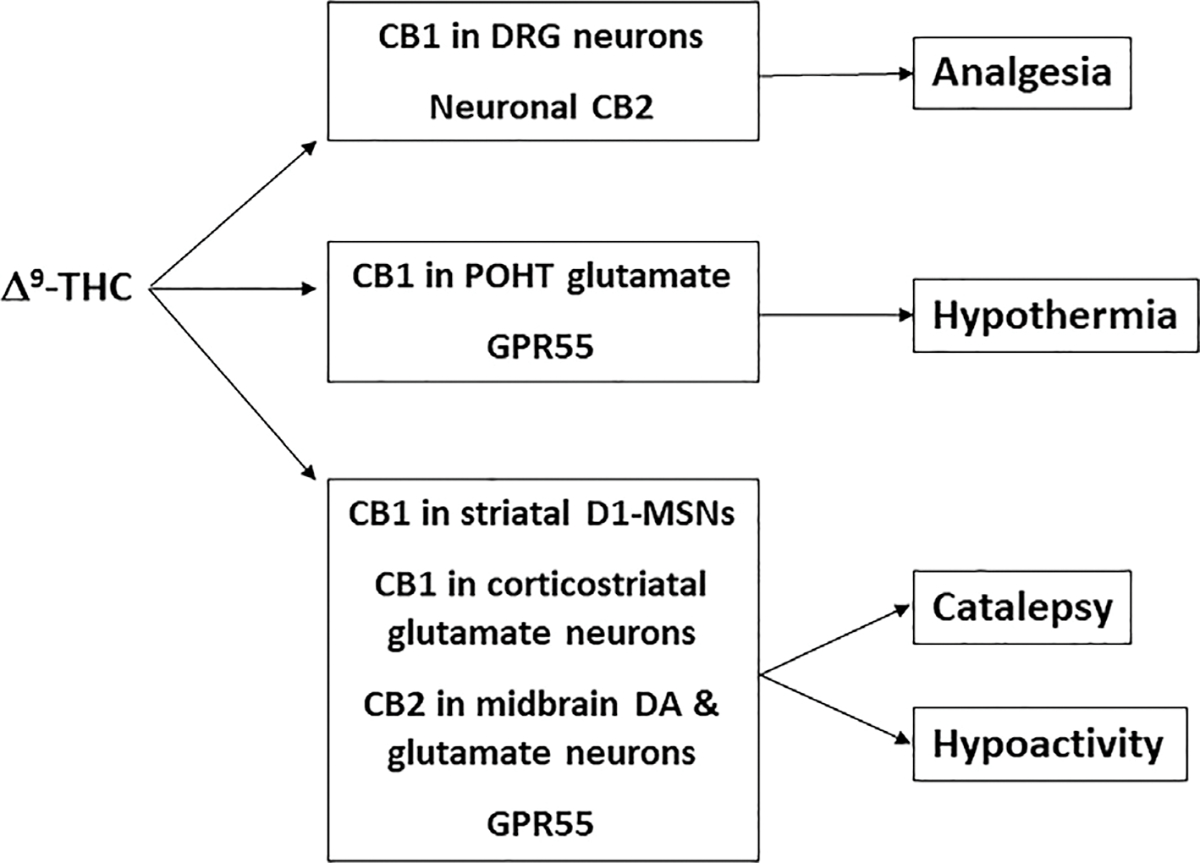
A summary of the major neural mechanisms underlying THC-induced tetrad effects.
Fig. 6
Fig. 6
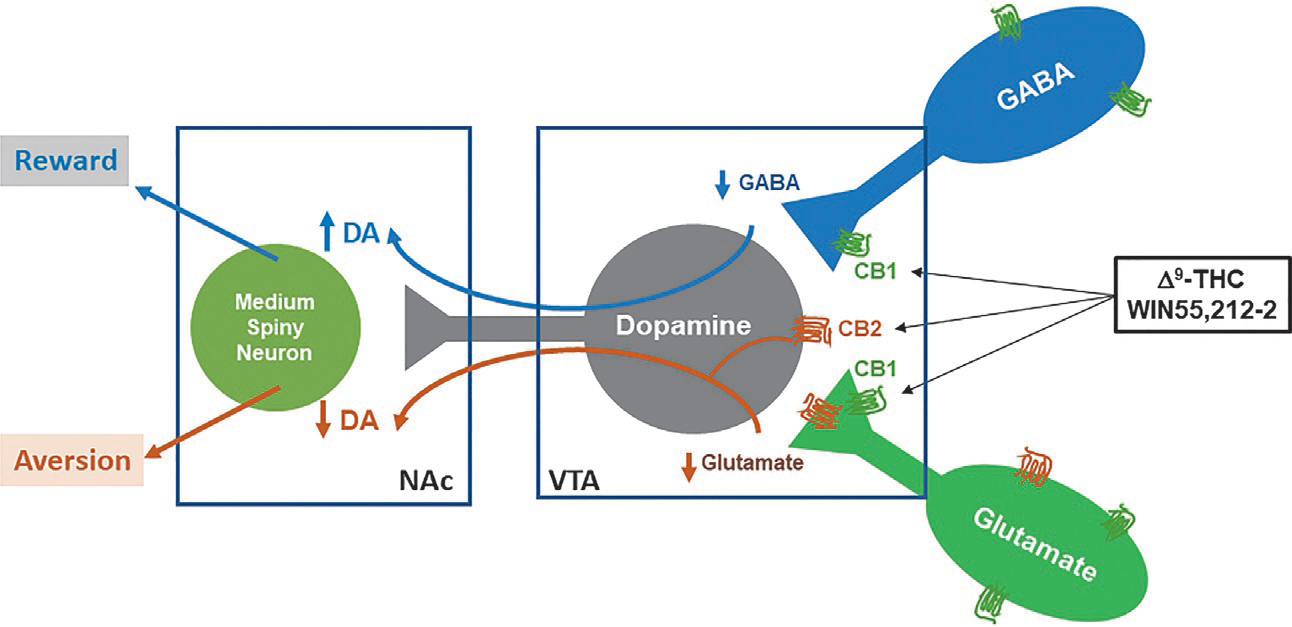
Neural mechanisms underlying cannabinoid reward vs. aversion. CB1Rs are expressed in VTA GABAergic neurons and glutamatergic neurons as well as their afferents projected from other brain regions to VTA DA neurons (data shown). CB2Rs are found in VTA DA neurons. Cannabinoids modulate the mesolimbic DA system via activation of brain CB1Rs and CB2Rs. Cannabinoids such as Δ9-THC or WIN55,212-2 produce rewarding effects by binding to CB1Rs on VTA GABAergic interneurons and/or their afferents, thereby reducing GABA-mediated disinhibition of VTA DA neurons and cannabinoid reward. Conversely, Δ9-THC or WIN55,212-2 may also produce aversive effects by activating CB1Rs on glutamatergic neurons in the VTA or glutamatergic afferents, and CB2Rs on midbrain DA neurons, thereby inhibiting VTA DA release to the NAc. The subjective effects of cannabinoids may thus depend on the balance of opposing CB1R and CB2R effects and individual differences in expression of cannabinoid receptors. DA, dopamine; GABA, γ-aminobutyric acid; NAc, nucleus accumbens; VTA, ventral tegmental area.

References

    1. Agarwal N, Pacher P, Tegeder I, Amaya F, Constantin CE, Brenner GJ, et al. (2007). Cannabinoids mediate analgesia largely via peripheral type 1 cannabinoid receptors in nociceptors. Nature Neuroscience, 10(7), 870–879. 10.1038/nn1916. - DOI - PMC - PubMed
    1. Ahluwalia J, Urban L, Capogna M, Bevan S, & Nagy I (2000). Cannabinoid 1 receptors are expressed in nociceptive primary sensory neurons. Neuroscience, 100(4), 685–688. 10.1016/S0306-4522(00)00389-4. - DOI - PubMed
    1. Akopian AN, Ruparel NB, Patwardhan A, & Hargreaves KM (2008). Cannabinoids desensitize capsaicin and mustard oil responses in sensory neurons via TRPA1 activation. The Journal of Neuroscience, 28(5), 1064–1075. 10.1523/jneurosci.1565-06.2008. - DOI - PMC - PubMed
    1. Alexander SPH (2016). Therapeutic potential of cannabis-related drugs. Progress in Neuro-Psychopharmacology and Biological Psychiatry, 64, 157–166. 10.1016/j.pnpbp.2015.07.001. - DOI - PubMed
    1. Aso E, Fernández-Dueñas V, López-Cano M, Taura J, Watanabe M, Ferrer I, et al. (2019). Adenosine A2A-cannabinoid CB1 receptor heteromers in the hippocampus: Cannabidiol blunts Δ9-tetrahydrocannabinol-induced cognitive impairment. Molecular Neurobiology, 56(8), 5382–5391. 10.1007/s12035-018-1456-3. - DOI - PubMed

Publication types

LinkOut - more resources