


Prevalence of fatigue after stroke: A systematic review and meta-analysis
- PMID: 35342803
- PMCID: PMC8948505
- DOI: 10.1177/23969873211047681
Prevalence of fatigue after stroke: A systematic review and meta-analysis
Erratum in
-
ERRATUM to Prevalence of fatigue after stroke: A systematic review and meta-analysis.Eur Stroke J. 2023 Mar;8(1):405. doi: 10.1177/23969873221133916. Epub 2022 Oct 26. Eur Stroke J. 2023. PMID: 37021159 Free PMC article.
Abstract
Background and purpose: Post-stroke fatigue is a debilitating and long-lasting condition. However, there are uncertainties regarding its prevalence and variability between studies. This review aims to estimate the prevalence of fatigue and determine the factors responsible for its variation in the literature.
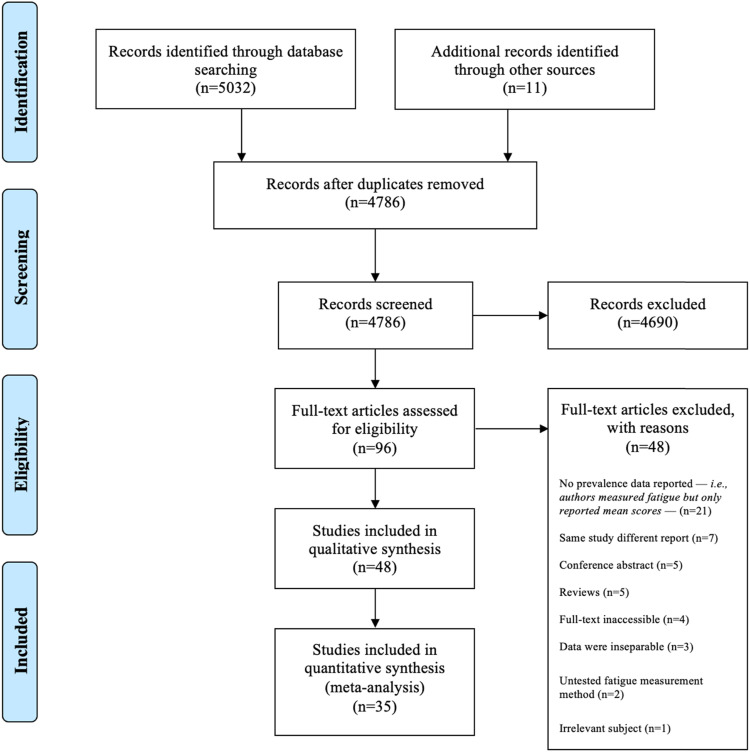
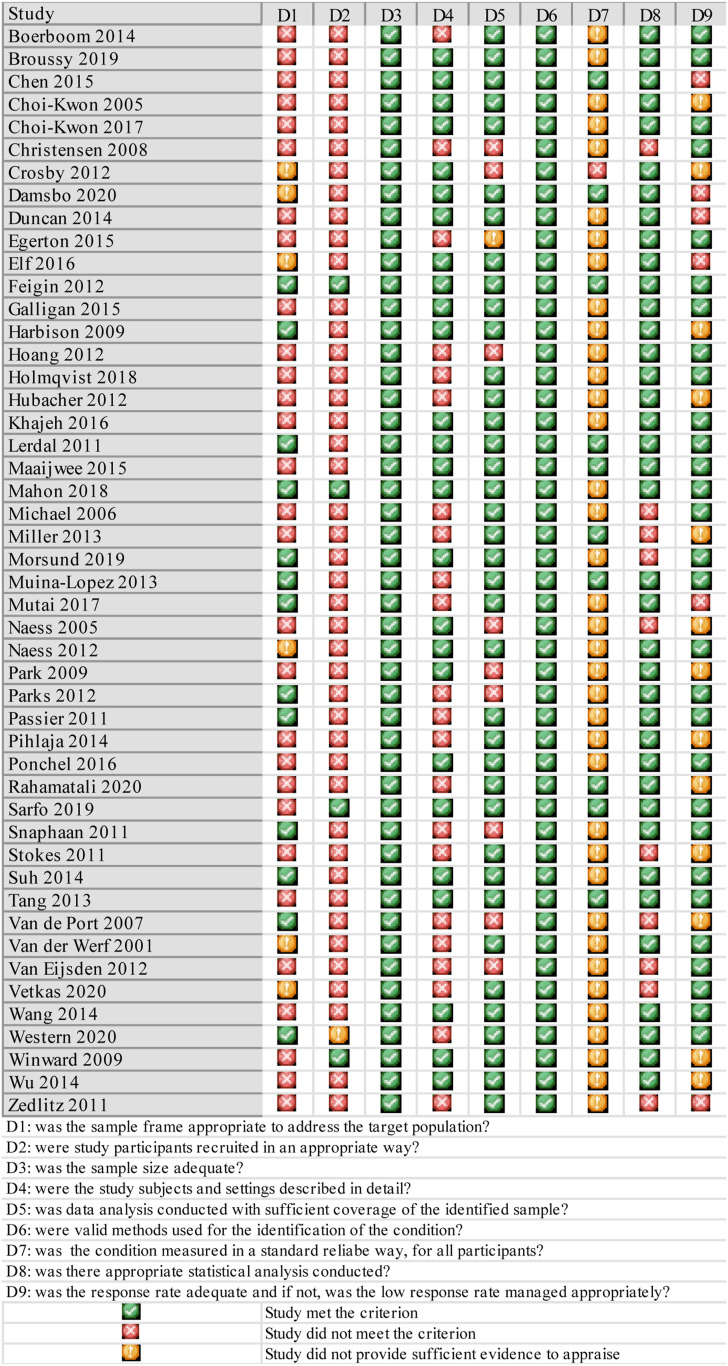
Methods: A systematic review was conducted for all published studies (search to November 2020) using AMED, CINAHL, EMBASE, MEDLINE, PsycINFO, SCOPUS and Web of Science. Papers were included if they recruited participants with stroke, used a validated scale to measure fatigue and were in English. Two reviewers screened and assessed the relevant studies for eligibility (n = 96). The included papers were appraised using the Joanna Briggs Institute (JBI) tool for prevalence studies, and data were extracted by one reviewer. To understand the variation in PSF prevalence between papers, data were pooled and analysed based on relevant methodological (e.g. time of assessment) or clinical factors (e.g. depression) using Review Manager 5.4 software.
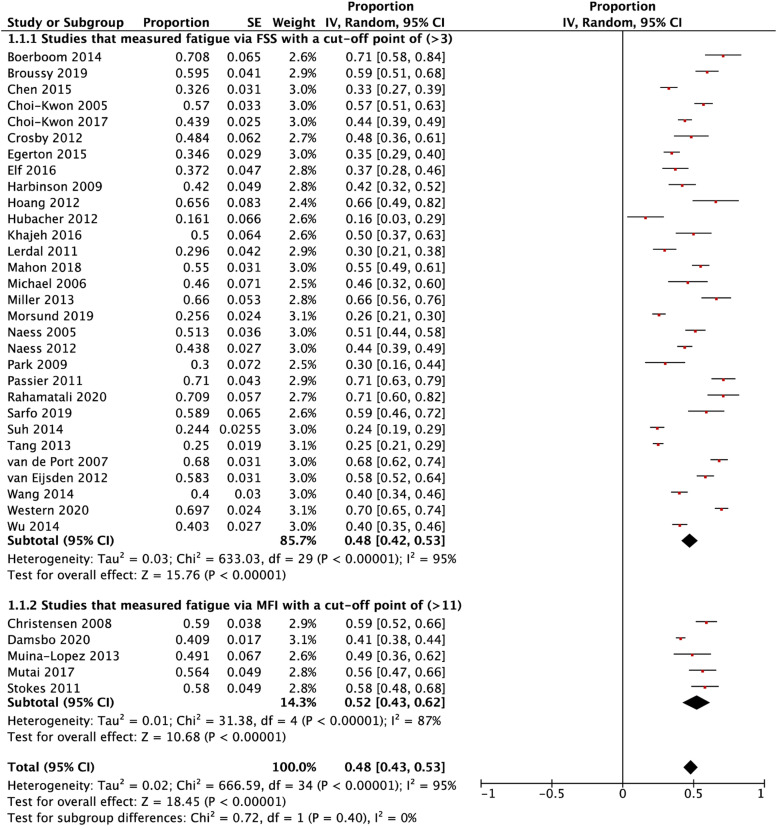
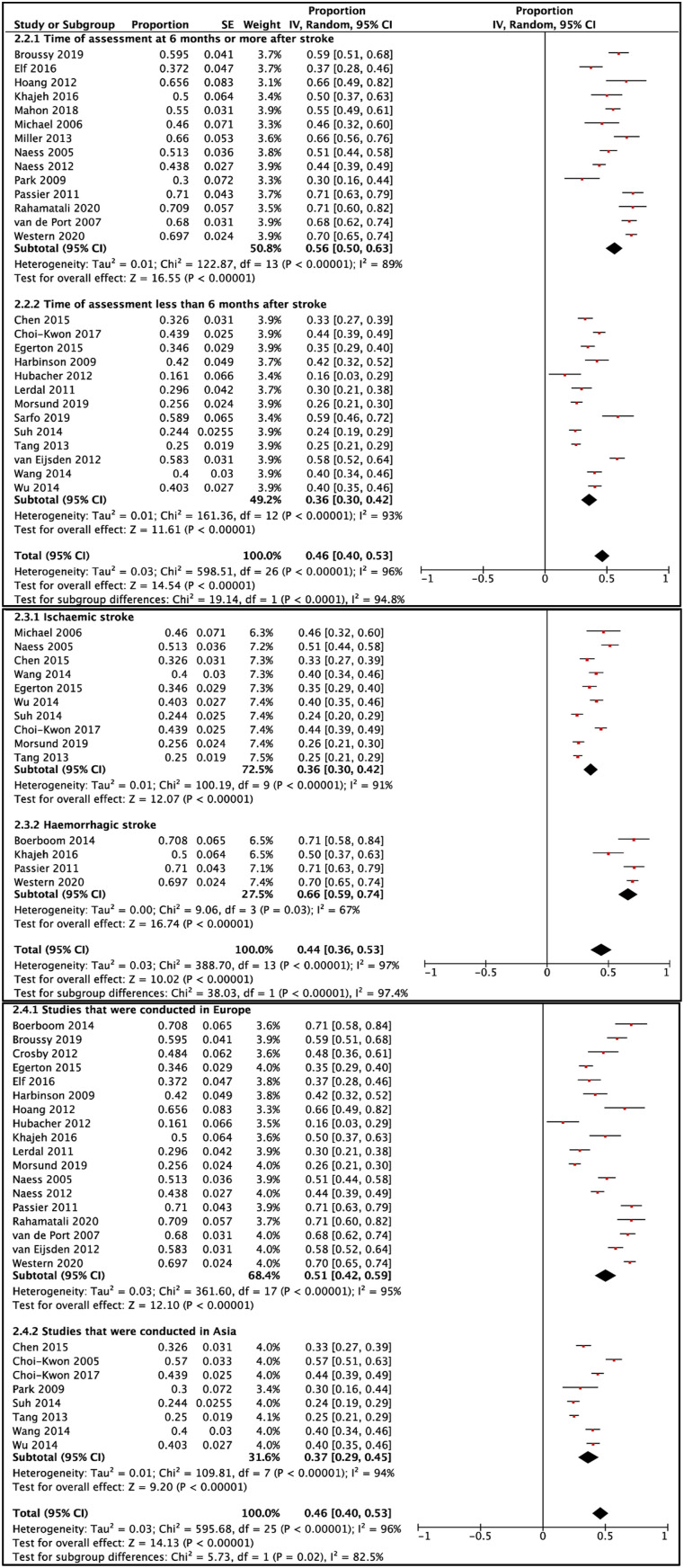
Results: While 48 studies were included and summarised (N = 9004), only 35 were appropriate for the meta-analysis (N = 6851). The most frequently used tool to measure fatigue was the Fatigue Severity Scale (FSS) (n = 31). The prevalence was calculated with a cut-off point of four or more using FSS and resulted in an estimate of 48% (95% CI 42-53%). Time of assessment (<6 vs ≥6 months), stroke type (ischaemic vs haemorrhagic/subarachnoid haemorrhage) and geographical location (East Asia vs Europe) could explain the prevalence variation between studies.
Conclusions: Fatigue is prevalent among stroke survivors. This condition varies in terms of occurrence between studies; however, time of assessment, stroke type and geographical location might explain this variation. As this review estimates the overall burden of fatigue after stroke, it provides a useful indicator to inform policy, planning and healthcare professionals. Further efforts are required to investigate the mechanisms that lead to PSF, particularly in the groups that show high prevalence, in order to prevent or alleviate it.
Keywords: fatigue; frequency; review; stroke.
© European Stroke Organisation 2021.
Conflict of interest statement
Declaration of conflicting interests: The author(s) declared no potential conflicts of interest with respect to the research, authorship, and/or publication of this article.
Figures
References
Publication types
LinkOut - more resources
Full Text Sources
Research Materials
