Effect of autologous platelet-rich plasma for treatment of recurrent pregnancy loss: a randomized controlled trial
- PMID: 35345084
- PMCID: PMC9119727
- DOI: 10.5468/ogs.21261
Effect of autologous platelet-rich plasma for treatment of recurrent pregnancy loss: a randomized controlled trial
Abstract
Objective: Recurrent pregnancy loss (RPL) is a fertility problem for which no exact mechanism of abortion or efficient treatment has been described. This study was conducted between 2018 and 2019 to investigate the effectiveness of autologous platelet-rich plasma (PRP) in improving the live birth rate of women with RPL who required in vitro fertilization (IVF).
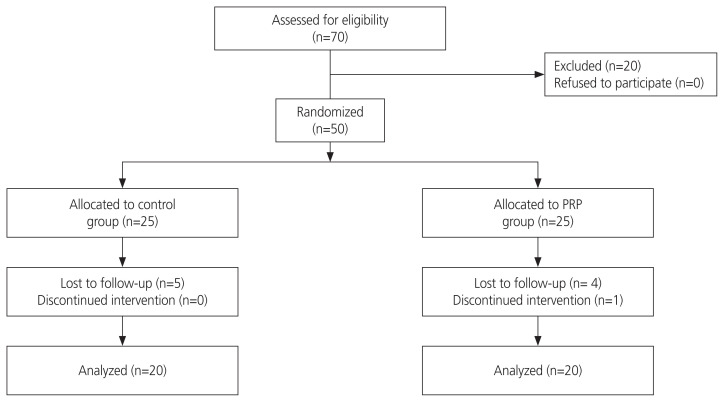
Methods: A total of 63 patients with at least two previous pregnancy losses and no specific cause detected for the RPL were included and randomly assigned into two groups (PRP and control). Intrauterine infusion of 0.5 mL of autologous PRP was performed 48 hours before embryo transfer in the PRP group. Women in the control group received standard treatment.
Results: Forty patients completed the study. The baseline and cycle characteristics of the participants did not differ significantly between the PRP and control groups. The clinical pregnancy rate was higher in the PRP group (35% vs. 20%, P=0.288). The live birth rate was 15% in the PRP group, but no live births were recorded in the control group (P=0.231).
Conclusion: This is the first study to show that intrauterine infusion of PRP in patients with RPL who undergo IVF may increase the chance of live birth.
Keywords: In vitro fertilization; Live-birth; Platelet-rich plasma; Recurrent pregnancy loss.
Conflict of interest statement
No potential conflict of interest relevant to this article was reported.
Figures
References
-
- Egerup P, Kolte AM, Larsen EC, Krog M, Nielsen HS, Christiansen OB. Recurrent pregnancy loss: what is the impact of consecutive versus non-consecutive losses? Hum Reprod. 2016;31:2428–34. - PubMed
-
- Di Nicuolo F, D’Ippolito S, Castellani R, Rossi ED, Masciullo V, Specchia M, et al. Effect of alpha-lipoic acid and myoinositol on endometrial inflammasome from recurrent pregnancy loss women. Am J Reprod Immunol. 2019;82:e13153. - PubMed
-
- Baradwan S, Abdulghani SH, Abuzaid M, Khadawardi K, Alshahrani MS, Al-Matary A, et al. 17-alpha hydroxy-progesterone caproate for the prevention of recurrent preterm birth among singleton pregnant women with a prior history of preterm birth: a systematic review and meta-analysis of six randomized controlled trials. Obstet Gynecol Sci. 2021;64:484–95. - PMC - PubMed
Grants and funding
LinkOut - more resources
Full Text Sources
Research Materials