


An unexpected case of Borrelia garinii liver infection
- PMID: 35346214
- PMCID: PMC8958789
- DOI: 10.1186/s12941-022-00506-6
An unexpected case of Borrelia garinii liver infection
Abstract
Background: Lyme borreliosis is the most prevalent arthropod-borne infection in the Northern Hemisphere. In Europe, Borrelia afzelii is predominantly involved in cutaneous manifestations, Borrelia garinii and Borrelia bavariensis in neurological manifestations, and Borrelia burgdorferi sensu stricto in articular ones. Liver impairement is not classical in Lyme borreliosis. Diagnosis is currently mainly based on serological testing, and is challenging in immunocompromised patients.
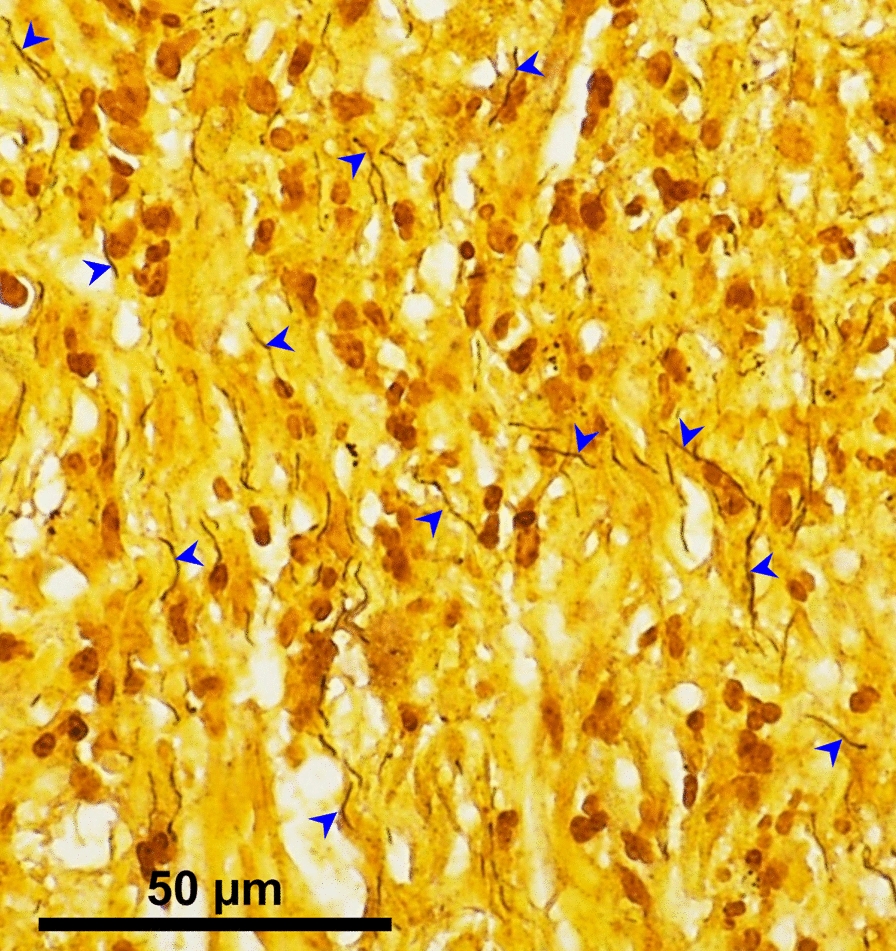
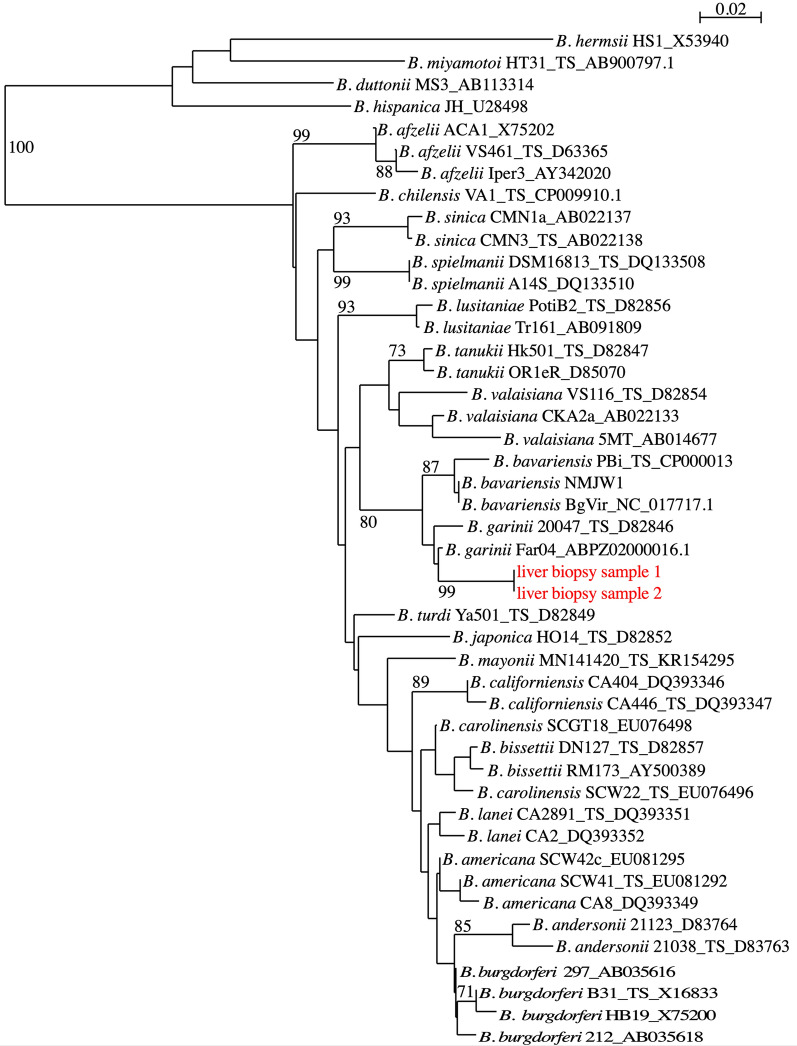
Case presentation: We report the first case of B. garinii infection revealed by liver involvement in an immunocompromised man. A 73-year-old man with marginal zone lymphoma, treated with bendamustine and rituximab, developed intermittent fever and inflammatory syndrome. Microbial investigations were all negative and FDG-PET showed complete remission of the lymphoma. Three months later, liver biopsy was performed and histology revealed spirochetes-like bacteria. Microbial diagnosis was performed by 16S rDNA sequencing, flagellin (flaB) gene sequencing and multi-locus sequence typing and identified B. garinii. The patient recovered successfully after a three weeks course of antibiotics. Diagnosis was challenging because Borrelia hepatic involvement is unusual and no erythema migrans nor tick bite were notified.
Conclusion: This case highlights that unexplained fever and inflammatory syndrome in immunocompromised patients warrants specific investigations to identify bacteria such as spirochetes.
Keywords: 16S rDNA; Borrelia garinii; Kupffer cell hyperplasia; Liver involvement; Warthin Starry stain.
© 2022. The Author(s).
Conflict of interest statement
The authors declare that they have no competing interest.
Figures
References
-
- Septfons A, Figoni J, Gautier A, Soullier N, de Valk H, Desenclos JC. Increased awareness and knowledge of Lyme Borreliosis and tick bite prevention among the general population in France: 2016 and 2019 health barometer survey. BMC Public Health. 2021;21(1):1808. doi: 10.1186/s12889-021-11850-1. - DOI - PMC - PubMed
Publication types
MeSH terms
LinkOut - more resources
Full Text Sources
Medical
