


Wearable sensors during drawing tasks to measure the severity of essential tremor
- PMID: 35347169
- PMCID: PMC8960784
- DOI: 10.1038/s41598-022-08922-6
Wearable sensors during drawing tasks to measure the severity of essential tremor
Abstract
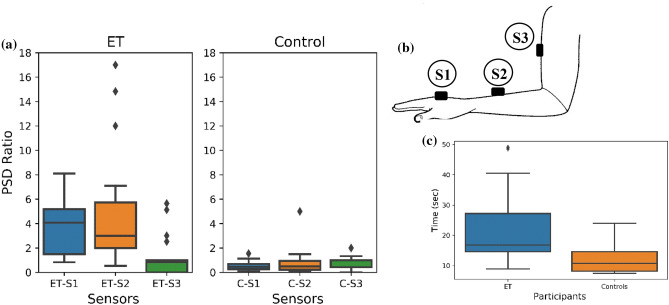
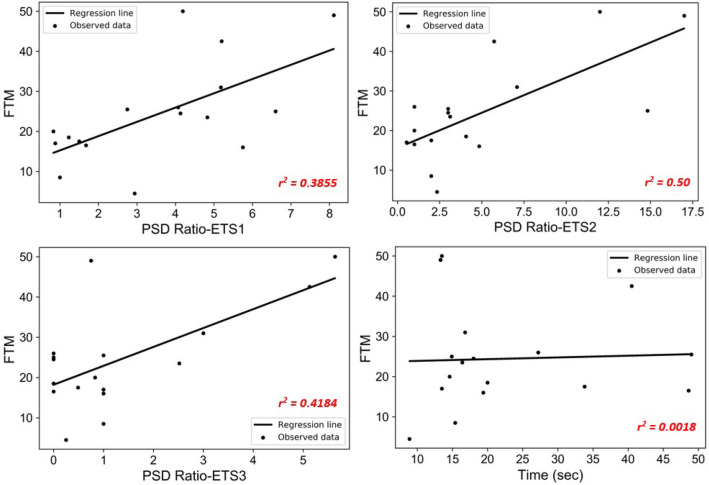
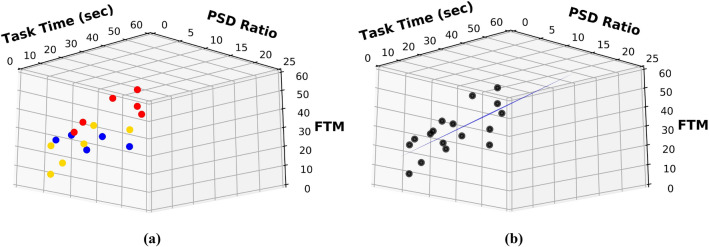
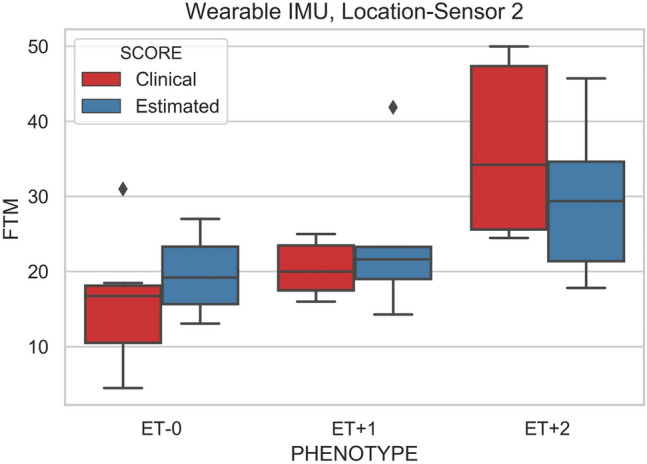
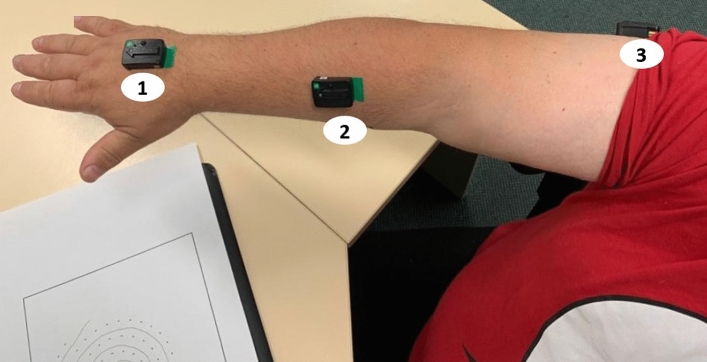
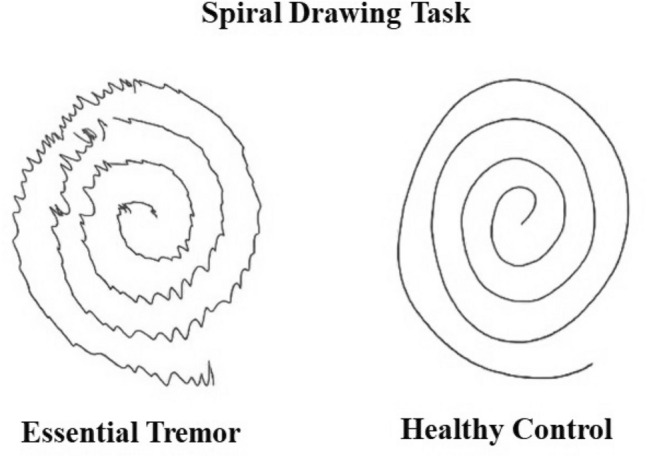
Commonly used methods to assess the severity of essential tremor (ET) are based on clinical observation and lack objectivity. This study proposes the use of wearable accelerometer sensors for the quantitative assessment of ET. Acceleration data was recorded by inertial measurement unit (IMU) sensors during sketching of Archimedes spirals in 17 ET participants and 18 healthy controls. IMUs were placed at three points (dorsum of hand, posterior forearm, posterior upper arm) of each participant's dominant arm. Movement disorder neurologists who were blinded to clinical information scored ET patients on the Fahn-Tolosa-Marin rating scale (FTM) and conducted phenotyping according to the recent Consensus Statement on the Classification of Tremors. The ratio of power spectral density of acceleration data in 4-12 Hz to 0.5-4 Hz bands and the total duration of the action were inputs to a support vector machine that was trained to classify the ET subtype. Regression analysis was performed to determine the relationship of acceleration and temporal data with the FTM scores. The results show that the sensor located on the forearm had the best classification and regression results, with accuracy of 85.71% for binary classification of ET versus control. There was a moderate to good correlation (r2 = 0.561) between FTM and a combination of power spectral density ratio and task time. However, the system could not accurately differentiate ET phenotypes according to the Consensus classification scheme. Potential applications of machine-based assessment of ET using wearable sensors include clinical trials and remote monitoring of patients.
© 2022. The Author(s).
Conflict of interest statement
The authors declare no competing interests.
Figures
References
-
- Louis ED. In: Handbook of Clinical Neurology. Weiner WJ, Tolosa E, editors. Elsevier; 2011. pp. 433–448. - PubMed
MeSH terms
LinkOut - more resources
Full Text Sources
