


Astrocytes in Post-traumatic Stress Disorder
- PMID: 35349095
- PMCID: PMC8960712
- DOI: 10.1007/s12264-022-00845-6
Astrocytes in Post-traumatic Stress Disorder
Abstract
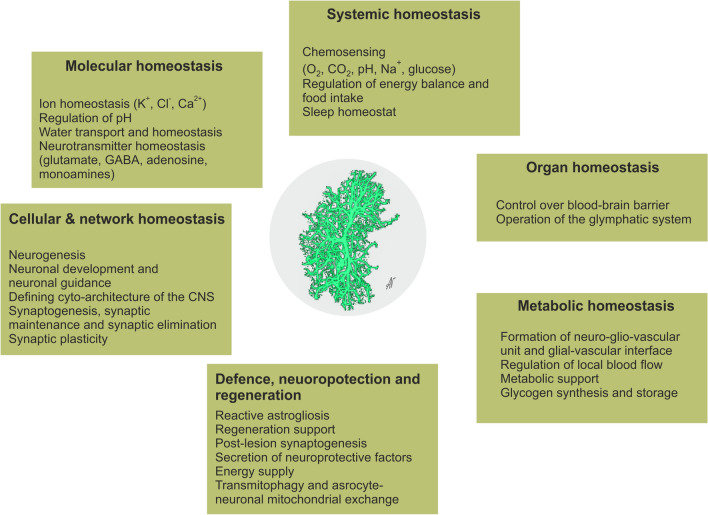
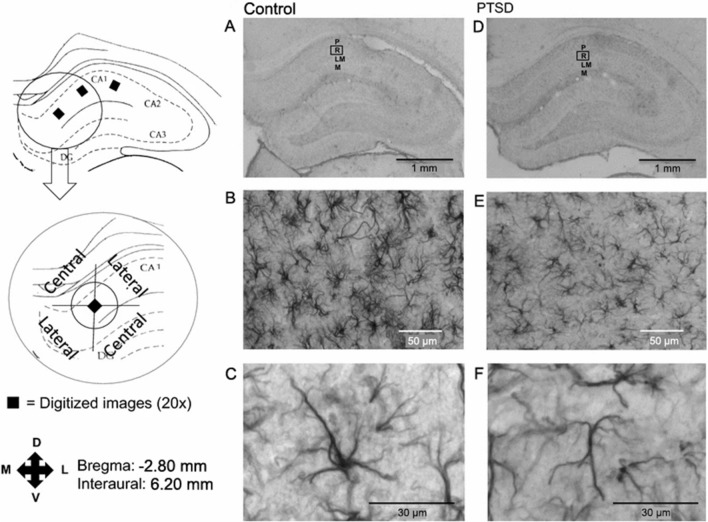
Although posttraumatic stress disorder (PTSD) is on the rise, traumatic events and their consequences are often hidden or minimized by patients for reasons linked to PTSD itself. Traumatic experiences can be broadly classified into mental stress (MS) and traumatic brain injury (TBI), but the cellular mechanisms of MS- or TBI-induced PTSD remain unknown. Recent evidence has shown that the morphological remodeling of astrocytes accompanies and arguably contributes to fearful memories and stress-related disorders. In this review, we summarize the roles of astrocytes in the pathogenesis of MS-PTSD and TBI-PTSD. Astrocytes synthesize and secrete neurotrophic, pro- and anti-inflammatory factors and regulate the microenvironment of the nervous tissue through metabolic pathways, ionostatic control, and homeostatic clearance of neurotransmitters. Stress or trauma-associated impairment of these vital astrocytic functions contribute to the pathophysiological evolution of PTSD and may present therapeutic targets.
Keywords: Astrocytes; Neurotrophic factors; Serotonin; Traumatic brain injury; Traumatic events.
© 2022. Center for Excellence in Brain Science and Intelligence Technology, Chinese Academy of Sciences.
Conflict of interest statement
The authors declare no competing interests.
Figures
References
-
- Gayle MC, Raskin JD. DSM-5: Do counselors really want an alternative? J Humanist Psychol. 2017;57:650–666. doi: 10.1177/0022167817696839. - DOI
Publication types
MeSH terms
LinkOut - more resources
Full Text Sources
Medical
