


Postpartum depression in maternal thyroidal changes
- PMID: 35351167
- PMCID: PMC8966368
- DOI: 10.1186/s13044-022-00124-6
Postpartum depression in maternal thyroidal changes
Abstract
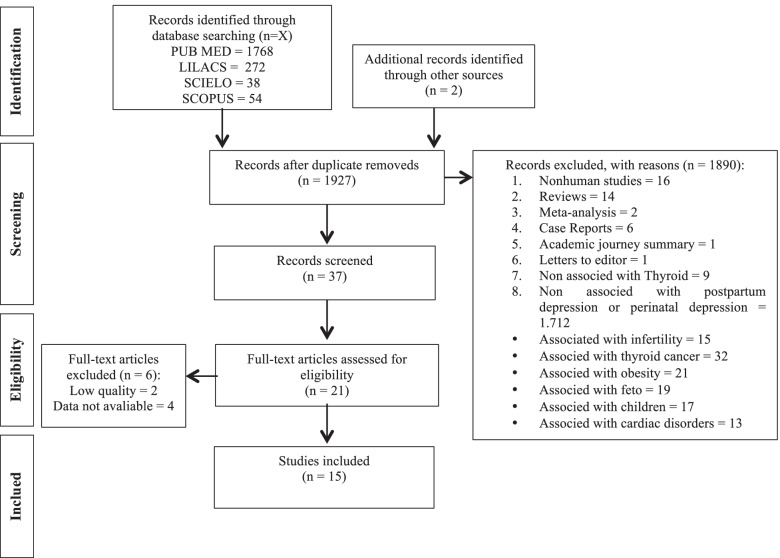
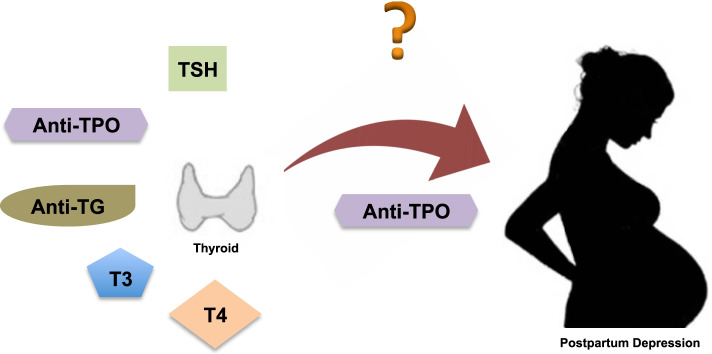
Evidence in the literature has suggested that there may be an association between thyroid antibodies and depression during pregnancy and in the postpartum period. Thus, this study aims to conduct a systematic review on the prevalence of postpartum depression (PPD) in women with thyroid abnormalities during pregnancy or in the postpartum period. For this review, we used four databases (PubMed, Lilacs, Scielo, and Scopus). Fifteen studies were selected; one study used a case-control design, four used a cross-sectional design and ten utilized prospective cohort designs. All studies were restricted to up to 1 year postpartum, and 46.7% focused on a period between immediate postpartum and 6 months postpartum. Estimates of the prevalence of PPD in pregnant women with thyroid disorders ranged between 8.3% and 36.0%. For follow-up studies, the cumulative incidence of self-reported depression from the primary episode in the first postpartum year was 6.3% in a high-city survey. Although some authors consider the status of positive anti-TPO antibodies to be a possible marker of vulnerability to depression , it is not yet possible to conclude whether thyroid function in the pregnancy-puerperal cycle is involved with the development of PPD.
Keywords: Perinatal depression; Postpartum depression; Pregnancy; Thyroid; Thyroid peroxidase antibodies.
© 2022. The Author(s).
Conflict of interest statement
The authors report no potential conflicts of interest.
Figures
References
-
- Theme Filha MM, Ayers S, da Gama SG, Leal MoC. Factors associated with postpartum depressive symptomatology in Brazil: The Birth in Brazil National Research Study, 2011/2012. J Affect Disord. 2016;194:159–67. - PubMed
-
- Zenclussen AC. Adaptive immune responses during pregnancy. Am J Reprod Immunol. 2013;69(4):291–303. - PubMed
Publication types
Grants and funding
LinkOut - more resources
Full Text Sources
