


The Potential Proconvulsant Effects of Cannabis: a Scoping Review
- PMID: 35352276
- PMCID: PMC9198115
- DOI: 10.1007/s13181-022-00886-3
The Potential Proconvulsant Effects of Cannabis: a Scoping Review
Erratum in
-
Correction to: The Potential Proconvulsant Effects of Cannabis: a Scoping Review.J Med Toxicol. 2022 Oct;18(4):357. doi: 10.1007/s13181-022-00895-2. J Med Toxicol. 2022. PMID: 35449497 Free PMC article. No abstract available.
-
Correction to: The Potential Proconvulsant Effects of Cannabis: a Scoping Review.J Med Toxicol. 2023 Jan;19(1):54-60. doi: 10.1007/s13181-022-00915-1. J Med Toxicol. 2023. PMID: 36322377 Free PMC article. No abstract available.
Abstract
Introduction: Cannabis' effect on seizure activity is an emerging topic that remains without consensus and merits further investigation. We therefore performed a scoping review to identify the available evidence and knowledge gaps within the existing literature on cannabis product exposures as a potential cause of seizures in humans.
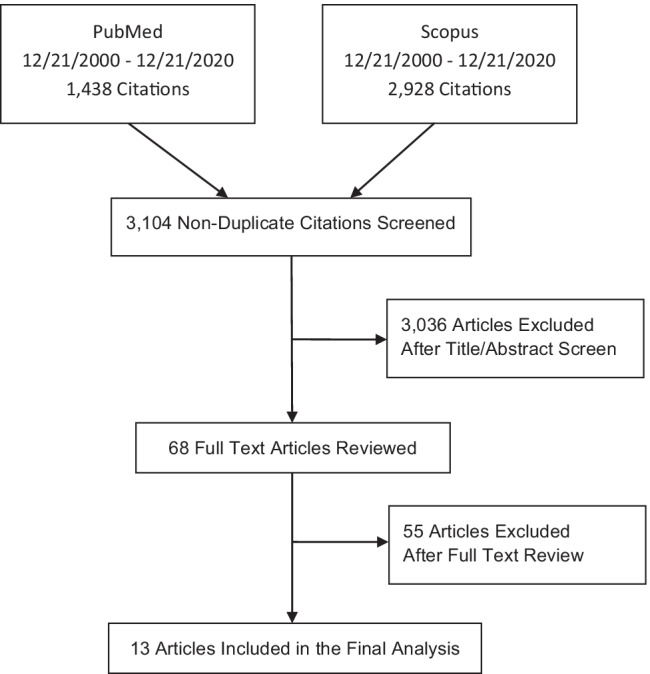
Methods: A scoping review was conducted in accordance with the PRISMA Extension for Scoping Reviews guidelines. The PubMed and Scopus databases were searched over a 20-year period from the date of the database query (12/21/2020). Inclusion criteria were (1) English language original research articles, (2) inclusion of human subjects, and (3) either investigation of seizures as a part of recreational cannabinoid use OR of exogenous cannabinoids as a cause of seizures.
Results: A total of 3104 unique articles were screened, of which 68 underwent full-text review, and 13 met inclusion/exclusion criteria. Ten of 11 studies evaluating acute cannabis exposures reported a higher seizure incidence than would be expected based on the prevalence of epilepsy in the general and pediatric populations (range 0.7-1.2% and 0.3-0.5% respectively). The remaining two studies demonstrated increased seizure frequency and/or seizure-related hospitalization in recreational cannabis users and those with cannabis use disorder.
Conclusions: This scoping review demonstrates that a body of literature describing seizures in the setting of cannabis exposure exists, but it has several limitations. Ten identified studies showed a higher than expected incidence of seizures in populations exposed to cannabis products. Based on the Bradford Hill criteria, delta-9 tetrahydrocannabinol (THC) may be the causative xenobiotic for this phenomenon.
Keywords: Adverse drug reaction; Cannabinoids; Cannabis; Seizures; Toxicity.
© 2022. American College of Medical Toxicology.
Conflict of interest statement
Dr. EK, Dr. KG, Dr. JZ, and Dr. MN declare that they have no conflict of interest.
Dr. LT has received honoraria for speaking and consultation fees for expert testimony both unrelated to this work.
Dr. SC is funded by the NIH/NIDA (K23DA045242).
Figures
References
-
- Hammond D. Communicating THC levels and ‘dose’ to consumers: implications for product labelling and packaging of cannabis products in regulated markets. International J of Drug Policy. 2021;91. - PubMed
Publication types
MeSH terms
Substances
Grants and funding
LinkOut - more resources
Full Text Sources
Miscellaneous
