


Mechanism underlying painful radiculopathy in patients with lumbar disc herniation
- PMID: 35357731
- PMCID: PMC10083974
- DOI: 10.1002/ejp.1947
Mechanism underlying painful radiculopathy in patients with lumbar disc herniation
Abstract
Background: Painful lumbar radiculopathy is a neuropathic pain condition, commonly attributed to nerve root inflammation/compression by disc herniation. The present exploratory study searched for associations between pain intensity and inflammatory markers, herniated disc size, infection, psychological factors and pain modulation in patients with confirmed painful lumbar radiculopathy scheduled for spine surgery.
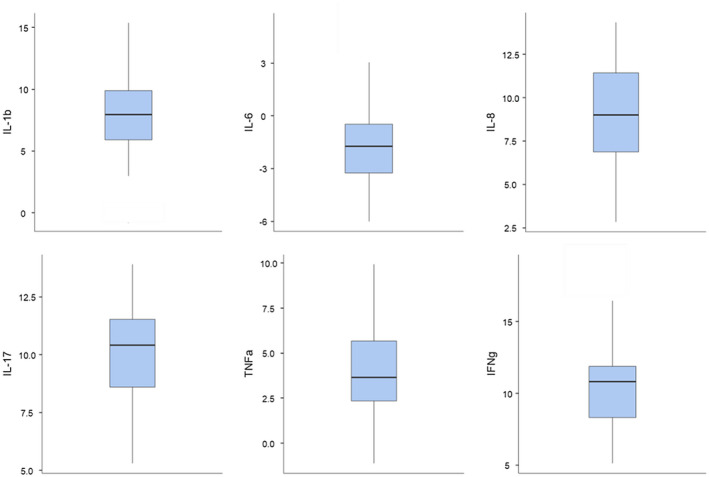
Methods: Prior to surgery, 53 patients underwent the following evaluation: pain intensity measured on a 0-10 numeric rating scale (NRS) and the Short-Form McGill Pain Questionnaire; sensory testing (modified DFNS protocol); pain processing including temporal summation and conditioned pain modulation (CPM); neurological examination; psychological assessment including Spielberger's Anxiety Inventory, Pain Sensitivity Questionnaire and the Pain Catastrophizing Scale. Pro-inflammatory cytokine levels (IL-1b, IL-6, IL-8, IL-17, TNFα, IFNg) and microbial infection (ELISA and rt-PCR) in blood and disc samples obtained during surgery. MRI scans assessments for disc herniation size/volume (MSU classification/ three-dimensional volumetric analysis).
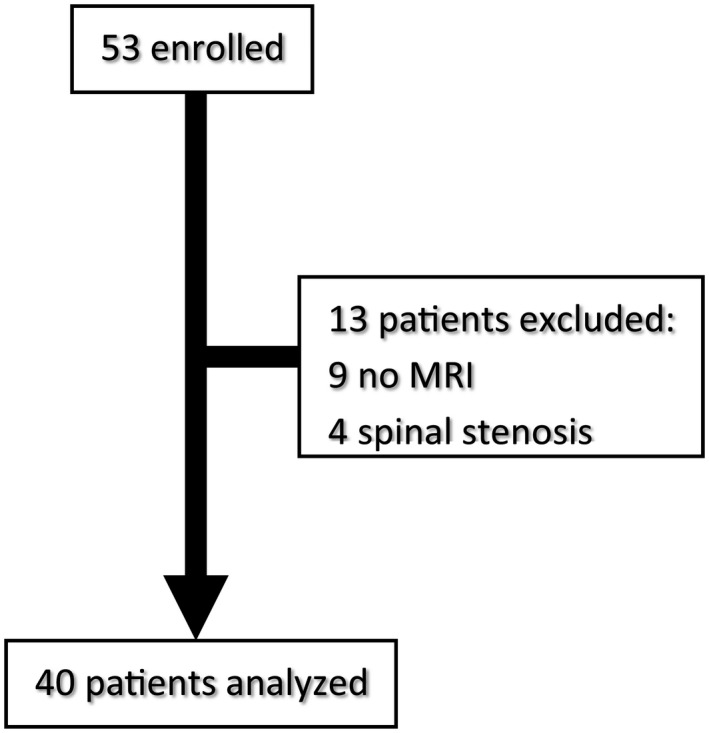
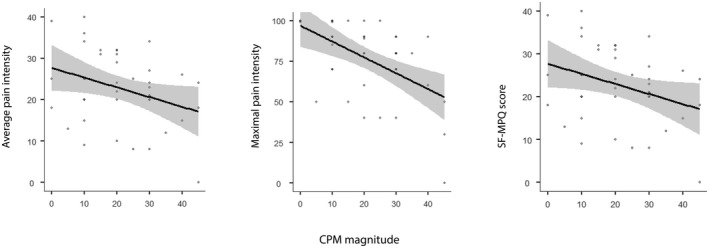
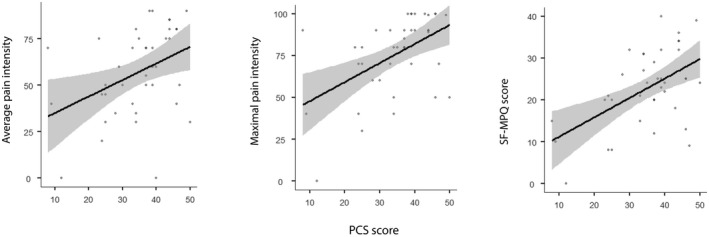
Results: Complete data were available from 40 (75%) patients (15 female) aged 44.8 ± 16.3 years. Pain intensity (NRS) positively correlated with pain catastrophizing and CPM (r = 0.437, p = 0.006; r = 0.421, p = 0.007; respectively), but not with disc/blood cytokine levels, bacterial infection or MRI measures. CPM (p = 0.001) and gender (p = 0.029) were associated with average pain intensity (adjusted R2 = 0.443).
Conclusions: This exploratory study suggests that pain catastrophizing, CPM and gender, seem to contribute to pain intensity in patients with painful lumbar radiculopathy. The role of mechanical compression and inflammation in determining the intensity of painful radiculopathy remains obscure.
Significance of study: Pain catastrophizing, CPM and gender rather than objective measures of inflammation and imaging seem to contribute to pain in patients with painful radiculopathy.
© 2022 The Authors. European Journal of Pain published by John Wiley & Sons Ltd on behalf of European Pain Federation - EFIC ®.
Conflict of interest statement
G. Samuelly‐Leichtag (PhD) reports no disclosures. E. Eisenberg (MD) reports no disclosures. Y. Zohar (MD, PhD) reports no disclosures. M. Andraous (MD) reports no disclosures. A. Eran (MD) reports no disclosures. G. Sviri (MD) reports no disclosures. O. Keynan (MD) reports no disclosures.
Figures
References
-
- Baker, A. D. (2014). Abnormal magnetic‐resonance scans of the lumbar spine in asymptomatic subjects. A prospective investigation. In Banaszkiewicz P. A. & Kader D. F. (Eds.), Classic papers in orthopaedics (pp. 245–247). Springer.
-
- Boos, N. , Semmer, N. , Elfering, A. , Schade, V. , Gal, I. , Zanetti, M. , Kissling, R. , Buchegger, N. , Hodler, J. , & Main, C. J. (2000). Natural history of individuals with asymptomatic disc abnormalities in magnetic resonance imaging: Predictors of low back pain–related medical consultation and work incapacity. Spine, 25(12), 1484–1492. 10.1097/00007632-200006150-00006 - DOI - PubMed
MeSH terms
Substances
LinkOut - more resources
Full Text Sources
Medical
Research Materials
