


Mental Health, Suicidality, and Connectedness Among High School Students During the COVID-19 Pandemic - Adolescent Behaviors and Experiences Survey, United States, January-June 2021
- PMID: 35358165
- PMCID: PMC8979602
- DOI: 10.15585/mmwr.su7103a3
Mental Health, Suicidality, and Connectedness Among High School Students During the COVID-19 Pandemic - Adolescent Behaviors and Experiences Survey, United States, January-June 2021
Abstract
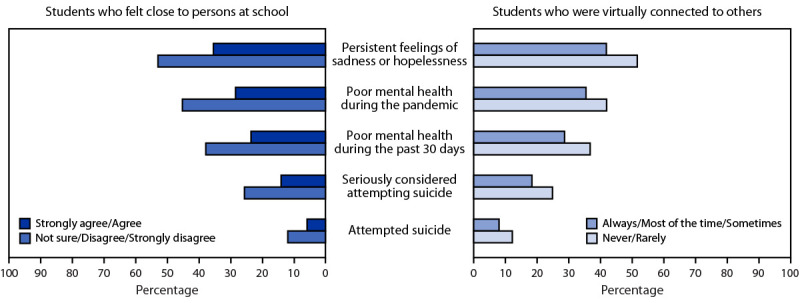
Disruptions and consequences related to the COVID-19 pandemic, including school closures, social isolation, family economic hardship, family loss or illness, and reduced access to health care, raise concerns about their effects on the mental health and well-being of youths. This report uses data from the 2021 Adolescent Behaviors and Experiences Survey, an online survey of a probability-based, nationally representative sample of U.S. public- and private-school students in grades 9-12 (N = 7,705), to assess U.S. high school students' mental health and suicidality during the COVID-19 pandemic. The study also examines whether mental health and suicidality are associated with feeling close to persons at school and being virtually connected to others during the pandemic. Overall, 37.1% of students experienced poor mental health during the pandemic, and 31.1% experienced poor mental health during the preceding 30 days. In addition, during the 12 months before the survey, 44.2% experienced persistent feelings of sadness or hopelessness, 19.9% had seriously considered attempting suicide, and 9.0% had attempted suicide. Compared with those who did not feel close to persons at school, students who felt close to persons at school had a significantly lower prevalence of poor mental health during the pandemic (28.4% versus 45.2%) and during the past 30 days (23.5% versus 37.8%), persistent feelings of sadness or hopelessness (35.4% versus 52.9%), having seriously considered attempting suicide (14.0% versus 25.6%), and having attempted suicide (5.8% versus 11.9%). The same pattern was observed among students who were virtually connected to others during the pandemic (i.e., with family, friends, or other groups by using a computer, telephone, or other device) versus those who were not. Comprehensive strategies that improve feelings of connectedness with others in the family, in the community, and at school might foster improved mental health among youths during and after the COVID-19 pandemic.
Conflict of interest statement
All authors have completed and submitted the International Committee of Medical Journal Editors form for disclosure of potential conflicts of interest. No potential conflicts of interest were disclosed.
Figures
References
-
- Panchal N, Kamal R, Cox C, Garfield R, Chidambaram P. Issue brief: mental health and substance use considerations among children during the COVID-19 pandemic. San Francisco, CA: KFF; 2021. https://www.kff.org/coronavirus-covid-19/issue-brief/mental-health-and-s...
-
- CDC. Youth Risk Behavior Survey: data summary and trends report 2009–2019. Atlanta, GA: US Department of Health and Human Services, CDC; 2021. https://www.cdc.gov/healthyyouth/data/yrbs/pdf/YRBSDataSummaryTrendsRepo...
-
- Bitsko RH, Claussen AH, Lichstein J, et al. Mental health surveillance among children—United States, 2013–2019. MMWR Suppl 71(No. Suppl 2):1–42. https://www.cdc.gov/mmwr/volumes/71/su/su7102a1.htm?s_cid=su7102a1_w - PMC - PubMed
MeSH terms
LinkOut - more resources
Full Text Sources
Medical
Miscellaneous