. 2022 Mar 14:12:852347.
doi: 10.3389/fonc.2022.852347. eCollection 2022.

Cause of Death Among Patients With Thyroid Cancer: A Population-Based Study

Affiliations

Cause of Death Among Patients With Thyroid Cancer: A Population-Based Study

Qian Wang et al. Front Oncol. .

Abstract

Background: Over the last decades, the number of patients diagnosed with thyroid carcinoma has been increasing, highlighting the importance of comprehensively evaluating causes of death among these patients. This study aimed to comprehensively characterize the risk of death and causes of death in patients with thyroid carcinoma.

Methods: A total of 183,641 patients diagnosed with an index thyroid tumor were identified from the Surveillance, Epidemiology, and End Result database (1975-2016). Standardized mortality rates (SMRs) for non-cancer deaths were calculated to evaluate mortality risk and to compare mortality risks with the cancer-free US population. Cumulative mortality rates were calculated to explore the factors associated with higher risk of deaths.

Results: There were 22,386 deaths recorded during follow-up, of which only 31.0% were due to thyroid cancer and 46.4% due to non-cancer causes. Non-cancer mortality risk among patients with thyroid cancer was nearly 1.6-fold (SMR=1.59) that of the general population. Cardiovascular diseases were the leading cause of non-cancer deaths, accounting for 21.3% of all deaths in thyroid cancer patients. Non-cancer causes were the dominant cause of death in thyroid cancer survivors as of the third year post-diagnosis. We found that males with thyroid cancer had a higher risk of all-cause mortality compared with females. The risk of suicide was highest in the first post-diagnostic year (<1 year: SMR=1.51). The long-term risk of Alzheimer's disease was notably increased in thyroid cancer patients (>5 years: SMR=8.27).

Conclusion: Non-cancer comorbidities have become the major risks of death in patients with thyroid tumor in the US, as opposed to death from the tumor itself. Clinicians and researchers should be aware of these risk trends in order to conduct timely intervention strategies.

Keywords: SEER (Surveillance Epidemiology and End Results) database; cause of death; epidemiology; population-based study; thyroid cancer (TC).


Conflict of interest statement

The authors declare that the research was conducted in the absence of any commercial or financial relationships that could be construed as a potential conflict of interest.

Figures
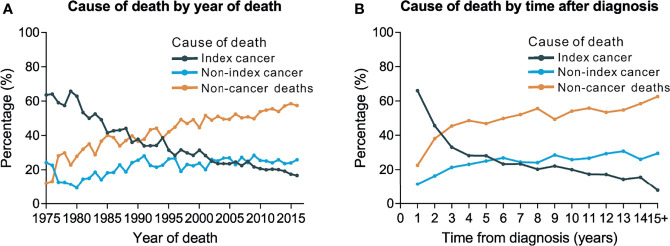
Figure 1
Figure 1
Trends of cause of death by year of death and time after diagnosis. (A) Trends of cause of death by year of death among patients with thyroid cancer. (B) Trends of cause of death by time after diagnosis.
Figure 2
Figure 2
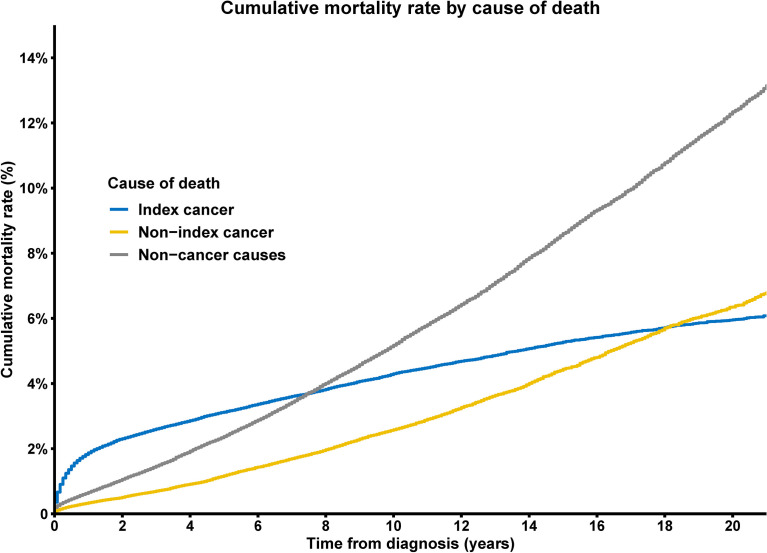
Cumulative mortality rate of deaths from index cancer, non-index cancer and other non-cancer causes among patients with thyroid cancer.
Figure 3
Figure 3
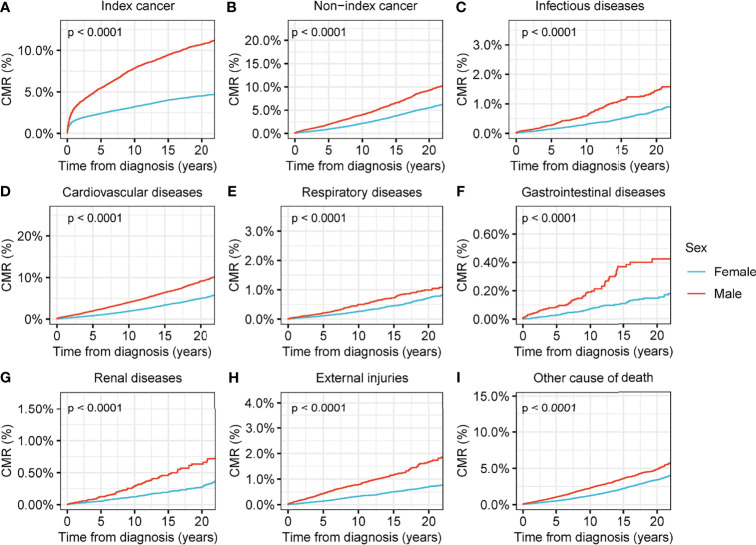
Cumulative mortality rate (CMR) among patients with thyroid cancer by sex. (A) CMR from index cancer among patients with thyroid cancer by sex. (B) CMR from non-index cancer among patients with thyroid cancer by sex. (C) CMR from infectious diseases among patients with thyroid cancer by sex. (D) CMR from cardiovascular diseases among patients with thyroid cancer by sex. (E) CMR from respiratory diseases among patients with thyroid cancer by sex. (F) CMR from gastrointestinal diseases among patients with thyroid cancer by sex. (G) CMR from renal diseases among patients with thyroid cancer by sex. (H) CMR from external injuries among patients with thyroid cancer by sex. (I) CMR from other non-cancer causes among patients with thyroid cancer by sex.
Figure 4
Figure 4
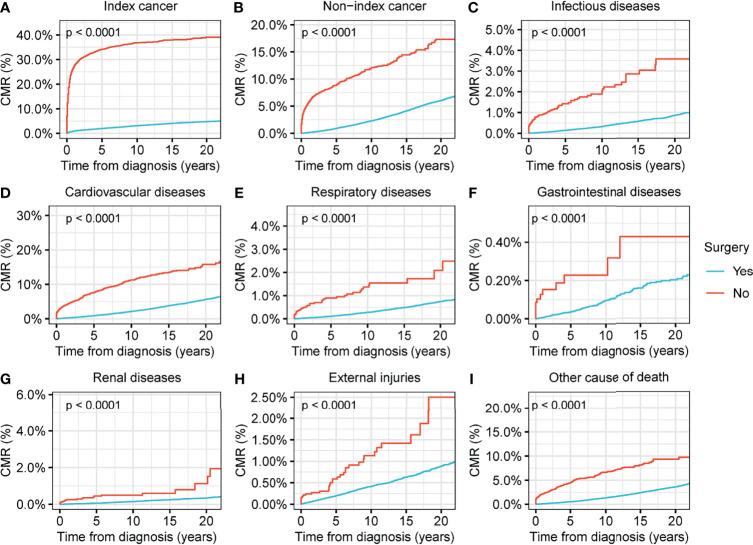
Cumulative mortality rate (CMR) among patients with thyroid cancer by surgery. (A) CMR from index cancer among patients with thyroid cancer by surgery. (B) CMR from non-index cancer among patients with thyroid cancer by surgery. (C) CMR from infectious diseases among patients with thyroid cancer by surgery. (D) CMR from cardiovascular diseases among patients with thyroid cancer by surgery. (E) CMR from respiratory diseases among patients with thyroid cancer by surgery. (F) CMR from gastrointestinal diseases among patients with thyroid cancer by surgery. (G) CMR from renal diseases among patients with thyroid cancer by surgery. (H) CMR from external injuries among patients with thyroid cancer by surgery. (I) CMR from other non-cancer causes among patients with thyroid cancer by surgery.
Figure 5
Figure 5
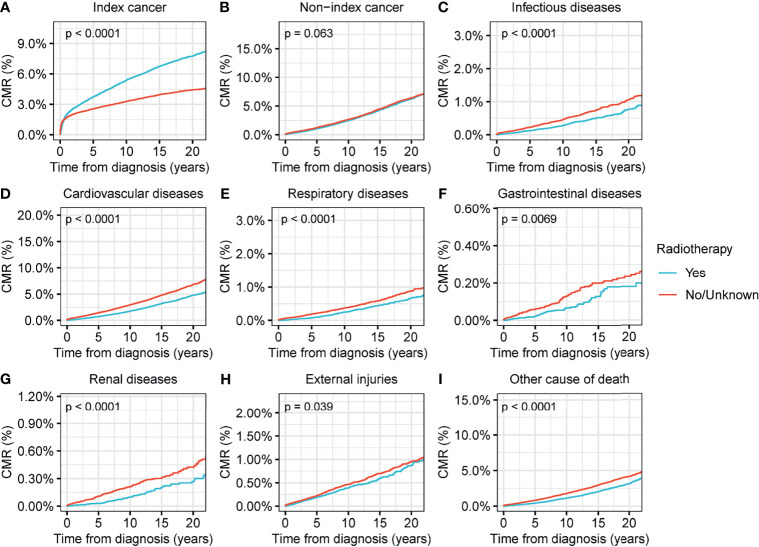
Cumulative mortality rate (CMR) among patients with thyroid cancer by radiotherapy. (A) CMR from index cancer among patients with thyroid cancer by radiotherapy. (B) CMR from non-index cancer among patients with thyroid cancer by radiotherapy. (C) CMR from infectious diseases among patients with thyroid cancer by radiotherapy. (D) CMR from cardiovascular diseases among patients with thyroid cancer by radiotherapy. (E) CMR from respiratory diseases among patients with thyroid cancer by radiotherapy. (F) CMR from gastrointestinal diseases among patients with thyroid cancer by radiotherapy. (G) CMR from renal diseases among patients with thyroid cancer by surgery. (H) CMR from external injuries among patients with thyroid cancer by radiotherapy. (I) CMR from other non-cancer causes among patients with thyroid cancer by radiotherapy.

References

    1. Seib CD, Sosa JA. Evolving Understanding of the Epidemiology of Thyroid Cancer. Endocrinol Metab Clin North Am (2019) 48(1):23–35. doi: 10.1016/j.ecl.2018.10.002 - DOI - PubMed
    1. Sung H, Ferlay J, Siegel RL, Laversanne M, Soerjomataram I, Jemal A, et al. Global Cancer Statistics 2020: GLOBOCAN Estimates of Incidence and Mortality Worldwide for 36 Cancers in 185 Countries. CA Cancer J Clin (2021) 71(3):209–49. doi: 10.3322/caac.21660 - DOI - PubMed
    1. Roman BR, Morris LG, Davies L. The Thyroid Cancer Epidemic, 2017 Perspective. Curr Opin Endocrinol Diabetes Obes (2017) 24(5):332–6. doi: 10.1097/MED.0000000000000359 - DOI - PMC - PubMed
    1. Davies L, Welch HG. Current Thyroid Cancer Trends in the United States. JAMA Otolaryngol Head Neck Surg (2014) 140(4):317–22. doi: 10.1001/jamaoto.2014.1 - DOI - PubMed
    1. Lim H, Devesa SS, Sosa JA, Check D, Kitahara CM. Trends in Thyroid Cancer Incidence and Mortality in the United States, 1974-2013. JAMA (2017) 317(13):1338–48. doi: 10.1001/jama.2017.2719 - DOI - PMC - PubMed

LinkOut - more resources