


Assessing the Relationship of Patient Reported Outcome Measures With Functional Status in Dysferlinopathy: A Rasch Analysis Approach
- PMID: 35359643
- PMCID: PMC8961025
- DOI: 10.3389/fneur.2022.828525
Assessing the Relationship of Patient Reported Outcome Measures With Functional Status in Dysferlinopathy: A Rasch Analysis Approach
Abstract
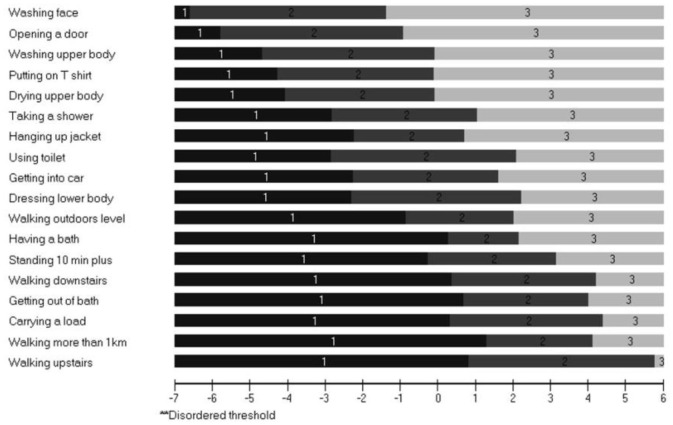
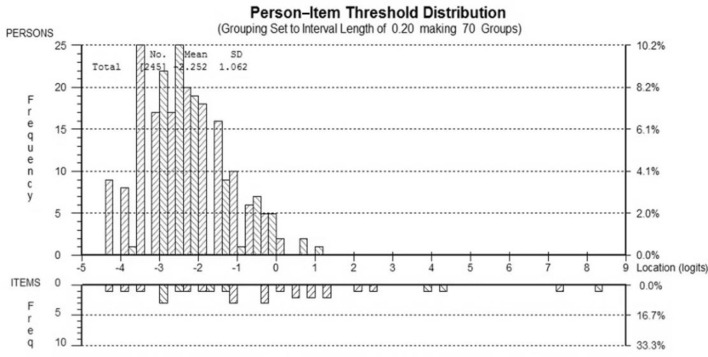
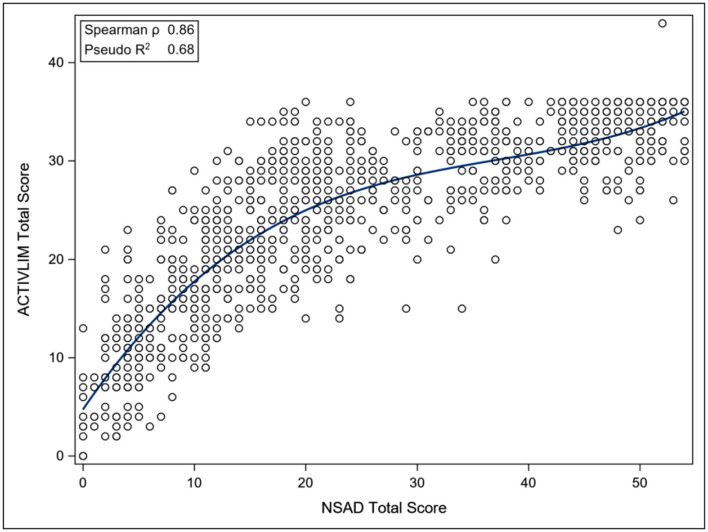
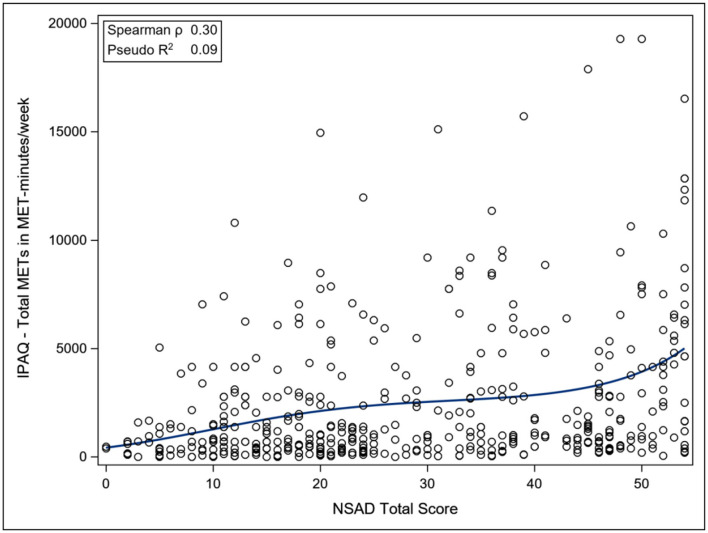
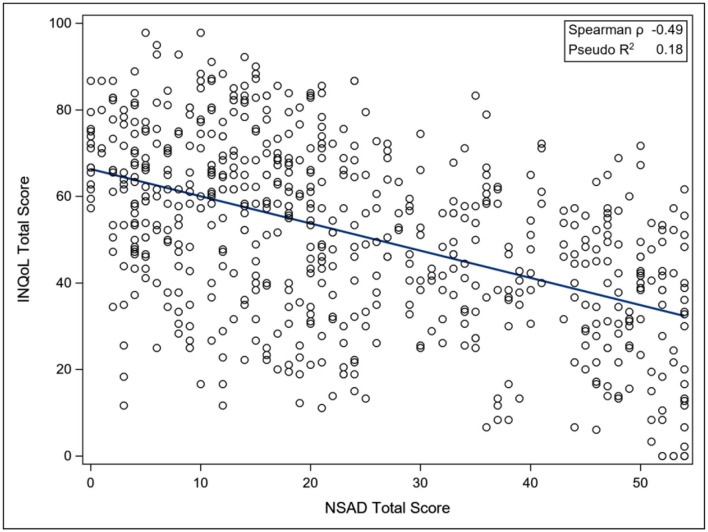
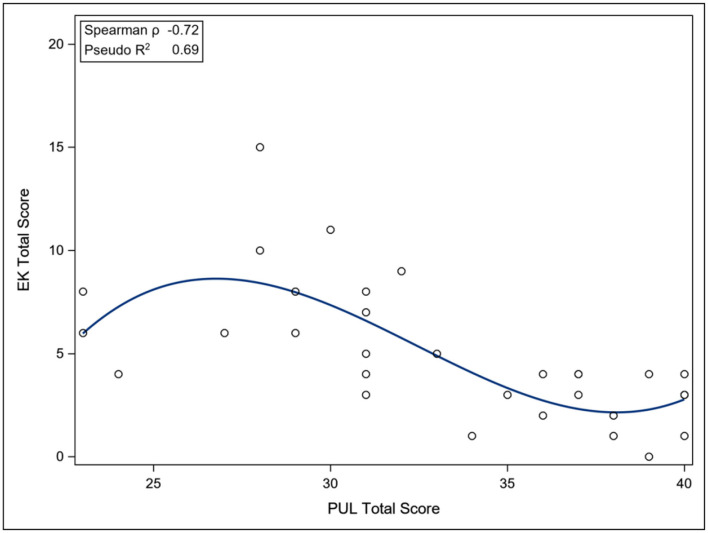
Dysferlinopathy is a muscular dystrophy with a highly variable functional disease progression in which the relationship of function to some patient reported outcome measures (PROMs) has not been previously reported. This analysis aims to identify the suitability of PROMs and their association with motor performance.Two-hundred and four patients with dysferlinopathy were identified in the Jain Foundation's Clinical Outcome Study in Dysferlinopathy from 14 sites in 8 countries. All patients completed the following PROMs: Individualized Neuromuscular Quality of Life Questionnaire (INQoL), International Physical Activity Questionnaire (IPAQ), and activity limitations for patients with upper and/or lower limb impairments (ACTIVLIMs). In addition, nonambulant patients completed the Egen Klassifikation Scale (EK). Assessments were conducted annually at baseline, years 1, 2, 3, and 4. Data were also collected on the North Star Assessment for Limb Girdle Type Muscular Dystrophies (NSAD) and Performance of Upper Limb (PUL) at these time points from year 2. Data were analyzed using descriptive statistics and Rasch analysis was conducted on ACTIVLIM, EK, INQoL. For associations, graphs (NSAD with ACTIVLIM, IPAQ and INQoL and EK with PUL) were generated from generalized estimating equations (GEE). The ACTIVLIM appeared robust psychometrically and was strongly associated with the NSAD total score (Pseudo R 2 0.68). The INQoL performed less well and was poorly associated with the NSAD total score (Pseudo R 2 0.18). EK scores were strongly associated with PUL (Pseudo R 2 0.69). IPAQ was poorly associated with NSAD scores (Pseudo R 2 0.09). This study showed that several of the chosen PROMs demonstrated change over time and a good association with functional outcomes. An alternative quality of life measure and method of collecting data on physical activity may need to be selected for assessing dysferlinopathy.
Keywords: PROMs; clinical outcome assessments; dysferlinopathy; limb girdle muscular dystrophy; quality of life.
Copyright © 2022 Mayhew, James, Moore, Sutherland, Jacobs, Feng, Lowes, Alfano, Muni Lofra, Rufibach, Rose, Duong, Bello, Pedrosa-Hernández, Holsten, Sakamoto, Canal, Sánchez-Aguilera Práxedes, Thiele, Siener, Vandevelde, DeWolf, Maron, Gordish-Dressman, Hilsden, Guglieri, Hogrel, Blamire, Carlier, Spuler, Day, Jones, Bharucha-Goebel, Salort-Campana, Pestronk, Walter, Paradas, Stojkovic, Mori-Yoshimura, Bravver, Díaz-Manera, Pegoraro, Mendell and Straub.
Conflict of interest statement
MJ receives fee support for PhD studies from the Jain Foundation. The remaining authors declare that the research was conducted in the absence of any commercial or financial relationships that could be construed as a potential conflict of interest.
Figures
References
LinkOut - more resources
Full Text Sources
Research Materials
