


Menopausal Impact on the Association Between Thyroid Dysfunction and Lipid Profiles: A Cross-Sectional Study
- PMID: 35360082
- PMCID: PMC8964097
- DOI: 10.3389/fendo.2022.853889
Menopausal Impact on the Association Between Thyroid Dysfunction and Lipid Profiles: A Cross-Sectional Study
Abstract
Background: Both dyslipidemia and thyroid dysfunction have a high prevalence rate and are important risk factors for cardiovascular diseases. However, the relationship between blood lipids and thyroid dysfunction is still controversial. This study aims to analyze the blood lipids in people with different thyroid functions.
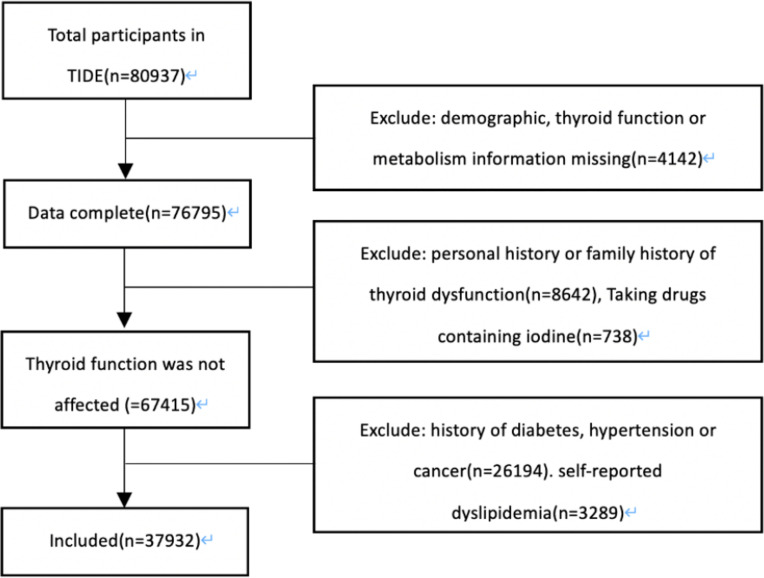
Methods: A total of 80937 adults were included in this population-based cross-sectional TIDE survey, which collected demographic and clinical data on thyroid function, blood lipid levels and other metabolic indicators. After screening, the final analysis included 10,747 participants, who were divided into hypothyroidism (n=311), subclinical hypothyroidism (n=5015), hyperthyroidism (n=203), subclinical hyperthyroidism (n=118) and control (n=5100) groups. The risk of dyslipidemia was analyzed by a logistic regression model and divided into groups of female menopausal.
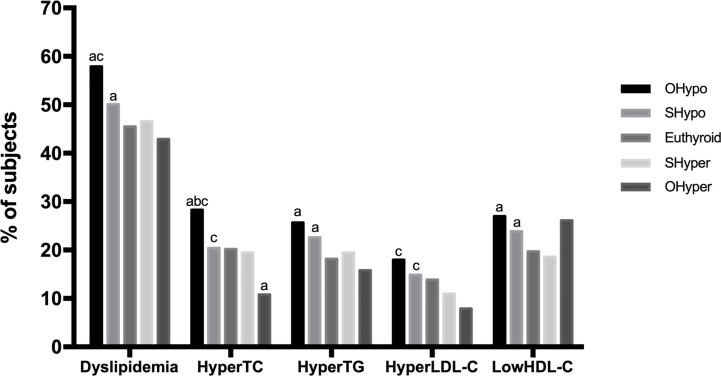
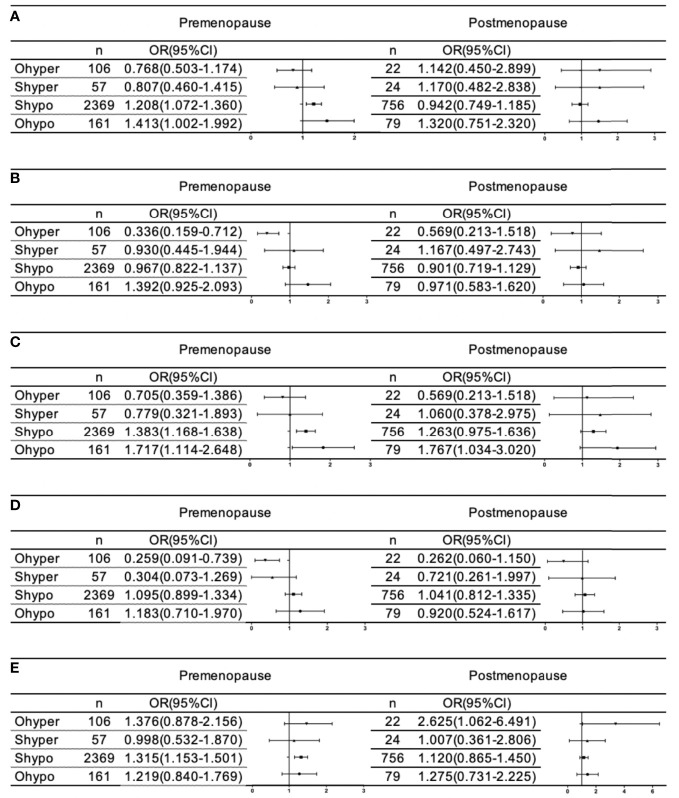
Results: After full adjustment, significant associations were found between hypothyroidism and hypertriglyceridemia. Subclinical hypothyroidism was associated with a significantly higher risk of hypertriglyceridemia and hyper-low density lipoprotein cholesterolemia. Hyperthyroidism was significantly correlated with a reduced risk of hypercholesterolemia and hyper-low density lipoprotein cholesterolemia but positively correlated with the risk of low-high density lipoprotein cholesterolemia. There was no significant association between subclinical hyperthyroidism and blood lipids. Hypothyroidism increased the risk of hypertriglyceridemia in both premenopausal and postmenopausal females. Subclinical hypothyroidism was significantly associated with increased hypertriglyceridemia and low-high density lipoprotein cholesterolemia in premenopausal females. Hyperthyroidism was significantly associated with a reduced risk of hypercholesterolemia and hyper-low density lipoprotein cholesterolemia in premenopausal females and an increased risk of low-high density lipoprotein cholesterolemia in postmenopausal female.
Conclusion: Abnormal thyroid function has an important effect on blood lipids and is closely related to female menopause.
Keywords: blood lipids; dyslipidemia; hypercholesterolemia; menopause; subclinical hypothyroidism; thyroid function.
Copyright © 2022 Han, Wang, Zhang, Zhu, Zhu, Li, Teng, Teng and Shan.
Conflict of interest statement
The authors declare that the research was conducted in the absence of any commercial or financial relationships that could be construed as a potential conflict of interest.
Figures
References
-
- Sigal GA, Tavoni TM, Silva BMO, Kalil Filho R, Brandão LG, Maranhão RC, et al. Effects of Short-Term Hypothyroidism on the Lipid Transfer to High-Density Lipoprotein and Other Parameters Related to Lipoprotein Metabolism in Patients Submitted to Thyroidectomy for Thyroid Cancer. Thyroid (2019) 29:53–8. doi: 10.1089/thy.2018.0190 - DOI - PubMed
-
- Bell RJ, Davison SL, Topliss DJ, Donath S, Davis SR, Rivera-Woll L, et al. Well-Being, Health-Related Quality of Life and Cardiovascular Disease Risk Profile in Women With Subclinical Thyroid Disease? A Community-Based Study. Clin Endocrinol (2007) 66:548–56. doi: 10.1111/j.1365-2265.2007.02771.x - DOI - PubMed
MeSH terms
Substances
LinkOut - more resources
Full Text Sources
Medical
