


Diagnosis of osteoarthritic changes, loss of cervical lordosis, and disc space narrowing on cervical radiographs with deep learning methods
- PMID: 35361083
- PMCID: PMC9057548
- DOI: 10.52312/jdrs.2022.445
Diagnosis of osteoarthritic changes, loss of cervical lordosis, and disc space narrowing on cervical radiographs with deep learning methods
Abstract
Objectives: In this study, we aimed to differentiate normal cervical graphs and graphs of diseases that cause mechanical neck pain by using deep convolutional neural networks (DCNN) technology.
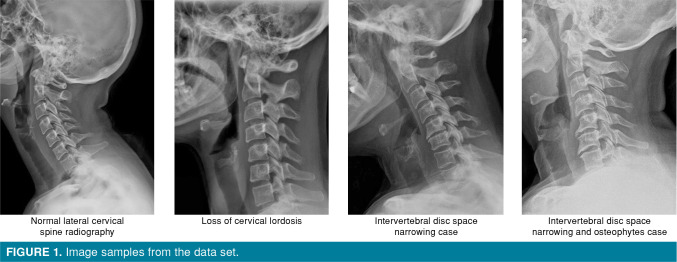
Materials and methods: In this retrospective study, the convolutional neural networks were used and transfer learning method was applied with the pre-trained VGG-16, VGG-19, Resnet-101, and DenseNet-201 networks. Our data set consisted of 161 normal lateral cervical radiographs and 170 lateral cervical radiographs with osteoarthritis and cervical degenerative disc disease.
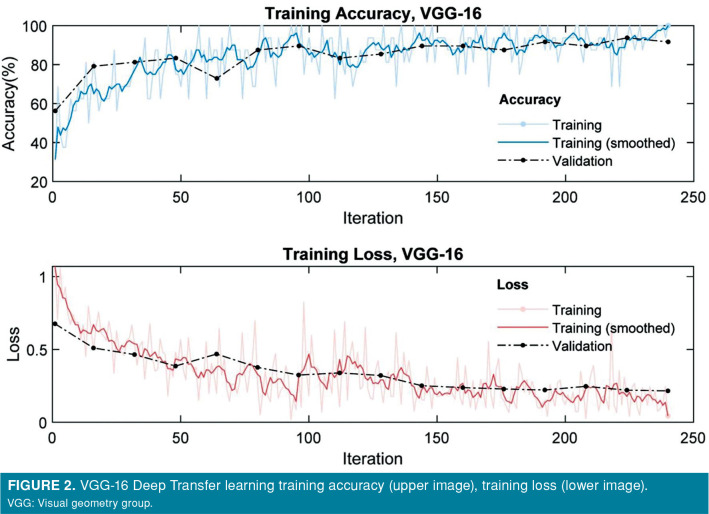
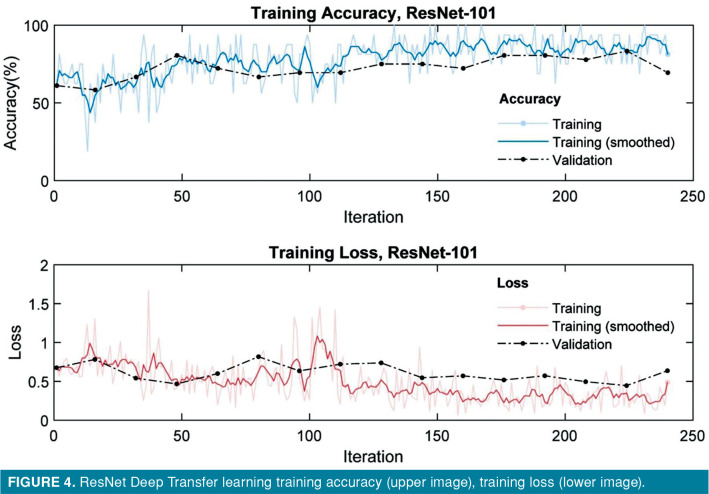
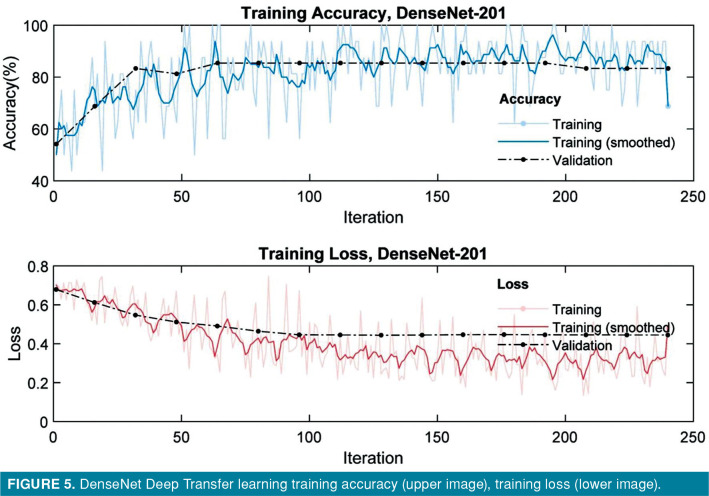
Results: We compared the performances of the classification models in terms of performance metrics such as accuracy, sensitivity, specificity, and precision metrics. Pre-trained VGG-16 network outperformed other models in terms of accuracy (93.9%), sensitivity (95.8%), specificity (92.0%), and precision (92.0%) results.
Conclusion: The results of this study suggest that the deep learning methods are promising support tool in automated control of cervical graphs using the DCNN and the exclusion of normal graphs. Such a supportive tool may reduce the diagnosis time and provide radiologists or clinicians to have more time to interpret abnormal graphs.
Conflict of interest statement
Figures


References
-
- Cohen SP. Epidemiology, diagnosis, and treatment of neck pain. Mayo Clin Proc. 2015;90:284–299. - PubMed
-
- Kerlikowske K, Carney PA, Geller B, Mandelson MT, Taplin SH, Malvin K, et al. Performance of screening mammography among women with and without a firstdegree relative with breast cancer. Ann Intern Med. 2000;133:855–863. - PubMed
MeSH terms
LinkOut - more resources
Full Text Sources
