Coordinated regulation of RNA polymerase II pausing and elongation progression by PAF1
- PMID: 35363521
- PMCID: PMC11093130
- DOI: 10.1126/sciadv.abm5504
Coordinated regulation of RNA polymerase II pausing and elongation progression by PAF1
Abstract
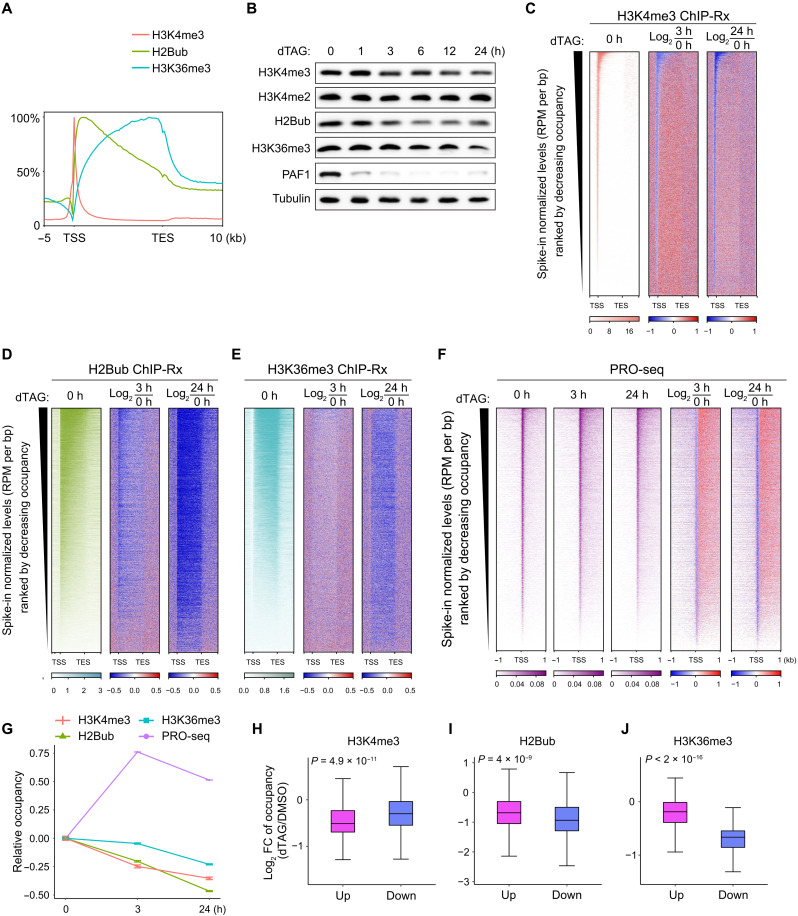
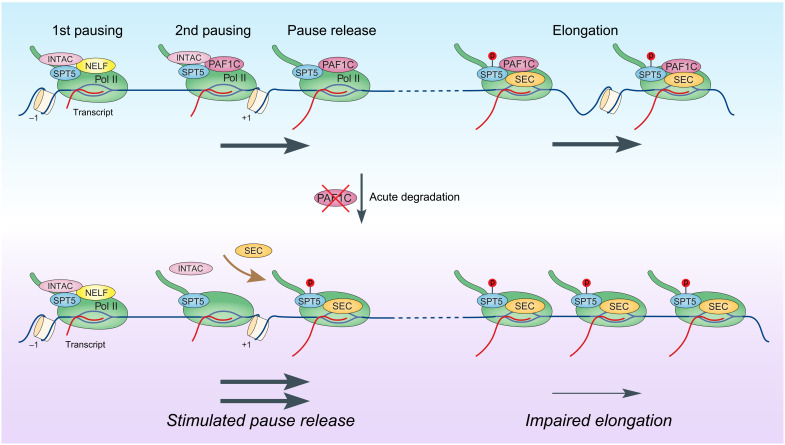
Pleiotropic transcription regulator RNA polymerase II (Pol II)-associated factor 1 (PAF1) governs multiple transcriptional steps and the deposition of several epigenetic marks. However, it remains unclear how ultimate transcriptional outcome is determined by PAF1 and whether it relates to PAF1-controlled epigenetic marks. We use rapid degradation systems and reveal direct PAF1 functions in governing pausing partially by recruiting Integrator-PP2A (INTAC), in addition to ensuring elongation. Following acute PAF1 degradation, most destabilized polymerase undergoes effective release, which presumably relies on skewed balance between INTAC and P-TEFb, resulting in hyperphosphorylated substrates including SPT5. Impaired Pol II progression during elongation, along with altered pause release frequency, determines the final transcriptional outputs. Moreover, PAF1 degradation causes a cumulative decline in histone modifications. These epigenetic alterations in chromatin likely further influence the production of transcripts from PAF1 target genes.
Figures
References
-
- Chen F. X., Smith E. R., Shilatifard A., Born to run: Control of transcription elongation by RNA polymerase II. Nat. Rev. Mol. Cell Biol. 19, 464–478 (2018). - PubMed
-
- Cramer P., Organization and regulation of gene transcription. Nature 573, 45–54 (2019). - PubMed
-
- Noe Gonzalez M., Blears D., Svejstrup J. Q., Causes and consequences of RNA polymerase II stalling during transcript elongation. Nat. Rev. Mol. Cell Biol. 22, 3–21 (2021). - PubMed
LinkOut - more resources
Full Text Sources
Other Literature Sources
Molecular Biology Databases