


Discontinuation, suboptimal adherence, and reinitiation of oral HIV pre-exposure prophylaxis: a global systematic review and meta-analysis
- PMID: 35364026
- PMCID: PMC9124596
- DOI: 10.1016/S2352-3018(22)00030-3
Discontinuation, suboptimal adherence, and reinitiation of oral HIV pre-exposure prophylaxis: a global systematic review and meta-analysis
Abstract
Background: Poor adherence to oral HIV pre-exposure prophylaxis (PrEP) diminishes its clinical and public health benefits. This study synthesises evidence regarding discontinuation, adherence, and reinitiation of PrEP among geographically diverse PrEP users.
Methods: We did a systematic review and meta-analysis evaluating studies published in MEDLINE, Embase, and Cochrane Central Register of Controlled Trials from inception to Dec 18, 2020. We included longitudinal studies that presented data for PrEP discontinuation, defined as investigator-reported loss to follow-up or participant self-reported PrEP stoppage. Data were extracted from published reports and assessed for risk of bias. We used a random-effects meta-analysis to pool estimates of discontinuation and I2 and τ2 to evaluate heterogeneity. This study is registered with PROSPERO, CRD42020155675.
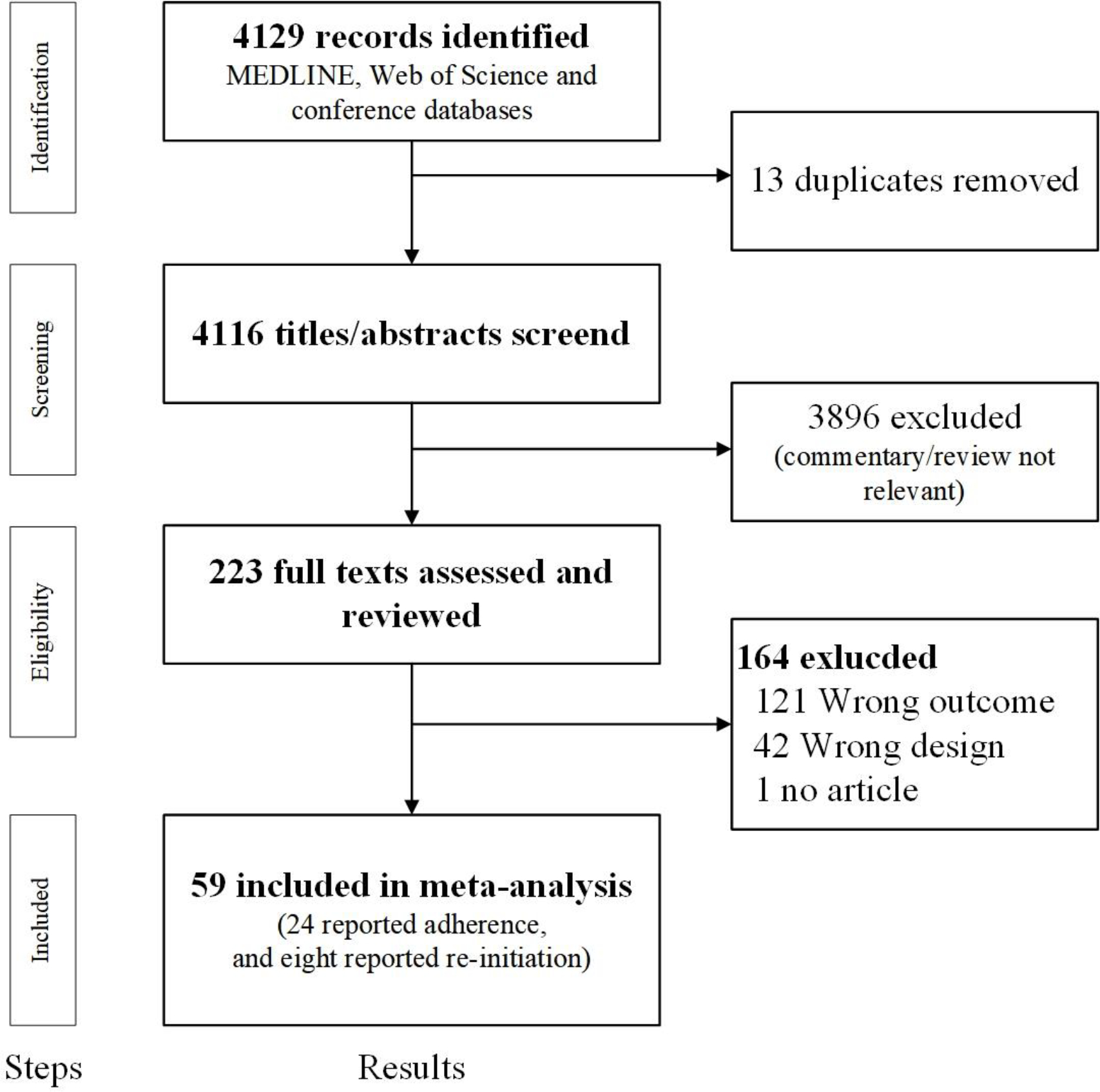
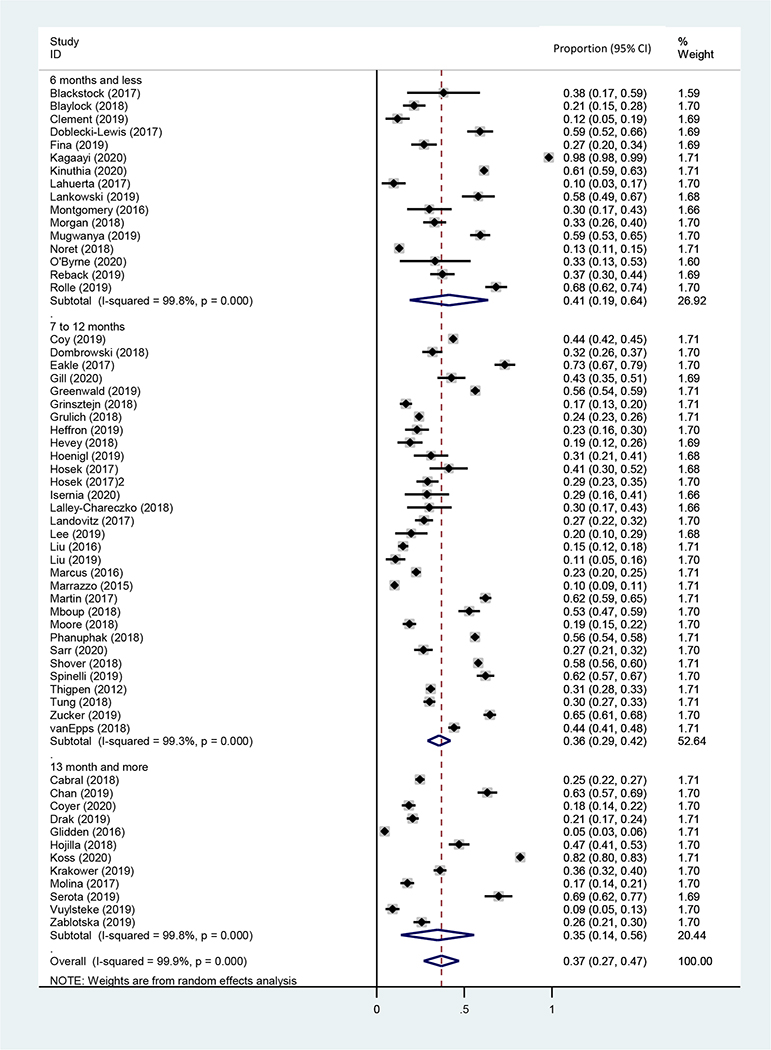
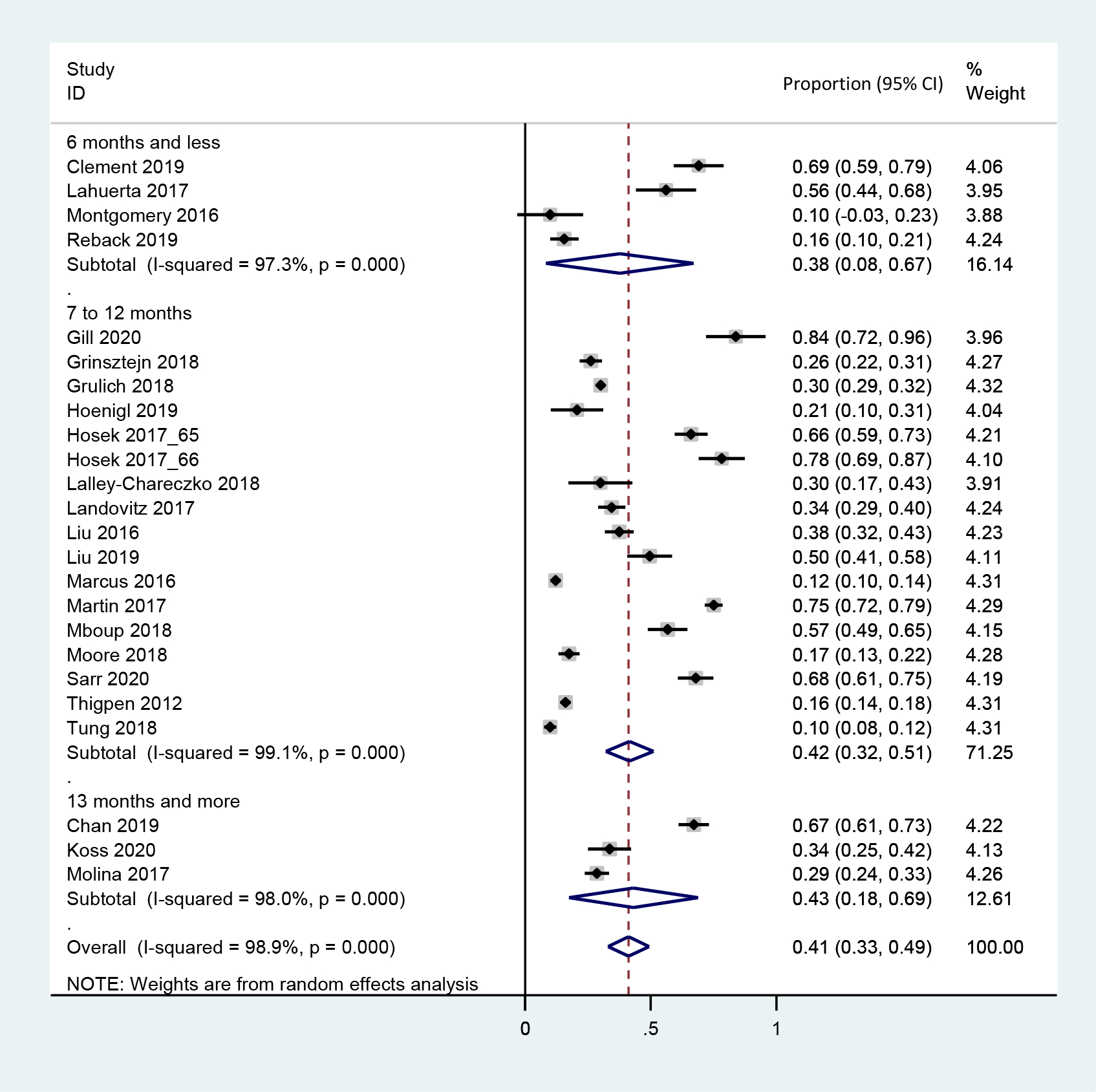
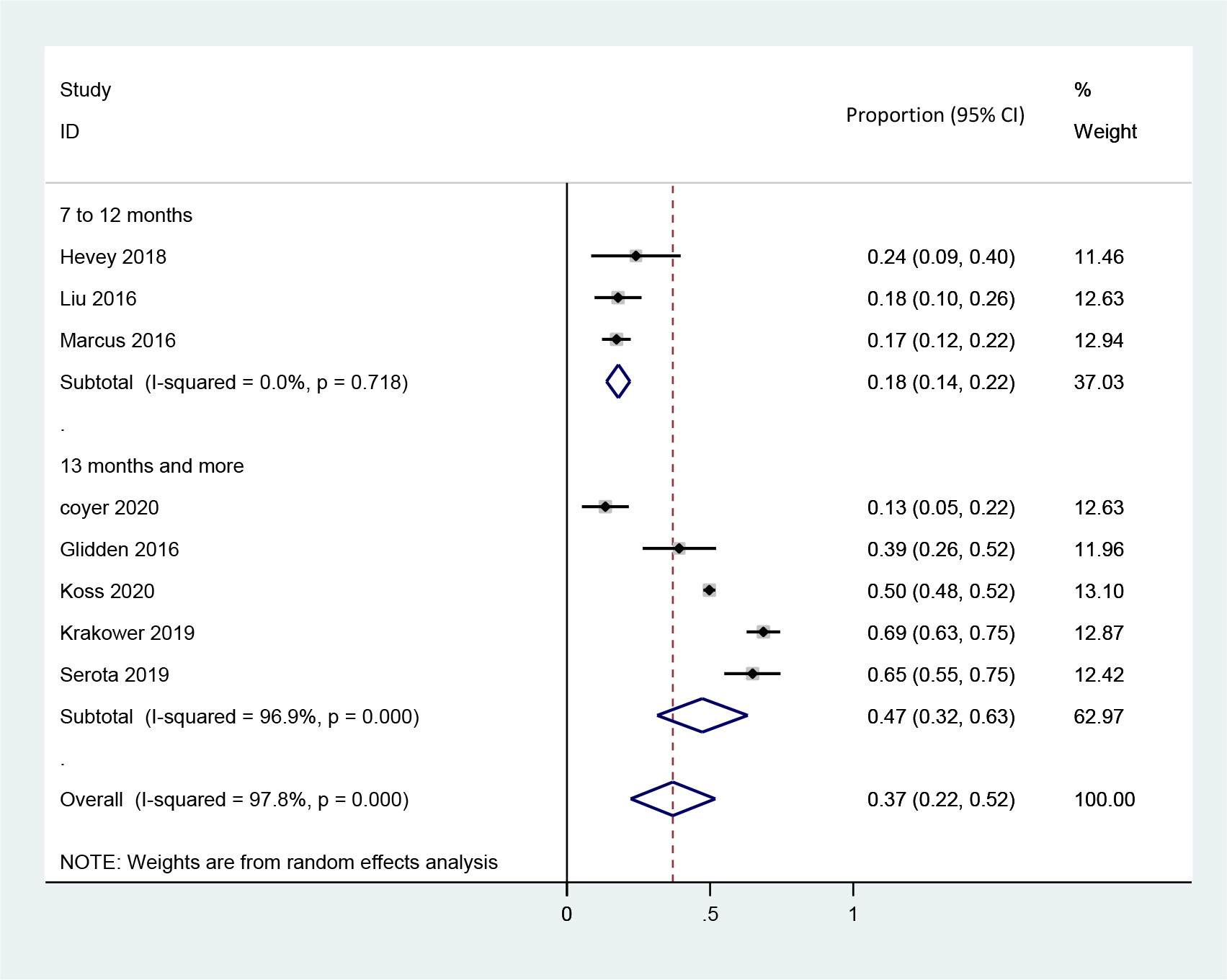
Findings: We identified 4129 records, of which 59 articles were included (n=43 917 participants). 41·0% (95% CI 18·8-63·5) of participants discontinued PrEP within 6 months, with the highest rates in observational studies. The discontinuation rate in sub-Saharan Africa (47·5%, 95% CI: 29·4-66·4%) was higher than in other regions (p<0·001). Discontinuation rates were lower in studies with adherence interventions than in those without (24·7% vs 36·7%, p=0·015). Gay or bisexual men who have sex with men and transgender women offered daily or non-daily dosing options had lower discontinuation rates than those offered daily dosing alone (21·6% vs 31·5%; p<0·001). The pooled suboptimal adherence within 6 months was 37·7% (95% CI 8·4-66·9). Among people who discontinued PrEP, 47·3% (95% CI 31·5-63·2) reinitiated PrEP within 1 year of PrEP initiation. The included studies had poor quality in terms of study design, with a moderate risk of bias.
Interpretation: Strategies to encourage reinitiating PrEP for new or persistent risk should be a focus of future PrEP implementation strategies.
Funding: National Institutes of Health and Nature Science Foundation of China.
Copyright © 2022 Elsevier Ltd. All rights reserved.
Conflict of interest statement
Declaration of interests We declare no competing interests.
Figures
Comment in
-
Making PrEP easy.Lancet HIV. 2022 Apr;9(4):e226-e228. doi: 10.1016/S2352-3018(22)00036-4. Lancet HIV. 2022. PMID: 35364024 No abstract available.
References
-
- Molina JM, Capitant C, Spire B, et al. On-Demand Preexposure Prophylaxis in Men at High Risk for HIV-1 Infection. The New England journal of medicine 2015; 373(23): 2237–46. - PubMed
-
- Mayer KH, Molina JM, Thompson MA, et al. Emtricitabine and tenofovir alafenamide vs emtricitabine and tenofovir disoproxil fumarate for HIV pre-exposure prophylaxis (DISCOVER): primary results from a randomised, double-blind, multicentre, active-controlled, phase 3, non-inferiority trial. Lancet 2020; 396(10246): 239–54. - PMC - PubMed
Publication types
MeSH terms
Substances
Grants and funding
LinkOut - more resources
Full Text Sources
Medical
Research Materials
Miscellaneous
