


Proteome profiling reveals changes in energy metabolism, transport and antioxidation during drought stress in Nostoc flagelliforme
- PMID: 35365086
- PMCID: PMC8973743
- DOI: 10.1186/s12870-022-03542-8
Proteome profiling reveals changes in energy metabolism, transport and antioxidation during drought stress in Nostoc flagelliforme
Abstract
Background: Drought is an important abiotic stress that constrains the growth of many species. Despite extensive study in model organisms, the underlying mechanisms of drought tolerance in Nostoc flagelliforme remain elusive.
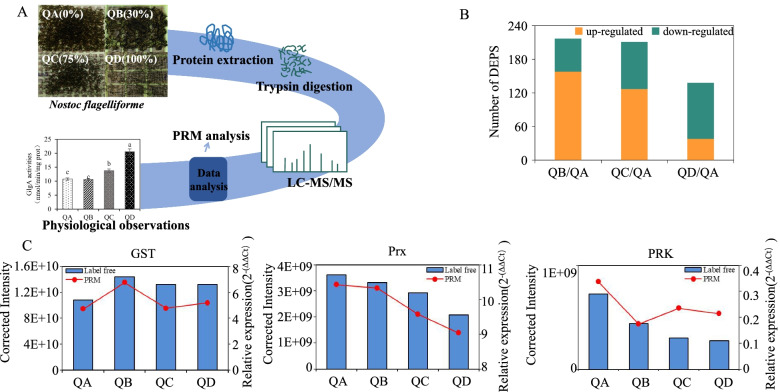
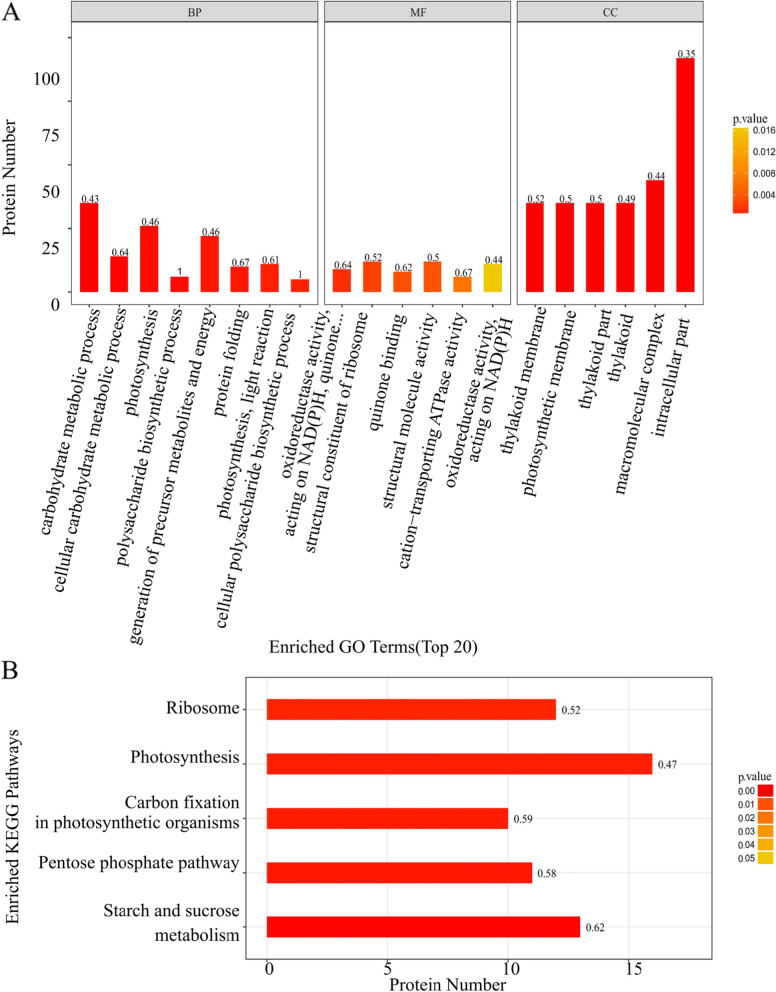
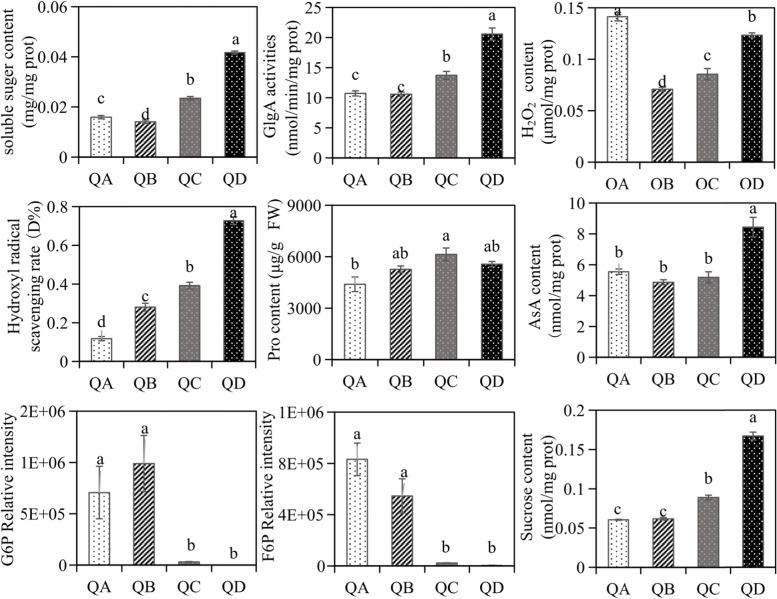
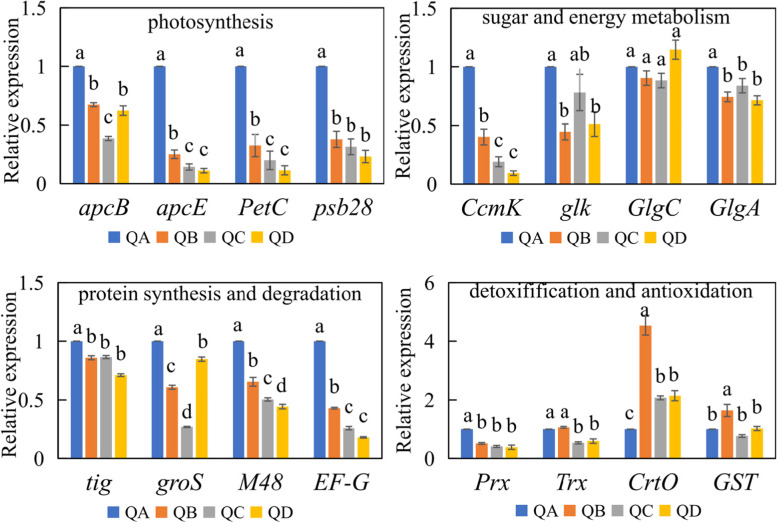
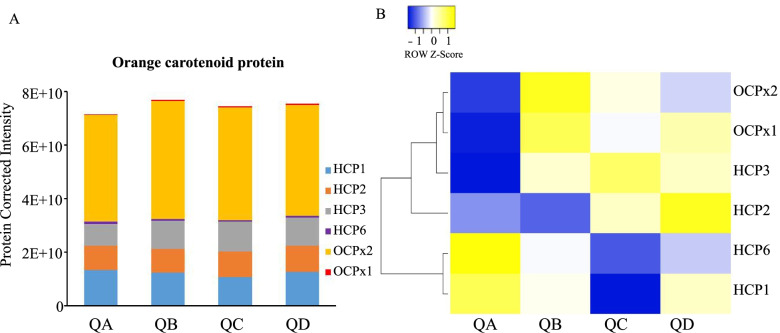
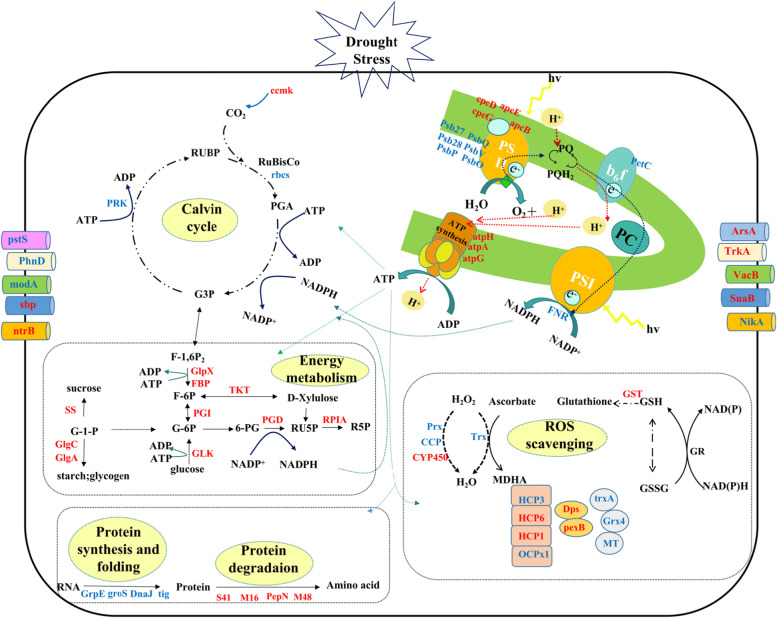
Results: We characterized the drought adaptation of N. flagelliforme by a combination of proteomics and qRT-PCR. A total of 351 differentially expressed proteins involved in drought stress adaptation were identified. It was found that the expression of several nutrient influx transporters was increased, including molybdate ABC transporter substrate binding protein (modA), sulfate ABC transporter substrate-binding protein (sbp) and nitrate ABC transporter (ntrB), while that of efflux transporters for toxic substances was also increased, including arsenic transporting ATPase (ArsA), potassium transporter (TrkA) and iron ABC transporter substrate-binding protein (VacB). Additionally, photosynthetic components were reduced while sugars built up during drought stress. Non-enzymatic antioxidants, orange carotenoid protein (OCP) homologs, cytochrome P450 (CYP450), proline (Pro) and ascorbic acid (AsA) were all altered during drought stress and may play important roles in scavenging reactive oxygen species (ROS).
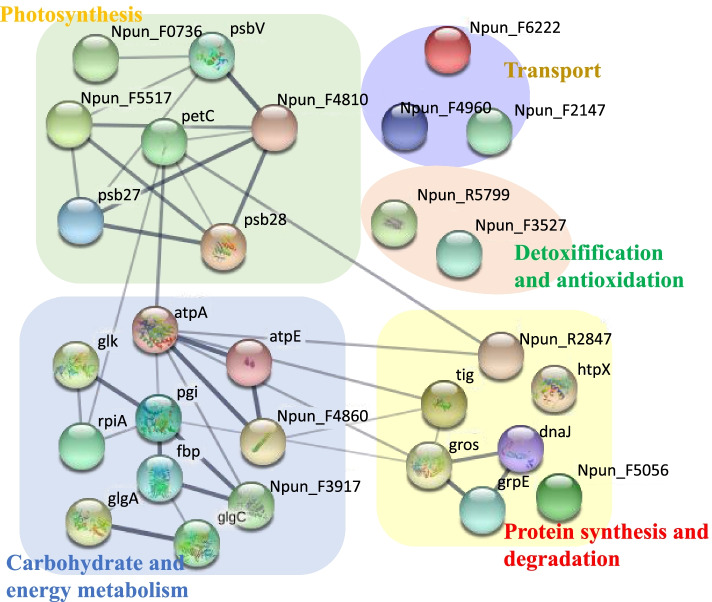
Conclusion: In this study, N. flagelliforme may regulates its adaptation to drought stress through the changes of protein expression in photosynthesis, energy metabolism, transport, protein synthesis and degradation and antioxidation.
Highlights: • A total of 351 DEPs involved in adaptation to drought stress were identified. • Changes in the expression of six OCP homologs were found in response to drought stress. • Differential expression of transporters played an important role in drought stress adaptation. • Most PSII proteins were downregulated, while PSI proteins were unchanged in response to drought stress. • Sugar metabolism was upregulated in response to drought stress.
Keywords: Differential expression; Drought stress; Functional analysis; Nostoc flagelliforme; Proteome.
© 2022. The Author(s).
Conflict of interest statement
This manuscript has no financial or non-financial competing interests.
Figures
References
-
- Wang B, Yang JJ, Xu C, Yi LX, Wan CH. Dynamic expression of intra- and extra-cellular proteome and the influence of epiphytic bacteria for Nostoc flagelliforme in response to rehydration. Environ Microbiol. 2020;22(4):1251–1264. - PubMed
-
- Baosheng Qiu KG. Dried field populations of Nostoc flagelliforme (Cyanophyceae) require exogenous nutrients for their photosynthetic recovery. J Appl Phycol. 1999;11:535–541.
-
- Zhao XM, Bi YH, Chen L, Hu S, Hu ZY. Responses of photosynthetic activity in the drought-tolerant cyanobacterium, Nostoc flagelliforme to rehydration at different temperature. J Arid Environ. 2008;72(4):370–377.
-
- Liang W, Zhou Y, Wang L, You X, Zhang Y, Cheng CL, Chen W. Ultrastructural, physiological and proteomic analysis of Nostoc flagelliforme in response to dehydration and rehydration. J Proteome. 2012;75(18):5604–5627. - PubMed
-
- Qiu BS, Zhang AH, Liu ZL, Gao KS. Studies on the photosynthesis of the terrestrial cyanobacterium Nostoc flagelliforme subjected to desiccation and subsequent rehydration. Phycologia 2004, 43(5):521-528.
MeSH terms
Substances
Supplementary concepts
LinkOut - more resources
Full Text Sources
Medical
