Review
. 2022 Sep;32(9):800-814.
doi: 10.1016/j.tcb.2022.02.009. Epub 2022 Mar 29.

Transsulfuration, minor player or crucial for cysteine homeostasis in cancer

Affiliations
Review

Transsulfuration, minor player or crucial for cysteine homeostasis in cancer

Hai-Feng Zhang et al. Trends Cell Biol. 2022 Sep.

Abstract

Cysteine, a thiol-containing amino acid, is crucial for the synthesis of sulfur-containing biomolecules that control multiple essential cellular activities. Altered cysteine metabolism has been linked to numerous driver oncoproteins and tumor suppressors, as well as to malignant traits in cancer. Cysteine can be acquired from extracellular sources or synthesized de novo via the transsulfuration (TSS) pathway. Limited availability of cystine in tumor interstitial fluids raises the possible dependency on de novo cysteine synthesis via TSS. However, the contribution of TSS to cancer metabolism remains highly contentious. Based on recent findings, we provide new perspectives on this crucial but understudied metabolic pathway in cancer.

Keywords: cancer; cysteine metabolism; ferroptosis; glutathione; redox homeostasis; transsulfuration.


Conflict of interest statement

Declaration of interests The authors declare no conflicts of interest.

Figures
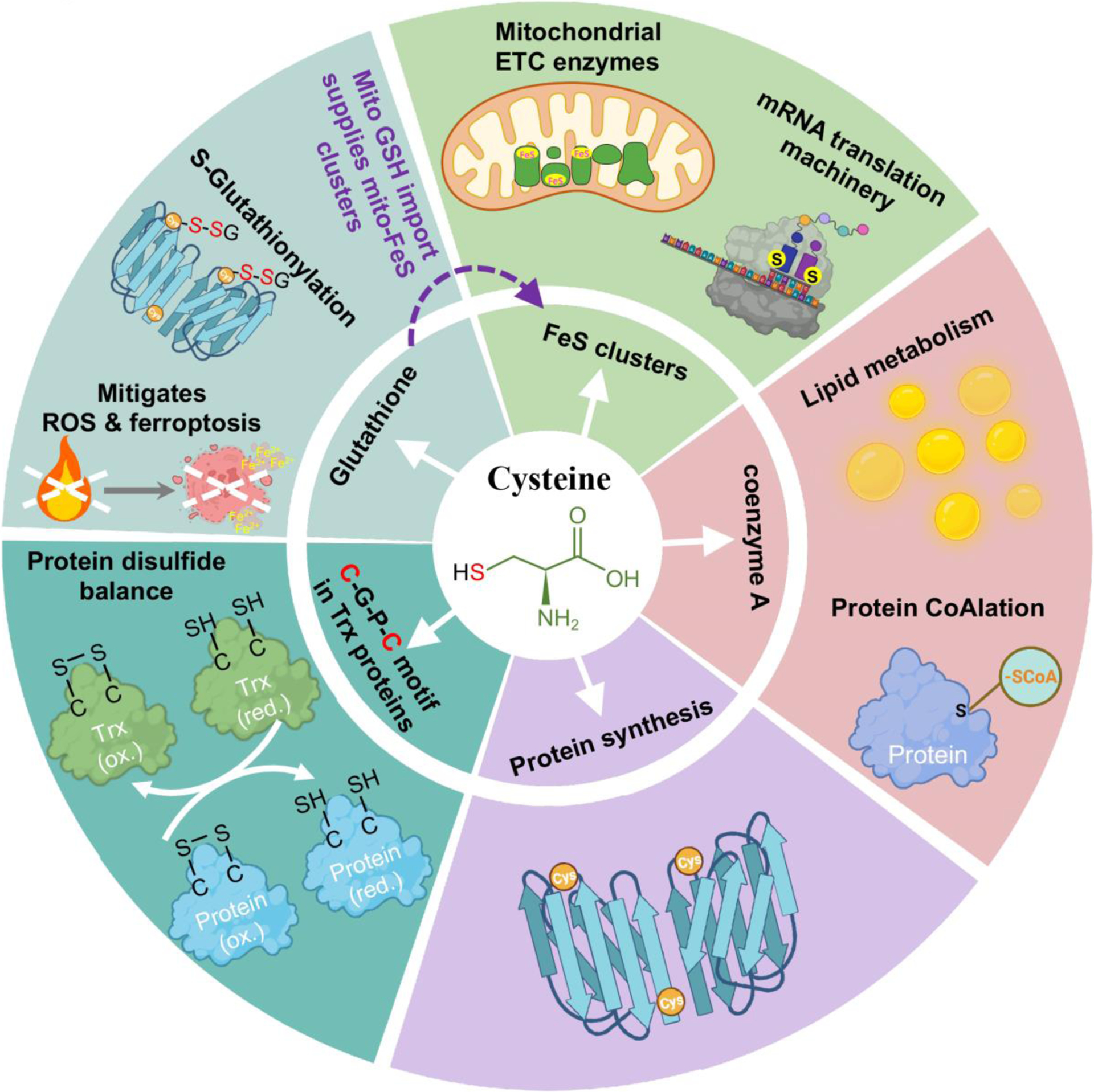
Figure 1.
Figure 1.
The multifaceted role of cysteine in a myriad of biochemical and biological processes.
Figure 2.
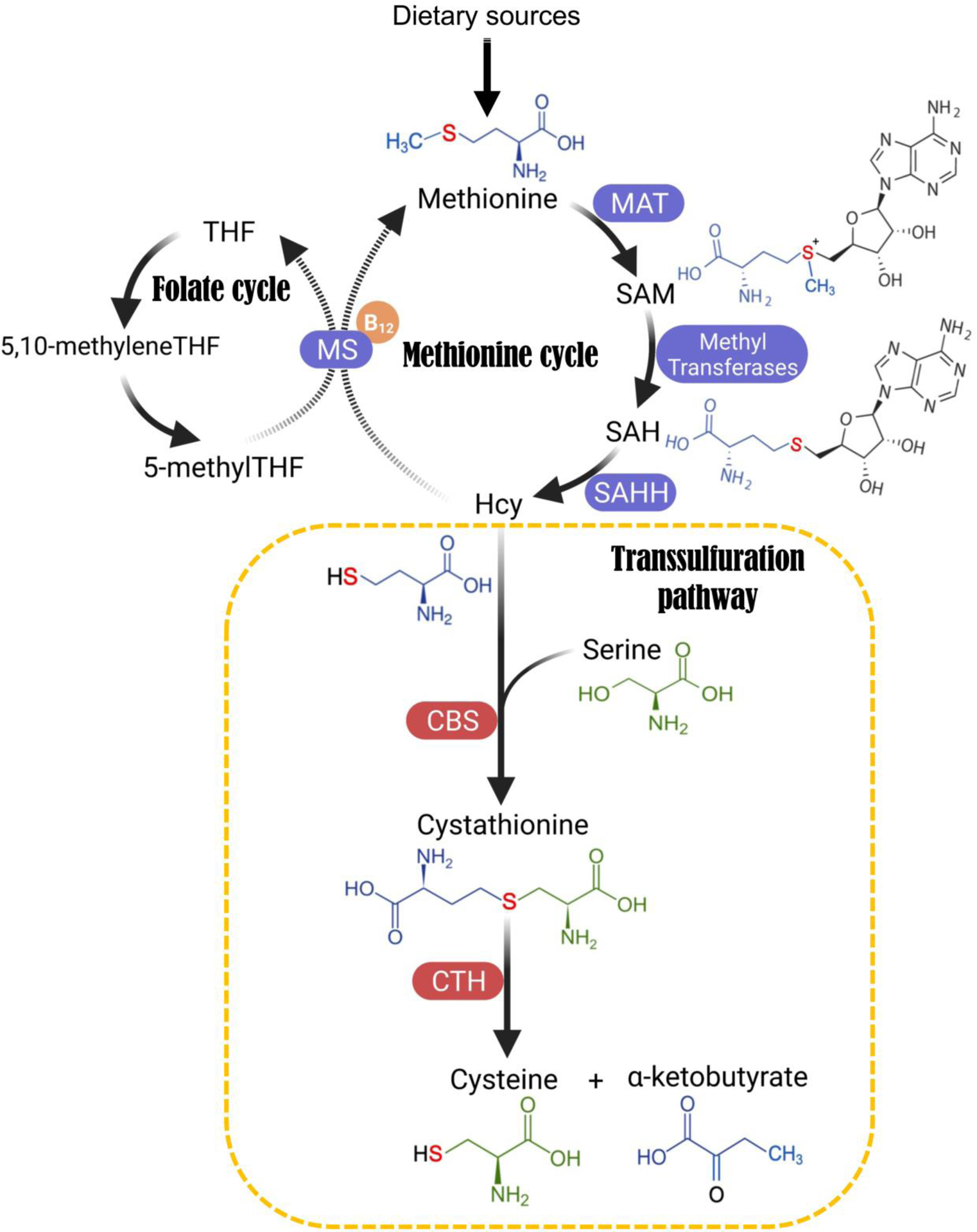
Figure 2.. Schematic showing the metabolic pathways that contribute to de novo cysteine synthesis.
Folate cycle, methionine cycle, and the transsulfuration (TSS) pathway mediate de novo cysteine synthesis. Atoms are colour-coded to indicate their flow in the metabolic reactions. This sulfur transfer process is indirect, and Hcy (homocysteine), an intermediate metabolite from the methionine cycle, is the sulfur-containing precursor that ultimately gets channelled to the TSS pathway. Hcy can either enter the TSS pathway to transfer the sulfur atom to serine, eventually leading to cysteine synthesis, or Hcy is recycled back to methionine using folate cycle metabolite 5-methyl-tetrahydrofolate (5-me-THF) as the methyl donor and vitamin B12 as a cofactor. The Hcy-to-cysteine conversion is again indirect, and is sequentially catalyzed by two enzymes: Cystathionine β-Synthase (CBS) and Cystathionine γ-Lyase (CGL, also named Cystathionase or CTH). Specifically, CBS condenses Hcy and serine into a single molecule called cystathionine, which is then cleaved and hydrolyzed by CTH to form cysteine, alpha-ketobutyrate and NH4+. Abbreviations: B12, Vitamin B12; CBS, Cystathionine beta-synthase; CTH, Cystathionine gamma-lyase; Hcy, Homocysteine; MAT, Methionine adenosyltransferase; MS, Methionine synthase; SAHH, S-Adenosylhomocysteine Hydrolase; SAH, S-Adenosyl homocysteine; SAM, S-Adenosyl methionine; THF, Tetrahydrofolate.
Figure 3.
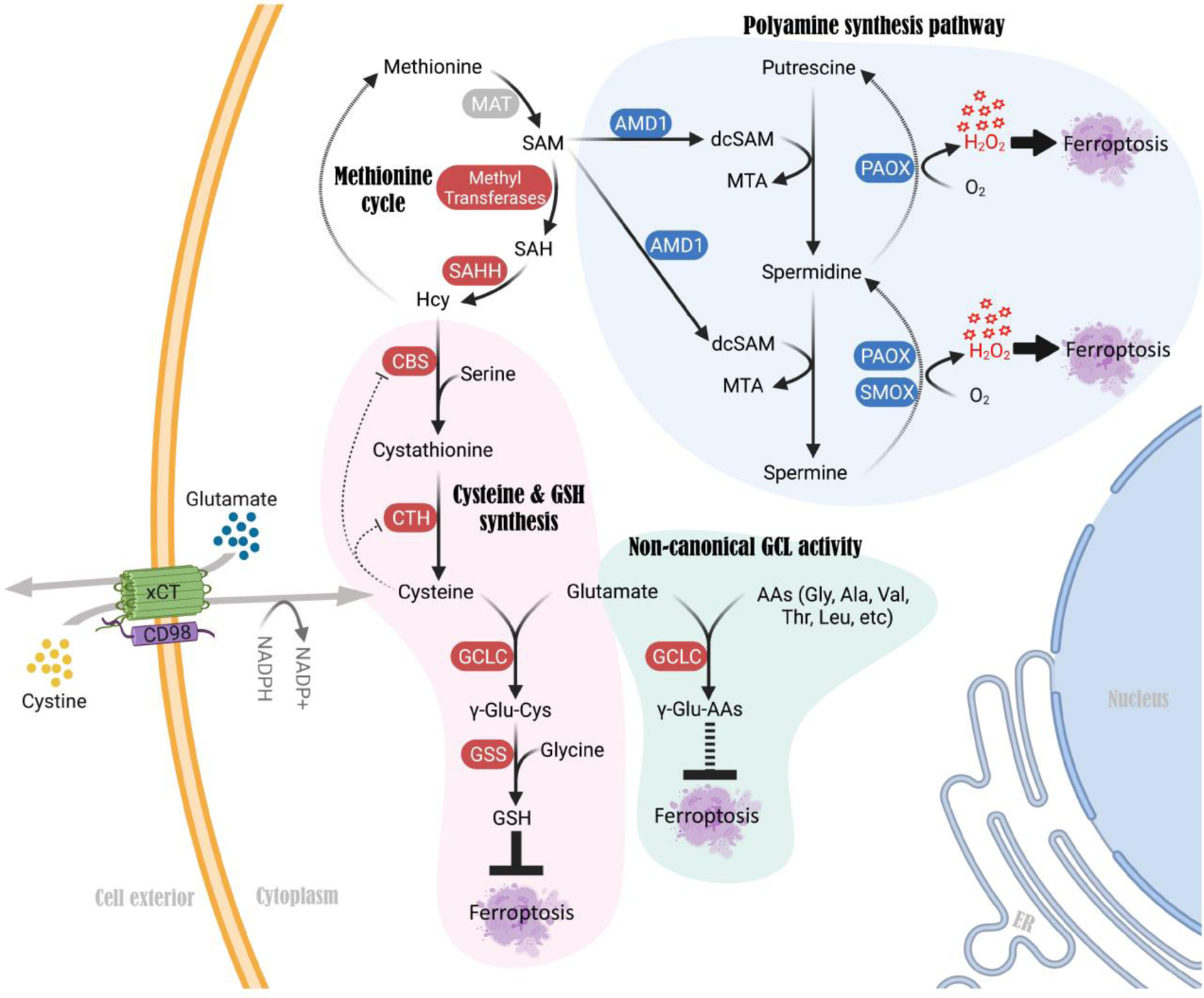
Figure 3.. Mechanisms in the TSS pathway that regulate cystine deprivation-induced ferroptosis independent of de novo cysteine synthesis and GSH.
A non-canonical function of GCLC, an enzyme that is known to catalyze γ-glutamyl-cysteine formation during GSH synthesis, mediates γ-glutamyl-peptide synthesis upon cystine deprivation. This non-canonical mechanism alleviates glutamate stress and prevents cystine starvation-induced ferroptosis in cancer cells. Genetic or pharmacological blockade of GCLC sensitizes cancer cells to cystine deficiency-induced ferroptosis. In contrast, activation of the polyamine synthesis pathway downstream of methionine promotes ROS (H2O2) production, which triggers cell death upon cystine starvation. Blocking each of the key enzymes in the polyamine synthesis pathway, such as AMD1, PAOX and SMOX, alleviates ROS levels and protects cells from cystine starvation-induced ferroptosis. Abbreviations: GCLC, Glutamate-cysteine ligase catalytic subunit; GSS, Glutathione synthetase; AMD1, Adenosylmethionine decarboxylase 1; PAOX, Polyamine oxidase; SMOX, Spermine oxidase; dcSAM, decarboxylated S-adenosylmethionine.
Figure 4.
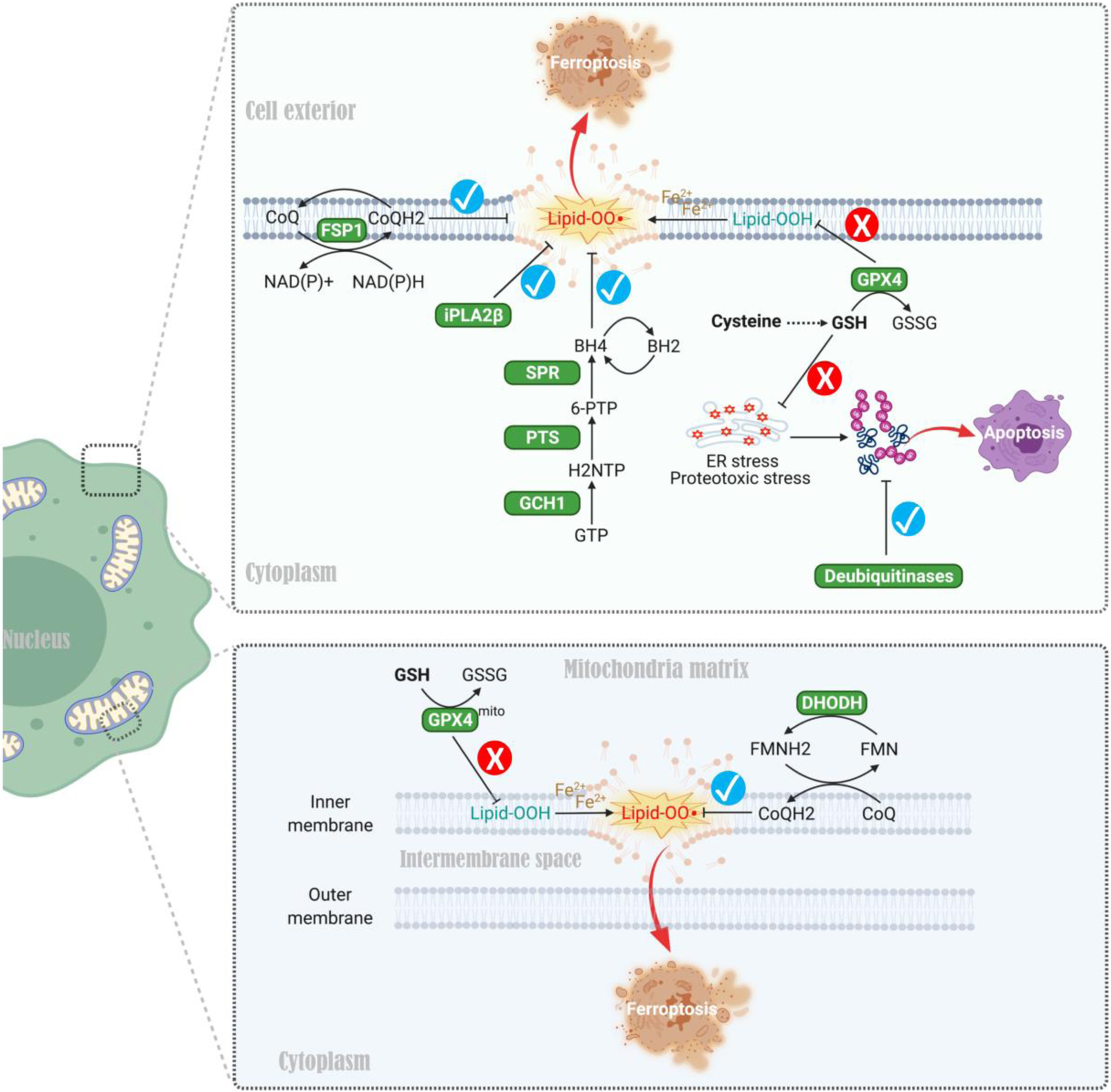
Figure 4.. Alternative cytoprotective mechanisms exploited by cancer cells when cyst(e)ine-mediated GSH antioxidant system is compromised.
First, apoptosis-inducing factor mitochondria-associated 2 (AIFM2/FSP1) and dihydroorotate dehydrogenase (DHODH) promote reduction of ubiquinone to ubiquinol (two forms of CoQ10) in the cytosol and mitochondria respectively, thereby mitigating lipid peroxidation and ferroptosis when the GSH-GPX4 system is inhibited. Second, radical-trapping antioxidant BH4 (tetrahydrobiopterin) protects lipid membranes from autoxidation, and enzymes promoting BH4 production such as GCH1, PTS, and SPR are exploited by cancer cells for survival when the cytoprotective GSH-GPX4 axis is blocked. Third, phospholipase A2 group VI (iPLA2β) promotes the hydrolysis of peroxidized phospholipids, thereby preventing ferroptosis when the GSH/GPX4 system is disabled. Finally, deubiquitinating enzymes (DUBs) mitigate GSH depletion-induced buildup of ubiquitinated proteins that cause proteotoxic stress and ER stress, thereby increasing tolerance to GSH depletion in various cancers. These mechanisms may facilitate cancer cells bypassing the TSS pathway to withstand cystine starvation or diminished GSH production. Abbreviations: FSP1, ferroptosis suppressor protein 1; DHODH, dihydroorotate dehydrogenase; CoQ, coenzyme Q; GPX4, Glutathione peroxidase 4; FMN, flavin mononucleotide; FMNH2, 1,5-dihydro flavin mononucleotide (reduced form); GCH1, GTP cyclohydrolase I; PTS, 6-pyruvoyltetrahydropterin synthase; SPR, sepiapterin reductase; iPLA2β, phospholipase A2 group VI; BH4, tetrahydrobiopterin; BH2, oxidized tetrahydrobiopterin; NH2TP, 7,8-dihydroneopterin triphosphate; 6-PTP, 6-pyruvoyltetrahydropterin.

References

    1. Poltorack CD and Dixon SJ (2022) Understanding the role of cysteine in ferroptosis: progress & paradoxes. FEBS J 289, 374–385 - PMC - PubMed
    1. Badgley MA et al. (2020) Cysteine depletion induces pancreatic tumor ferroptosis in mice. Science 368, 85–89 - PMC - PubMed
    1. Gout I (2018) Coenzyme A, protein CoAlation and redox regulation in mammalian cells. Biochem. Soc. Trans 46, 721–728 - PMC - PubMed
    1. Ghareeb H et al. (2020) The Thioredoxin System: A Promising Target for Cancer Drug Development. Chemistry 26, 10175–10184 - PubMed
    1. Harris IS et al. (2015) Glutathione and thioredoxin antioxidant pathways synergize to drive cancer initiation and progression. Cancer Cell 27, 211–22 - PubMed

Publication types