


Ecology of Middle East respiratory syndrome coronavirus, 2012-2020: A machine learning modelling analysis
- PMID: 35366384
- PMCID: PMC9526759
- DOI: 10.1111/tbed.14548
Ecology of Middle East respiratory syndrome coronavirus, 2012-2020: A machine learning modelling analysis
Abstract
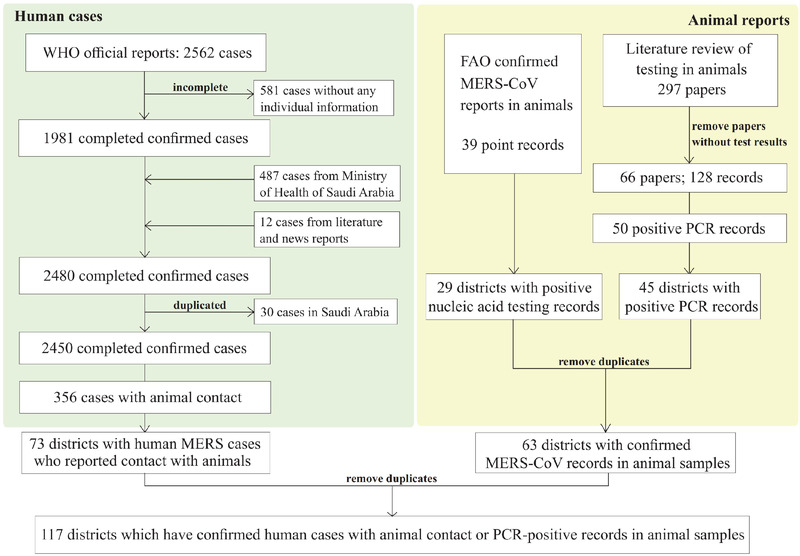
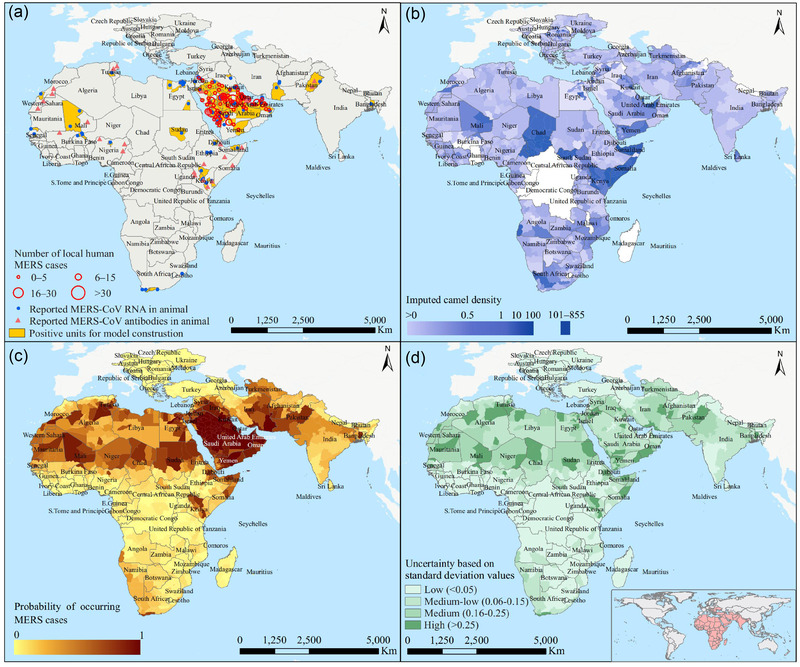
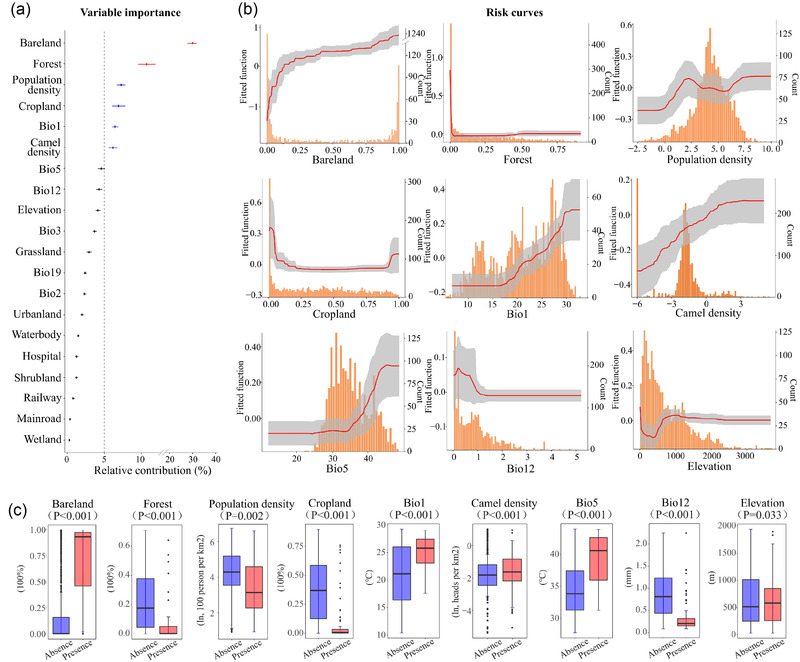
The ongoing enzootic circulation of the Middle East respiratory syndrome coronavirus (MERS-CoV) in the Middle East and North Africa is increasingly raising the concern about the possibility of its recombination with other human-adapted coronaviruses, particularly the pandemic SARS-CoV-2. We aim to provide an updated picture about ecological niches of MERS-CoV and associated socio-environmental drivers. Based on 356 confirmed MERS cases with animal contact reported to the WHO and 63 records of animal infections collected from the literature as of 30 May 2020, we assessed ecological niches of MERS-CoV using an ensemble model integrating three machine learning algorithms. With a high predictive accuracy (area under receiver operating characteristic curve = 91.66% in test data), the ensemble model estimated that ecologically suitable areas span over the Middle East, South Asia and the whole North Africa, much wider than the range of reported locally infected MERS cases and test-positive animal samples. Ecological suitability for MERS-CoV was significantly associated with high levels of bareland coverage (relative contribution = 30.06%), population density (7.28%), average temperature (6.48%) and camel density (6.20%). Future surveillance and intervention programs should target the high-risk populations and regions informed by updated quantitative analyses.
Keywords: MERS-CoV; Middle East respiratory syndrome; machine learning; predicted map; risk factors.
© 2022 The Authors. Transboundary and Emerging Diseases published by Wiley-VCH GmbH.
Conflict of interest statement
The authors declare no conflict of interest.
Figures
References
-
- Anthony, S. J. , Gilardi, K. , Menachery, V. D. , Goldstein, T. , Ssebide, B. , Mbabazi, R. , Navarrete‐Macias, I. , Liang, E. , Wells, H. , Hicks, A. , Petrosov, A. , Byarugaba, D. K. , Debbink, K. , Dinnon, K. H. , Scobey, T. , Randell, S. H. , Yount, B. L. , Cranfield, M. , Johnson, C. K. , & Mazet, J. A. K. (2017). Further evidence for bats as the evolutionary source of Middle East respiratory syndrome coronavirus. MBio, 8(2), e00373–17. 10.1128/mBio.00373-17 - DOI - PMC - PubMed
-
- Alraddadi, B. M. , Watson, J. T. , Almarashi, A. , Abedi, G. R. , Turkistani, A. , Sadran, M. , Housa, A. , Almazroa, M. A. , Alraihan, N. , Banjar, A. , Albalawi, E. , Alhindi, H. , Choudhry, A. J. , Meiman, J. G. , Paczkowski, M. , Curns, A. , Mounts, A. , Feikin, D. R. , Marano, N. , & Madani, T. A. (2016). Risk factors for primary Middle East respiratory syndrome coronavirus illness in humans, Saudi Arabia, 2014. Emerging Infectious Diseases, 22(1), 49–55. 10.3201/eid2201.151340 - DOI - PMC - PubMed
-
- Alshukairi, A. N. , Zheng, J. , Zhao, J. , Nehdi, A. , Baharoon, S. A. , Layqah, L. , Bokhari, A. , Al Johani, S. M. , Samman, N. , Boudjelal, M. , Ten Eyck, P. , Al‐Mozaini, M. A. , Zhao, J. , Perlman, S. , & Alagaili, A. N. (2018). High prevalence of MERS‐CoV infection in camel workers in Saudi Arabia. MBio, 9(5), e01985–18. 10.1128/mBio.01985-18 - DOI - PMC - PubMed
-
- Bhatt, S. , Gething, P. W. , Brady, O. J. , Messina, J. P. , Farlow, A. W. , Moyes, C. L. , Drake, J. M. , Brownstein, J. S. , Hoen, A. G. , Sankoh, O. , Myers, M. F. , George, D. B. , Jaenisch, T. , Wint, G. R. W. , Simmons, C. P. , Scott, T. W. , Farrar, J. J. , & Hay, S. I. (2013). The global distribution and burden of dengue. Nature, 496(7446), 504–507. 10.1038/nature12060 - DOI - PMC - PubMed
MeSH terms
Grants and funding
LinkOut - more resources
Full Text Sources
Medical
Miscellaneous
