


Urinary and fecal excretion of aromatic amines in pet dogs and cats from the United States
- PMID: 35366557
- PMCID: PMC9035069
- DOI: 10.1016/j.envint.2022.107208
Urinary and fecal excretion of aromatic amines in pet dogs and cats from the United States
Abstract
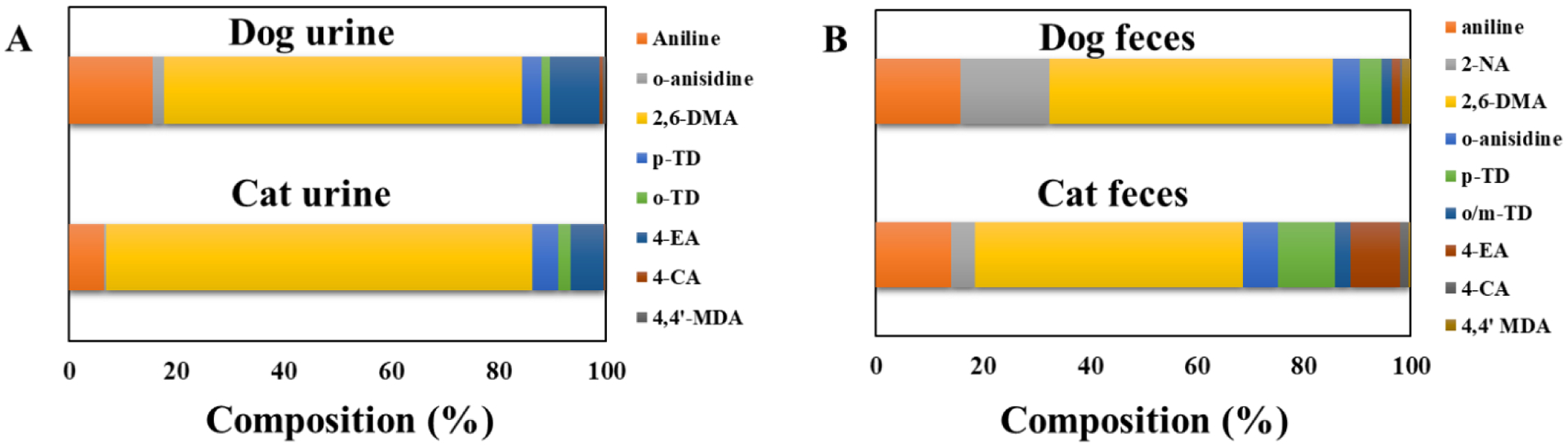
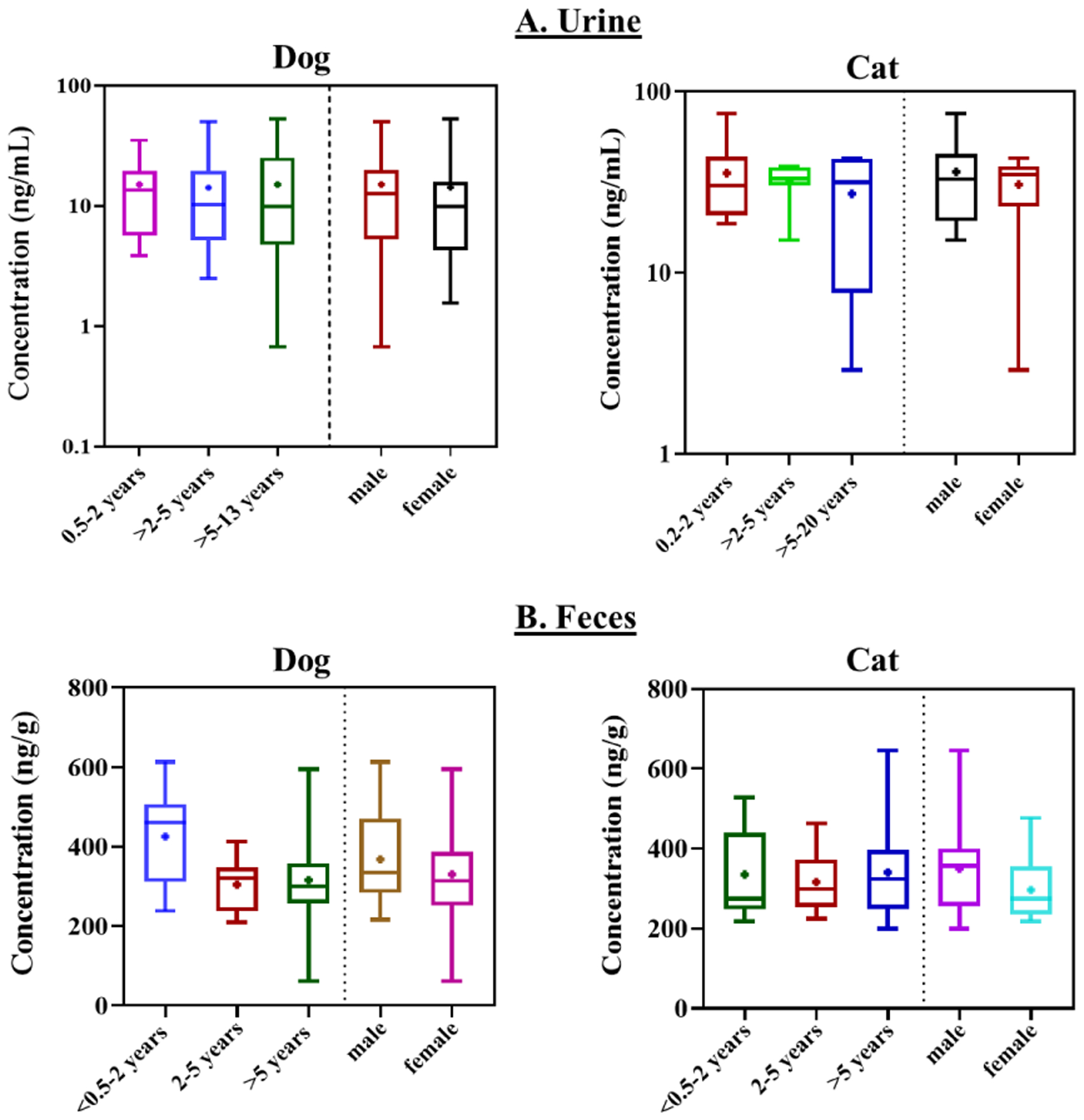
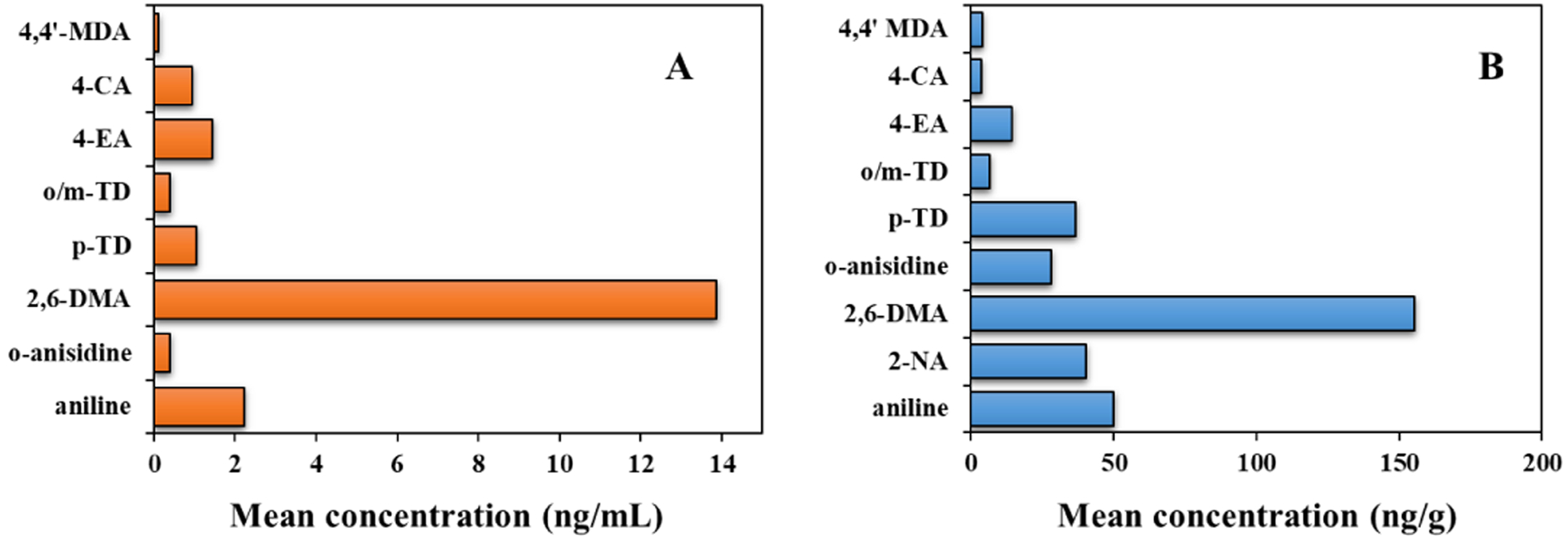
Several primary aromatic amines (AAs) are known or suspected carcinogens. Despite this, the exposure of pet animals to this class of chemicals is unknown. In this study, we investigated the occurrence of 30 AAs and two tobacco chemical markers (nicotine and cotinine) in 63 pet urine (42 dog and 21 cat) and 77 pet feces (37 dog and 40 cat) samples collected from the Albany area of New York State. Eight of the 30 AAs (∑8AAs) were found in > 38% of dog and cat urine samples, at median concentrations of 7.99 (range: 0.42-52.3 ng/mL) and 31.4 (2.63-75.9) ng/mL, respectively. Nine of the 30 AAs (∑9AAs) were found in > 73% of dog and cat feces samples, at median concentrations of 278 (range: 61.7-613 ng/g) and 240 (55.4-645) ng/g dry wt, respectively. Among the 30 AAs, 2,6-dimethylaniline (2,6-DMA) accounted for the highest median concentrations in both urine and fecal samples. Median concentrations of nicotine and cotinine were below 0.92 ng/mL in urine and below 3.86 ng/g in feces of both dogs and cats. No significant relationship was found between AA concentrations and pet age or gender. The lack of significant Spearman's rank correlation between the concentrations of AA and nicotine in pet urine/feces suggested that sources other than tobacco smoke contributed to AA exposure in pets. Furthermore, the calculated fecal excretion rates of AAs were higher than the intake rates (estimated through reverse dosimetry), which indicates that cats and dogs are exposed to AA precursors such as azo dyes. Concentrations in urine and feces reflected exposure to direct and indirect exposure sources, respectively, of AAs.
Keywords: Aniline; Aromatic amines; Biomonitoring; Cotinine; LC-MS/MS; Pets.
Copyright © 2022 The Authors. Published by Elsevier Ltd.. All rights reserved.
Conflict of interest statement
Conflict of Interest
The authors declare no competing financial interest.
Declaration of interests
The authors declare that they have no known competing financial interests or personal relationships that could have appeared to influence the work reported in this paper.
Figures
References
-
- Baan R; Straif K; Grosse Y; Secretan B; El Ghissassi F; Bouvard V; Benbrahim-Tallaa L; Cogliano V; W, W.I.A.R.C.M. 2008. Special Report: Policy: Carcinogenicity of some aromatic amines, organic dyes, and related exposures. Lancet Oncol. 9, 322–323 - PubMed
-
- Campanella G; Ghaani M; Quetti G; Farris S 2015. On the origin of primary aromatic amines in food packaging materials. Trends Food Sci Tech. 46, 137–143
Publication types
MeSH terms
Substances
Grants and funding
LinkOut - more resources
Full Text Sources
Miscellaneous
