


Application analysis of omental flap isolation and modified pancreaticojejunostomy in pancreaticoduodenectomy (175 cases)
- PMID: 35366868
- PMCID: PMC8976960
- DOI: 10.1186/s12893-022-01552-9
Application analysis of omental flap isolation and modified pancreaticojejunostomy in pancreaticoduodenectomy (175 cases)
Abstract
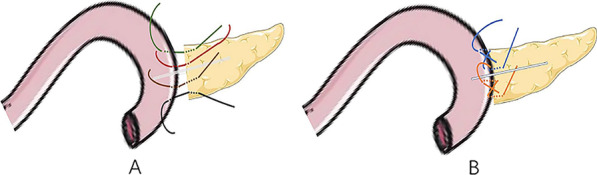
Background: To explore the application value of free omental wrapping and modified pancreaticojejunostomy in pancreaticoduodenectomy (PD).
Methods: The clinical data of 175 patients who underwent pancreaticoduodenectomy from January 2015 to December 2020 were retrospectively analysed. In total, 86 cases were divided into Group A (omental wrapping and modified pancreaticojejunostomy) and 89 cases were divided into Group B (control group). The incidences of postoperative pancreatic fistula and other complications were compared between the two groups, and univariate and multivariate logistic regression analyses were used to determine the potential risk factors for postoperative pancreatic fistula. Risk factors associated with postoperative overall survival were identified using Cox regression.
Results: The incidences of grade B/C pancreatic fistula, bile leakage, delayed bleeding, and reoperation in Group A were lower than those in Group B, and the differences were statistically significant (P < 0.05). Group A had an earlier drainage tube extubation time, earlier return to normal diet time and shorter postoperative hospital stay than the control group (P < 0.05). The levels of C-reactive protein (CRP), interleukin-6 (IL-6), and procalcitonin (PCT) inflammatory factors 1, 3 and 7 days after surgery also showed significant. Univariate and multivariate logistic regression analyses showed that a body mass index (BMI) ≥ 24, pancreatic duct diameter less than 3 mm, no isolation of the greater omental flap and modified pancreaticojejunostomy were independent risk factors for pancreatic fistula (P < 0.05). Cox regression analysis showed that age ≥ 65 years old, body mass index ≥ 24, pancreatic duct diameter less than 3 mm, no isolation of the greater omental flap isolation and modified pancreaticojejunostomy, and malignant postoperative pathology were independent risk factors associated with postoperative overall survival (P < 0.05).
Conclusions: Wrapping and isolating the modified pancreaticojejunostomy with free greater omentum can significantly reduce the incidence of postoperative pancreatic fistula and related complications, inhibit the development of inflammation, and favourably affect prognosis.
Keywords: Modified pancreaticojejunostomy; Omental flap isolation; Pancreatic fistula; Postoperative complications; Radical pancreatoduodenectomy.
© 2022. The Author(s).
Conflict of interest statement
The authors have no conflicts of interest to declare.
Figures
References
-
- Braga M, Capretti G, Pecorelli N, Balzano G, Doglioni C, Ariotti R, Di Carlo V. A prognostic score to predict major complications after pancreaticoduodenectomy. Ann Surg. 2011;254(5):702–707. - PubMed
-
- Panni RZ, Guerra J, Hawkins WG, Hall BL, Asbun HJ, Sanford DE. National pancreatic fistula rates after minimally invasive pancreaticoduodenectomy: a NSQIP analysis. J Am Coll Surg. 2019;229(2):192–199.e191. - PubMed
-
- Hackert T, Werner J, Büchler MW. Postoperative pancreatic fistula. Surg J R Coll Surg Edinb Irel. 2011;9(4):211–217. - PubMed
-
- Chen JF, Xu SF, Zhao W, Tian YH, Gong L, Yuan WS, Dong JH. Diagnostic and therapeutic strategies to manage post-pancreaticoduodenectomy hemorrhage. World J Surg. 2015;39(2):509–515. - PubMed
MeSH terms
Grants and funding
LinkOut - more resources
Full Text Sources
Research Materials
Miscellaneous
