


Club cell secretory protein and lung function in children with cystic fibrosis
- PMID: 35367162
- PMCID: PMC9509401
- DOI: 10.1016/j.jcf.2022.03.007
Club cell secretory protein and lung function in children with cystic fibrosis
Abstract
Background: Club cell secretory protein (CC16) exerts anti-inflammatory functions in lung disease. We sought to determine the relation of serum CC16 deficits and genetic variants that control serum CC16 to lung function among children with cystic fibrosis (CF).
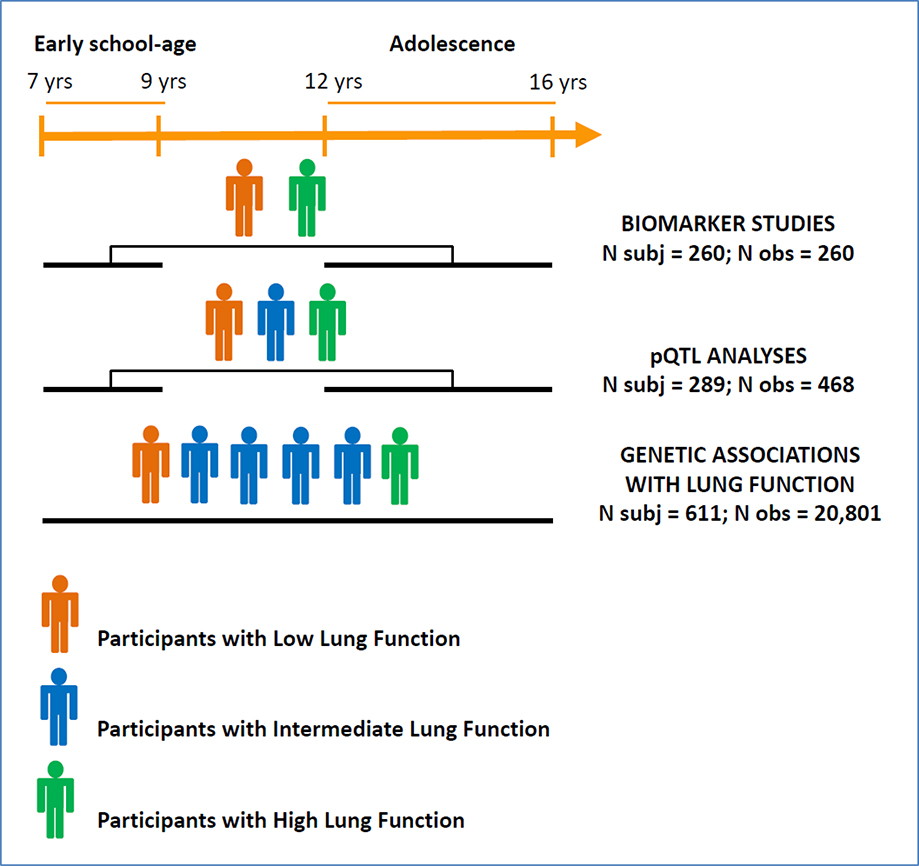
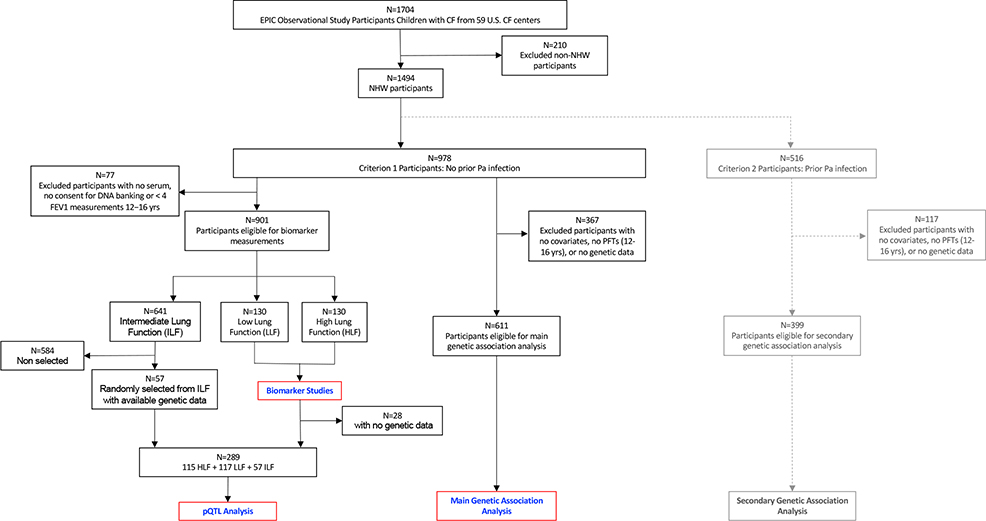
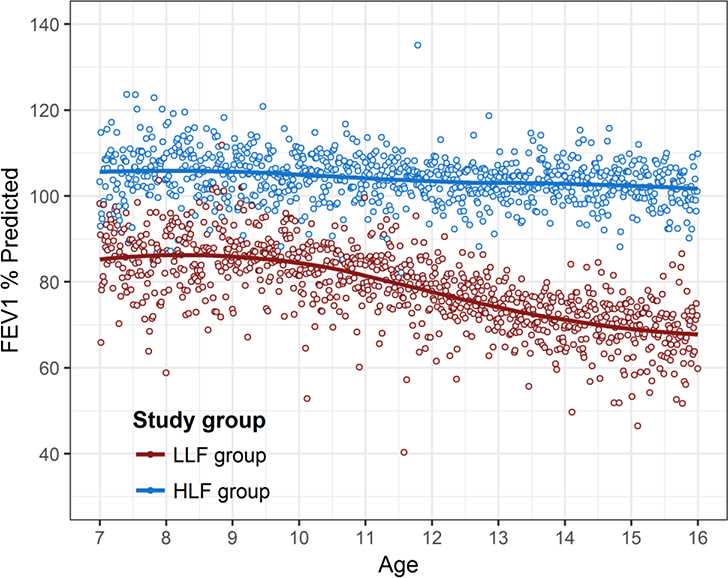
Methods: We used longitudinal data from CF children (EPIC Study) with no positive cultures for Pseudomonas aeruginosa prior to enrollment. Circulating levels of CC16 and an inflammatory score (generated from CRP, SAA, calprotectin, G-CSF) were compared between participants with the lowest and highest FEV1 levels in adolescence (LLF and HLF groups, respectively; N = 130-per-group). Single nucleotide variants (SNVs) in the SCGB1A1, EHF-APIP loci were tested for association with circulating CC16 and with decline of FEV1 and FEV1/FVC% predicted levels between ages 7-16 using mixed models.
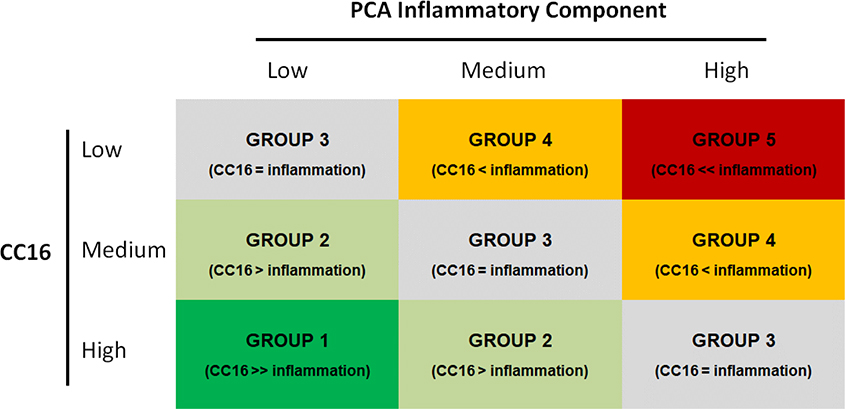
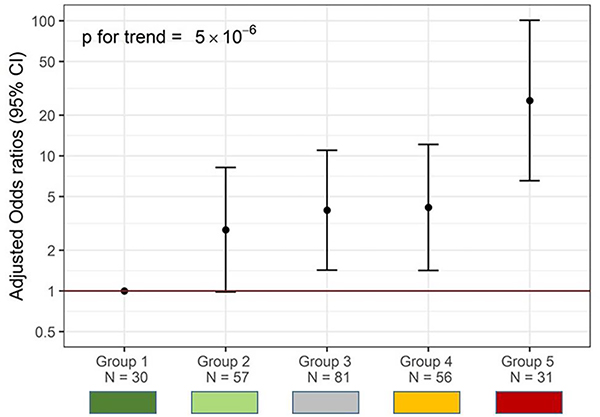
Results: Compared with the HLF group, the LLF group had lower levels of CC16 (geometric means: 8.2 vs 6.5 ng/ml, respectively; p = 0.0002) and higher levels of the normalized inflammatory score (-0.21 vs 0.21, p = 0.0007). Participants in the lowest CC16 and highest inflammation tertile had the highest odds for having LLF (p<0.0001 for comparison with participants in the highest CC16 and lowest inflammation tertile). Among seven SNVs associated with circulating CC16, the top SNV rs3741240 was associated with decline of FEV1/FVC and, marginally, FEV1 (p = 0.003 and 0.025, respectively; N = 611 participants, 20,801 lung function observations).
Conclusions: Serum CC16 deficits are strongly associated with severity of CF lung disease and their effects are additive with systemic inflammation. The rs3741240 A allele is associated with low circulating CC16 and, possibly, accelerated lung function decline in CF.
Keywords: Club cell secretory protein; Cystic fibrosis; Lung function.
Copyright © 2022. Published by Elsevier B.V.
Conflict of interest statement
Declaration of Competing Interest MJE, EEB, KJB, MH, RLG, MR, SDS, MJB, WJM, and SG report receiving grant support through their institution for the present work. SDS reports receiving honoraria from DKBMed. WJM reports receiving consulting fees from the Cystic Fibrosis Foundation, receiving speaker honoraria from the American College of Chest Physicians, and participating on the CFF DSMB.
Figures
References
-
- Broeckaert F, Bernard A. Clara cell secretory protein (CC16): characteristics and perspectives as lung peripheral biomarker. Clin Exp Allergy. 2000;30(4):469–75. - PubMed
-
- Mukherjee AB, Zhang Z, Chilton BS. Uteroglobin: a steroid-inducible immunomodulatory protein that founded the Secretoglobin superfamily. Endocr Rev. 2007;28(7):707–25. - PubMed
-
- Lakind JS, Holgate ST, Ownby DR, Mansur AH, Helms PJ, Pyatt D, et al. A critical review of the use of Clara cell secretory protein (CC16) as a biomarker of acute or chronic pulmonary effects. Biomarkers. 2007;12(5):445–67. - PubMed
-
- Gamez AS, Gras D, Petit A, Knabe L, Molinari N, Vachier I, et al. Supplementing defect in Club Cell Secretory Protein attenuates airway inflammation in COPD. Chest. 2014. - PubMed
Publication types
MeSH terms
Substances
Grants and funding
LinkOut - more resources
Full Text Sources
Medical
Research Materials
Miscellaneous
