


Neuroprotective Mechanisms of Glucagon-Like Peptide-1-Based Therapies in Ischemic Stroke: An Update Based on Preclinical Research
- PMID: 35370875
- PMCID: PMC8964641
- DOI: 10.3389/fneur.2022.844697
Neuroprotective Mechanisms of Glucagon-Like Peptide-1-Based Therapies in Ischemic Stroke: An Update Based on Preclinical Research
Abstract
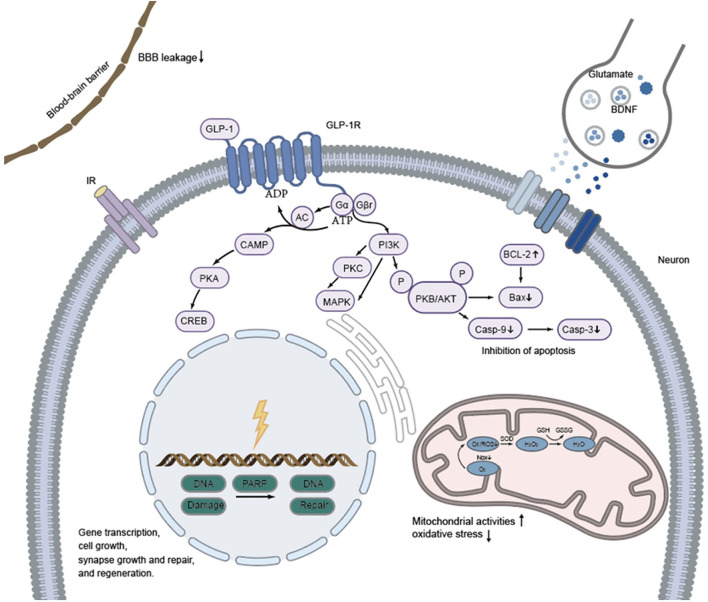
The public and social health burdens of ischemic stroke have been increasing worldwide. Hyperglycemia leads to a greater risk of stroke. This increased risk is commonly seen among patients with diabetes and is in connection with worsened clinical conditions and higher mortality in patients with acute ischemic stroke (AIS). Therapy for stroke focuses mainly on restoring cerebral blood flow (CBF) and ameliorating neurological impairment caused by stroke. Although choices of stroke treatment remain limited, much advance have been achieved in assisting patients in recovering from ischemic stroke, along with progress of recanalization therapy through pharmacological and mechanical thrombolysis. However, it is still necessary to develop neuroprotective therapies for AIS to protect the brain against injury before and during reperfusion, prolong the time window for intervention, and consequently improve neurological prognosis. Glucagon-like peptide-1 receptor agonists (GLP-1 RAs) are broadly regarded as effective drugs in the treatment of type 2 diabetes mellitus (T2DM). Preclinical data on GLP-1 and GLP-1 RAs have displayed an impressive neuroprotective efficacy in stroke, Parkinson's disease (PD), Alzheimer's disease (AD), Amyotrophic lateral sclerosis (ALS), and other neurodegenerative diseases. Based on the preclinical studies in the past decade, we review recent progress in the biological roles of GLP-1 and GLP-1 RAs in ischemic stroke. Emphasis will be placed on their neuroprotective effects in experimental models of cerebral ischemia stroke at cellular and molecular levels.
Keywords: GLP-1; GLP-1R agonists; diabetes; neuroprotection; stroke.
Copyright © 2022 Yang, Qiang, Li, Feng, Wei and Hölscher.
Conflict of interest statement
The authors declare that the research was conducted in the absence of any commercial or financial relationships that could be construed as a potential conflict of interest.
Figures
References
-
- Pega F, Nafradi B, Momen NC, Ujita Y, Streicher KN, Pruss-Ustun AM, et al. . Global, regional, and national burdens of ischemic heart disease and stroke attributable to exposure to long working hours for 194 countries, 2000-2016: a systematic analysis from the Who/Ilo joint estimates of the work-related burden of disease and injury. Environ Int. (2021) 154:106595. 10.1016/j.envint.2021.106595 - DOI - PMC - PubMed
-
- Sacco RL, Kasner SE, Broderick JP, Caplan LR, Connors JJ, Culebras A, et al. . An updated definition of stroke for the 21st century a statement for healthcare professionals from the American Heart Association/American Stroke Association. Stroke. (2013) 44:2064–89. 10.1161/STR.0b013e318296aeca - DOI - PMC - PubMed
Publication types
LinkOut - more resources
Full Text Sources
Miscellaneous
