


Butyrophilins: γδ T Cell Receptor Ligands, Immunomodulators and More
- PMID: 35371078
- PMCID: PMC8968916
- DOI: 10.3389/fimmu.2022.876493
Butyrophilins: γδ T Cell Receptor Ligands, Immunomodulators and More
Abstract
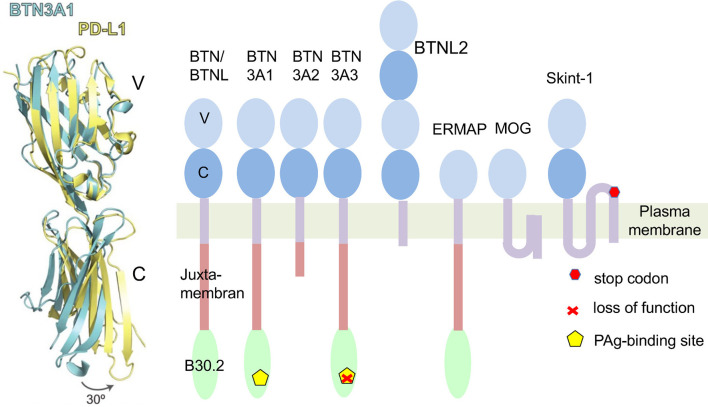
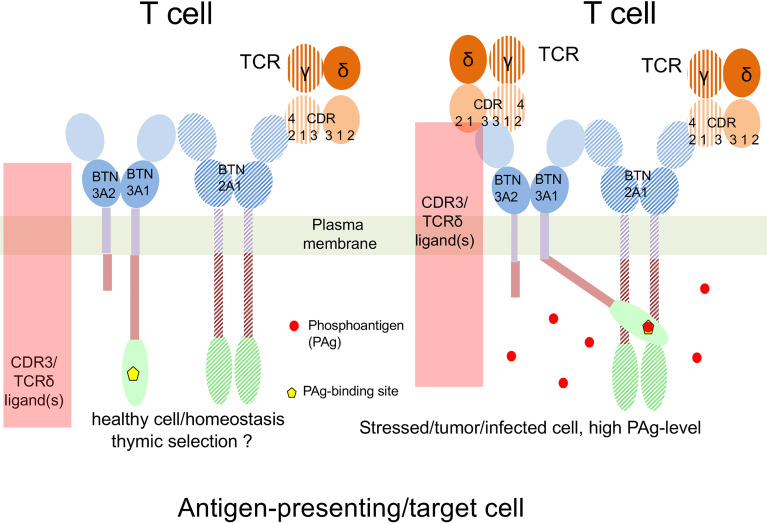
Butyrophilins (BTN) are relatives of the B7 family (e.g., CD80, PD-L1). They fulfill a wide range of functions including immunomodulation and bind to various receptors such as the γδ T cell receptor (γδTCR) and small molecules. One intensively studied molecule is BTN3A1, which binds via its cytoplasmic B30.2 domain, metabolites of isoprenoid synthesis, designated as phosphoantigen (PAg), The enrichment of PAgs in tumors or infected cells is sensed by Vγ9Vδ2 T cells, leading to the proliferation and execution of effector functions to remove these cells. This article discusses the contribution of BTNs, the related BTNL molecules and SKINT1 to the development, activation, and homeostasis of γδ T cells and their immunomodulatory potential, which makes them interesting targets for therapeutic intervention.
Keywords: BTN2A1; BTN3A1; T cell receptor; butyrophilin; immune therapy; phosphoantigen; tumor; γδ T cell.
Copyright © 2022 Herrmann and Karunakaran.
Conflict of interest statement
The authors declare that the research was conducted in the absence of any commercial or financial relationships that could be construed as a potential conflict of interest.
Figures
References
Publication types
MeSH terms
Substances
LinkOut - more resources
Full Text Sources
Research Materials
