


Editorial
doi: 10.1165/rcmb.2022-0023ED.
"Stick a Fork in Me; I'm Done": Epithelial Cell Expression of ORMDL Sphingolipid Biosynthesis Regulator 3 Mediates Autophagic Cell Death
Affiliations
- PMID: 35377833
- PMCID: PMC9163635
- DOI: 10.1165/rcmb.2022-0023ED
Item in Clipboard
Editorial
"Stick a Fork in Me; I'm Done": Epithelial Cell Expression of ORMDL Sphingolipid Biosynthesis Regulator 3 Mediates Autophagic Cell Death
Am J Respir Cell Mol Biol.
2022 Jun.
No abstract available
Figures
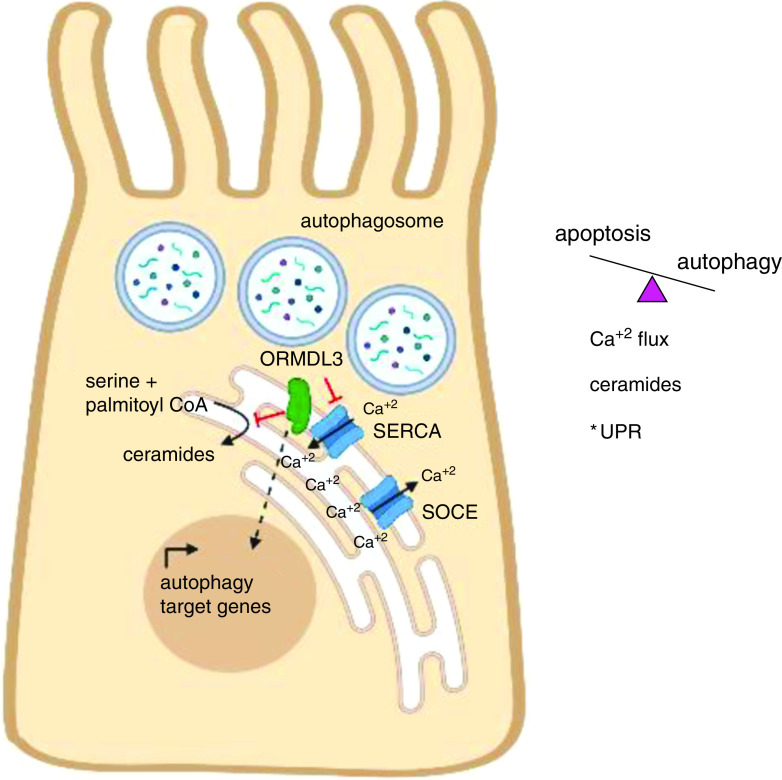
ORMDL3 (ORMDL sphingolipid biosynthesis regulator 3) activity drives autophagic cell death in bronchial epithelial cells. ORMDL3 associates with SERCA2 (sarcoplasmic/endoplasmic reticulum calcium ATPase 2) calcium channels in the endoplasmic reticulum (ER), inhibiting SERCA2 activity. SOCE regulates calcium egress from the ER to cytosol via several possible receptor families, including IP3 receptors, voltage-gated calcium channels, and RYR family members; SERCA2 opposes this activity by pumping calcium into the ER. Overexpression of ORMDL3 or treatment with the noncompetitive SERCA inhibitor thapsigargin increases autophagosome formation and impairs intracellular calcium flux. ORMDL3 overexpression and knockdown in bronchial epithelial cell lines respectively increase or decrease the expression of autophagy-related genes. ORMDL3 intersects with several pathways regulating cell fate decisions between autophagy and apoptosis, including calcium homeostasis, de novo sphingolipid metabolism and downstream metabolites (ceramides), and the unfolded protein response (UPR). *Altered ORMDL3 expression did not modulate UPR activity in bronchial epithelial cells, in contrast to hematopoietic cells, suggesting cell-specific effects of ORMDL3 on UPR. RYR = ryanodine receptor; SOCE = store-operated calcium entry. Image created by the authors using Biorender.
Comment on
-
Asthma Susceptibility Gene ORMDL3 Promotes Autophagy in Human Bronchial Epithelium.Am J Respir Cell Mol Biol. 2022 Jun;66(6):661-670. doi: 10.1165/rcmb.2021-0305OC. Am J Respir Cell Mol Biol. 2022. PMID: 35353673 Free PMC article.
References
-
- Moffatt MF, Kabesch M, Liang L, Dixon AL, Strachan D, Heath S, et al. Genetic variants regulating ORMDL3 expression contribute to the risk of childhood asthma. Nature . 2007;448:470–473. - PubMed
