. 2022 Apr 4;17(4):e0266027.
doi: 10.1371/journal.pone.0266027. eCollection 2022.

CXCR2 signaling might have a tumor-suppressive role in patients with cholangiocarcinoma

Affiliations

CXCR2 signaling might have a tumor-suppressive role in patients with cholangiocarcinoma

Yurie Yamamoto et al. PLoS One. .

Abstract

Background: We reported that chemokine C-X-C motif receptor 2 (CXCR2) signaling appears to play an important role in the pathogenic signaling of gastric cancer (GC), and although CXCR2 may have a role in other solid cancers, the significance of CXCR2 in cholangiocarcinoma (CCA) has not been evaluated. Herein, we determined the clinicopathologic significance of CXCL1-CXCR2 signaling in CCA.

Materials and methods: Two human CCA cell lines, OCUG-1 and HuCCT1, were used. CXCR2 expression was examined by western blotting. We investigated the effects of CXCL1 on the proliferation (by MTT assay) and migration activity (by a wound-healing assay) of each cell line. Our immunohistochemical study of the cases of 178 CCA patients examined the expression levels of CXCR2 and CXCL1, and we analyzed the relationship between these expression levels and the patients' clinicopathologic features.

Results: CXCR2 was expressed on both CCA cell lines. CXCL1 significantly inhibited both the proliferative activity and migratory activity of both cell lines. CXCL1 and CXCR2 were immunohistochemically expressed in 73% and 18% of the CCA cases, respectively. The CXCL1-positive group was significantly associated with negative lymph node metastasis (p = 0.043). The CXCR2-positive group showed significantly better survival (p = 0.042, Kaplan-Meier). A multivariate logistic regression analysis revealed that CXCR2 expression (p = 0.031) and lymph node metastasis (p = 0.004) were significantly correlated with the CCA patients' overall survival.

Conclusion: CXCR2 signaling might exert a tumor-suppressive effect on CCA cells. CXCR2 might be a useful independent prognostic marker for CCA patients after surgical resection.


Conflict of interest statement

The authors have declared that no competing interests exist.

Figures
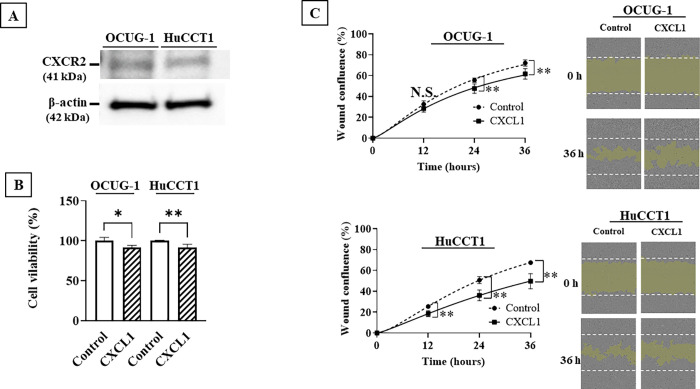
Fig 1
Fig 1. Effect of CXCL1 on the proliferation and migration of CCA cells.
A, CXCR2 expression on OCUG-1 cells and HuCCT1 cells. B, CXCL1 significantly inhibited the proliferative potential of OCUG-1 cells and HuCCT1 cells at 72 h. **, p<0.01 vs control. C, CXCL1 significantly inhibited the migration potential of OCUG-1 cells after 24 h and HuCCT1 cells after 12 h. **, p<0.01 vs control.
Fig 2
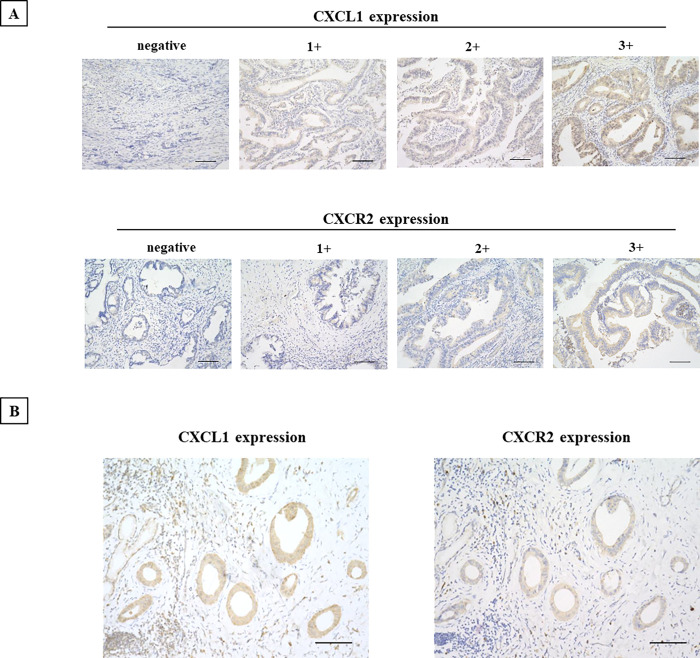
Fig 2. Representative immunostaining images of CXCL1 and CXCR2 expression.
A, CXCL1 was expressed in CCA cells. CXCR2 was observed at both the cell membrane and the cytoplasm. Intensity score: 0, negative; 1+, weakly positive; 2+, positive; 3+. Bar: 100 μm. B, CXCL1 and CXCR2 expression in a case. Bar: 100 μm.
Fig 3
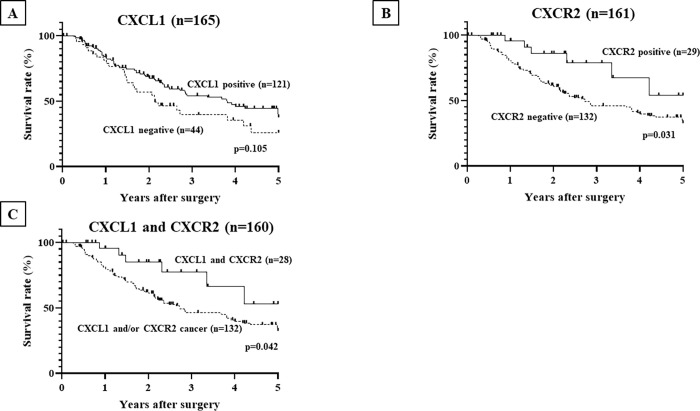
Fig 3. The overall survival rate of CCA patients according to CXCR2 expression.
The patients with a positive expression of CXCR2 (n = 29) had a significantly better survival rate than those without CXCR2 expression (n = 132). The patients with positive expressions of both CXCL1 and CXCR2 (n = 28) had a significantly better survival rate than those with no CXCR2 expression (n = 132), but the patients with positive CXCL1 expression (n = 121) did not have a significantly better survival rate than those without CXCL1 expression (n = 44).

References

    1. Caligiuri A, Pastore M, Lori G, Raggi C, Di Maira G, Marra F, et al.. Role of Chemokines in the Biology of Cholangiocarcinoma. Cancers (Basel). 2020;12(8). doi: 10.3390/cancers12082215 - DOI - PMC - PubMed
    1. Sarcognato S, Sacchi D, Fassan M, Fabris L, Cadamuro M, Zanus G, et al.. Cholangiocarcinoma. Pathologica. 2021;113(3):158–69. doi: 10.32074/1591-951X-252 - DOI - PMC - PubMed
    1. Macias RIR, Banales JM, Sangro B, Muntané J, Avila MA, Lozano E, et al.. The search for novel diagnostic and prognostic biomarkers in cholangiocarcinoma. Biochim Biophys Acta Mol Basis Dis. 2018;1864(4 Pt B):1468–77. doi: 10.1016/j.bbadis.2017.08.002 - DOI - PubMed
    1. Macias RIR, Kornek M, Rodrigues PM, Paiva NA, Castro RE, Urban S, et al.. Diagnostic and prognostic biomarkers in cholangiocarcinoma. Liver Int. 2019;39 Suppl 1:108–22. doi: 10.1111/liv.14090 - DOI - PubMed
    1. Rodrigues PM, Vogel A, Arrese M, Balderramo DC, Valle JW, Banales JM. Next-Generation Biomarkers for Cholangiocarcinoma. Cancers (Basel). 2021;13(13). doi: 10.3390/cancers13133222 - DOI - PMC - PubMed

Publication types

Substances