


Adolescent peer struggles predict accelerated epigenetic aging in midlife
- PMID: 35379374
- PMCID: PMC9532470
- DOI: 10.1017/S0954579422000153
Adolescent peer struggles predict accelerated epigenetic aging in midlife
Abstract
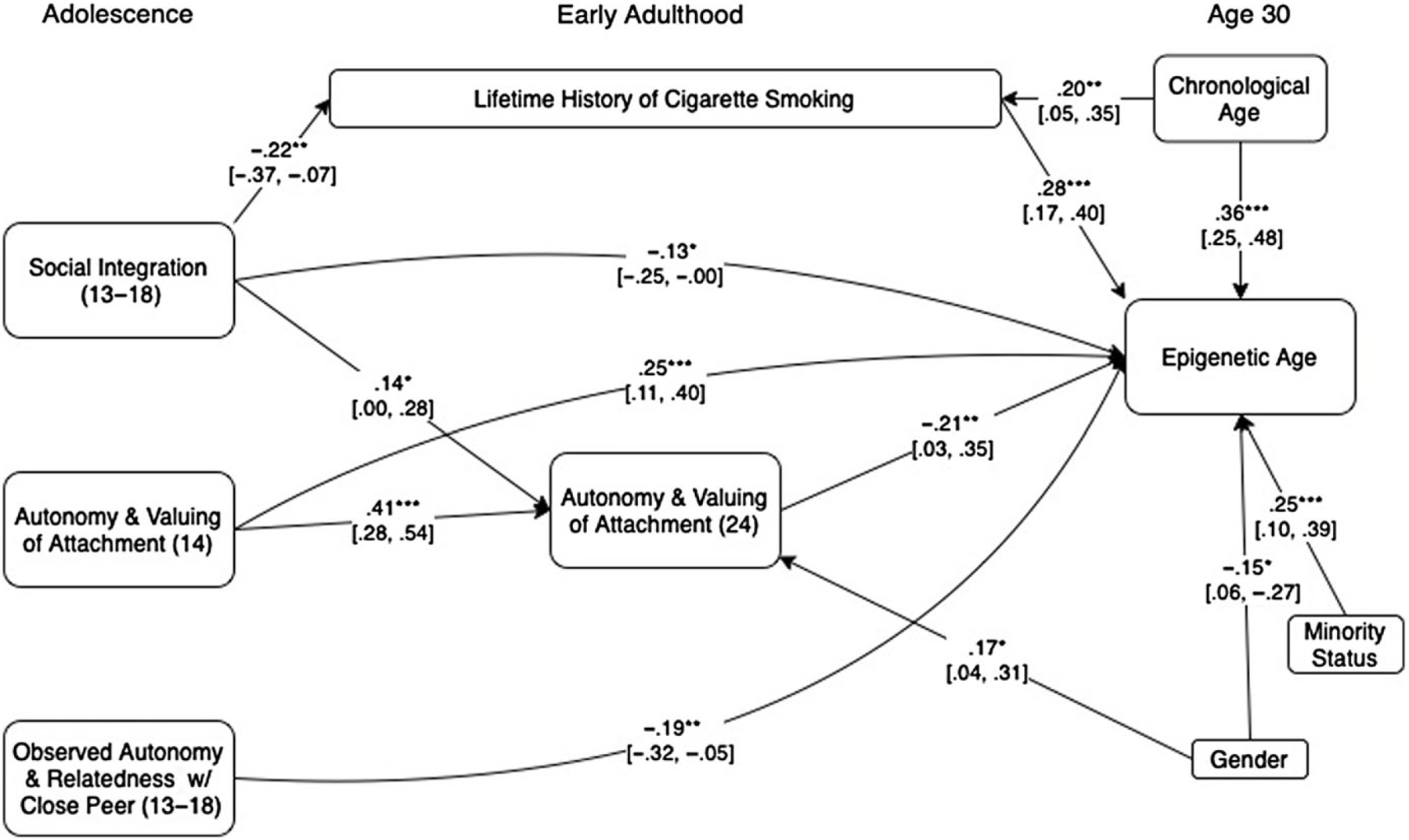
This study examined struggles to establish autonomy and relatedness with peers in adolescence and early adulthood as predictors of advanced epigenetic aging assessed at age 30. Participants (N = 154; 67 male and 87 female) were observed repeatedly, along with close friends and romantic partners, from ages 13 through 29. Observed difficulty establishing close friendships characterized by mutual autonomy and relatedness from ages 13 to 18, an interview-assessed attachment state of mind lacking autonomy and valuing of attachment at 24, and self-reported difficulties in social integration across adolescence and adulthood were all linked to greater epigenetic age at 30, after accounting for chronological age, gender, race, and income. Analyses assessing the unique and combined effects of these factors, along with lifetime history of cigarette smoking, indicated that each of these factors, except for adult social integration, contributed uniquely to explaining epigenetic age acceleration. Results are interpreted as evidence that the adolescent preoccupation with peer relationships may be highly functional given the relevance of such relationships to long-term physical outcomes.
Keywords: adolescent; autonomy; epigenetic aging; friendships; longitudinal; peer; social relationships.
Conflict of interest statement
Figures
References
-
- Allen JP, & Hauser ST (1996). Autonomy and relatedness in adolescent-family interactions as predictors of young adults’ states of mind regarding attachment. Development & Psychopathology, 8(4), 793–809.
-
- Allen JP, Hauser ST, O’Connor TG, Bell KL, & Eickholt C (1996). The connection of observed hostile family conflict to adolescents’ developing autonomy and relatedness with parents. Development & Psychopathology, 8(2), 425–442.
Publication types
MeSH terms
Grants and funding
LinkOut - more resources
Full Text Sources
Medical
