Review
. 2022 May-Jun;97(3):338-347.
doi: 10.1016/j.abd.2021.08.006. Epub 2022 Apr 2.

Leprosy: clinical and immunopathological characteristics

Affiliations
Review

Leprosy: clinical and immunopathological characteristics

Luis Alberto Ribeiro Froes Junior et al. An Bras Dermatol. 2022 May-Jun.

Abstract

Leprosy, a disease caused by Mycobacterium leprae, has polymorphic neurocutaneous manifestations strongly correlated with the host immune response. Peripheral neural damage can lead to sensory and motor losses, as well as deformities of the hands and feet. Both innate and acquired immune responses are involved, but the disease has been classically described along a Th1/Th2 spectrum, where the Th1 pole corresponds to the more limited presentations and the Th2 to the multibacillary ones. The aim of this review is to discuss this dichotomy in light of the current knowledge of the cytokines, T helper subpopulations, and regulatory T cells involved in each presentation of leprosy. The text will also address leprosy reactions related to increased inflammatory activity in both limited and multibacillary presentations, leading to exacerbation of chronic signs and symptoms and/or the development of new ones. Despite the efforts of many research groups around the world, there is no standardized serological test/biological marker for diagnosis so far, even in endemic areas, which could contribute to the eradication of leprosy.

Keywords: Immunology; Leprosy; Lymphocyte activation; Mycobacterium leprae.


Figures

Figure 1
Figure 1
Tuberculoid leprosy. Well-organized epithelioid granuloma, with a dense peripheral halo consisting mainly of lymphocytes. (Hematoxylin & eosin, ×200).
Figure 2
Figure 2
Tuberculoid leprosy. Plaque well demarcated by erythematous papules with a hypochromic center.
Figure 3
Figure 3
Lepromatous leprosy. (A), Dense dermal cell infiltrate consisting of macrophages with vacuolated cytoplasm (Hematoxylin & eosin, ×400). (B), Numerous isolated acid-fast bacilli forming globi (Faraco, ×1000).
Figure 4
Figure 4
Lepromatous leprosy. Diffuse indurated erythematous-ferruginous plaque, interspersed with macules and papules, sparing the spinal column and axillary regions and predominating on the elbows.
Figure 5
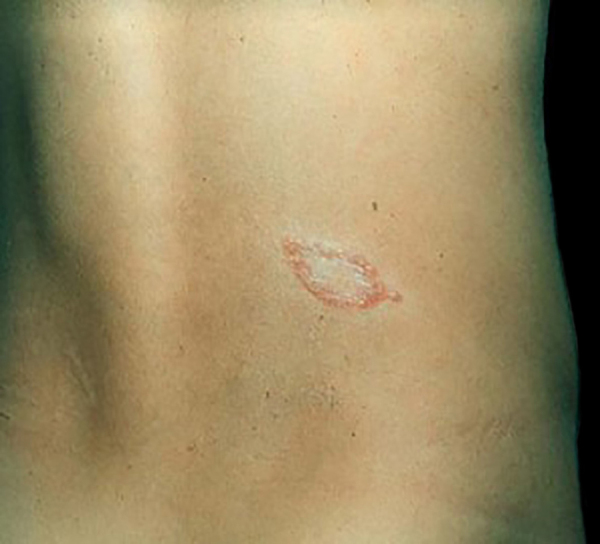
Figure 5
Borderline-tuberculoid leprosy. Indurated-erythematous foveolar plaque, with clear inner and outer edges.
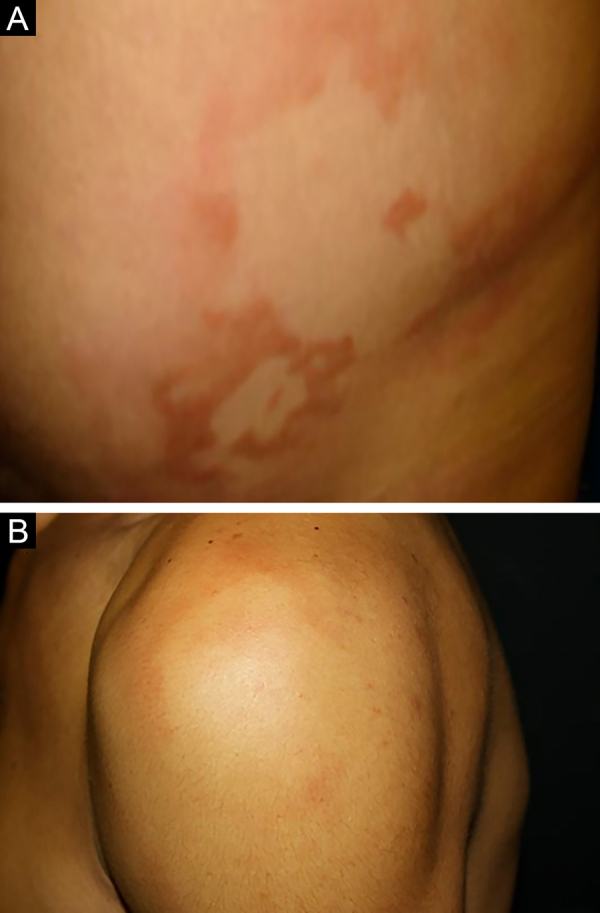
Figure 6
Figure 6
(A), Borderline Leprosy. Well-demarcated erythematous-edematous plaques and papules. (B), Borderline-lepromatous leprosy. Erythematous plaque with a well-defined hypochromic center, and ill-defined outer edges.
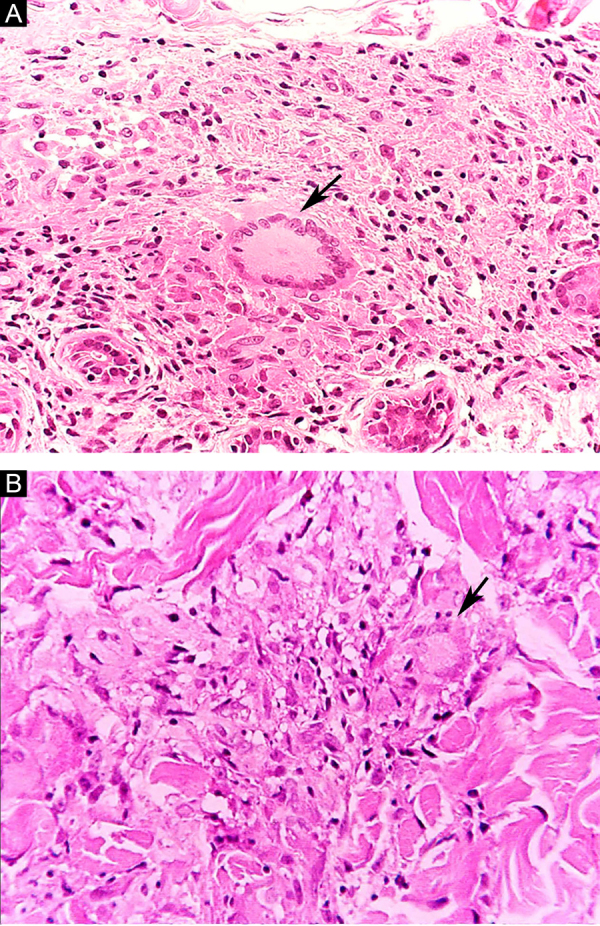
Figure 7
Figure 7
Tuberculoid leprosy. (A), Epithelioid granuloma with Langhans-type multinucleated giant cell (arrow). Borderline leprosy (B), Loose granulomatous arrangement with the presence of a multinucleated giant cell with fine cytoplasmic vacuolization (arrow). (Hematoxylin & eosin, ×400).
Figure 8
Figure 8
Lepromatous leprosy. (A), Rectification of the epidermis, which is separated from the dense dermal infiltrate by a collagen band (Hematoxylin & eosin, ×40). (B), Cross-section of a dermal nerve with perineural delamination (Hematoxylin & eosin, ×200).
Figure 9
Figure 9
Histoid leprosy. (A), Well-delimited erythematous-ferruginous papules disseminated throughout the upper limb. (B), Proliferation of spindle-shaped macrophages with finely vacuolated cytoplasm (Hematoxylin-eosin, ×200). (C), Alcohol-acid resistant bacilli in the cytoplasm of spindle-shaped macrophages. (Faraco, ×1000).
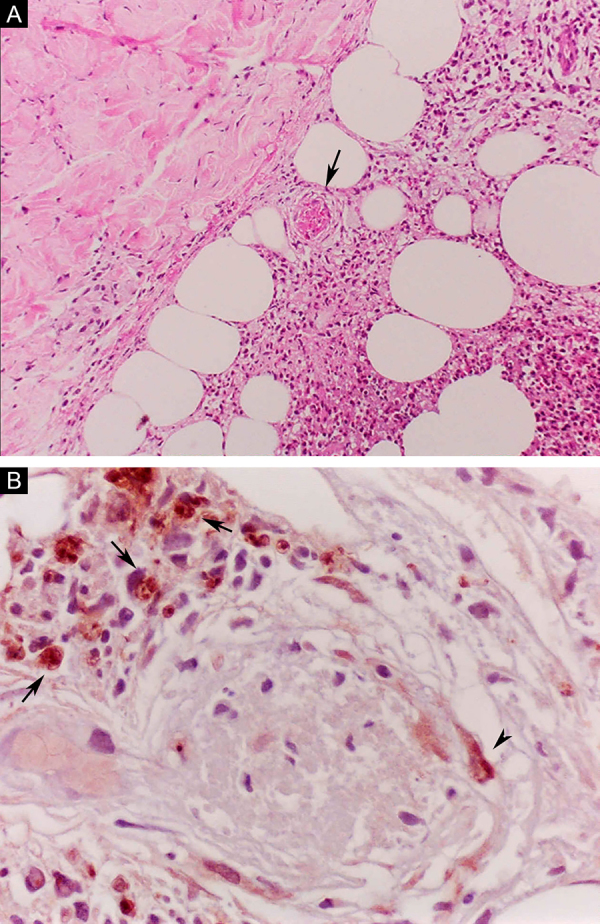
Figure 10
Figure 10
Erythema nodosum leprosum. (A), Involvement of hypodermal lobes with foci of neutrophilic exudation, macrophages, rupture of adipocytes, and blood vessel with thrombosis (arrow) (Hematoxylin & eosin, ×100). (B), Mycobacterial antigenic material in the cytoplasm of macrophages (arrows) and in endothelial cell (arrowhead) of a blood vessel with thrombosis (Immunohistochemical reaction with anti-BCG antibody, ×400).

References

    1. Organization WH Global leprosy (Hansen disease) update, 2019: time to step-up prevention initiatives. Weekly Epidemiological Record. 2020;95:417–440.
    1. Carlock S., Fulton E.H., Rosenbaum E., Mukasa L., Gardner J.M., Shalin S.C., et al. Hansen Disease (Leprosy) and Armadillo Exposure in Arkansas: A Case Series. Am J Dermatopathol. 2020;42:769–773. - PubMed
    1. Han X.Y., Seo Y.H., Sizer K.C., Schoberle T., May G.S., Spencer J.S., et al. A new Mycobacterium species causing diffuse lepromatous leprosy. Am J Clin Pathol. 2008;130:856–864. - PubMed
    1. Froes L.A.R., Jr, Trindade M.A.B., Sotto M.N. Immunology of leprosy. Int Rev Immunol. 2022;41(2):72–83. doi: 10.1080/08830185.2020.1851370. Epub 2020 Nov 26. PMID: 33241709. - DOI - PubMed
    1. Casanova J.L., Abel L. Genetic dissection of immunity to mycobacteria: the human model. Annu Rev Immunol. 2002;20:581–620. - PubMed