. 2022 Nov;18(11):2519-2536.
doi: 10.1080/15548627.2022.2039994. Epub 2022 Apr 6.

Autophagopathies: from autophagy gene polymorphisms to precision medicine for human diseases

Affiliations

Autophagopathies: from autophagy gene polymorphisms to precision medicine for human diseases

Iris Grosjean et al. Autophagy. 2022 Nov.

Abstract

At a time when complex diseases affect globally 280 million people and claim 14 million lives every year, there is an urgent need to rapidly increase our knowledge into their underlying etiologies. Though critical in identifying the people at risk, the causal environmental factors (microbiome and/or pollutants) and the affected pathophysiological mechanisms are not well understood. Herein, we consider the variations of autophagy-related (ATG) genes at the heart of mechanisms of increased susceptibility to environmental stress. A comprehensive autophagy genomic resource is presented with 263 single nucleotide polymorphisms (SNPs) for 69 autophagy-related genes associated with 117 autoimmune, inflammatory, infectious, cardiovascular, neurological, respiratory, and endocrine diseases. We thus propose the term 'autophagopathies' to group together a class of complex human diseases the etiology of which lies in a genetic defect of the autophagy machinery, whether directly related or not to an abnormal flux in autophagy, LC3-associated phagocytosis, or any associated trafficking. The future of precision medicine for common diseases will lie in our ability to exploit these ATG SNP x environment relationships to develop new polygenetic risk scores, new management guidelines, and optimal therapies for afflicted patients.Abbreviations: ATG, autophagy-related; ALS-FTD, amyotrophic lateral sclerosis-frontotemporal dementia; ccRCC, clear cell renal cell carcinoma; CD, Crohn disease; COPD, chronic obstructive pulmonary disease; eQTL, expression quantitative trait loci; HCC, hepatocellular carcinoma; HNSCC, head and neck squamous cell carcinoma; GTEx, genotype-tissue expression; GWAS, genome-wide association studies; LAP, LC3-associated phagocytosis; LC3-II, phosphatidylethanolamine conjugated form of LC3; LD, linkage disequilibrium; LUAD, lung adenocarcinoma; MAF, minor allele frequency; MAP1LC3/LC3: microtubule associated protein 1 light chain 3; NSCLC, non-small cell lung cancer; OS, overall survival; PtdIns3K CIII, class III phosphatidylinositol 3 kinase; PtdIns3P, phosphatidylinositol-3-phosphate; SLE, systemic lupus erythematosus; SNPs, single-nucleotide polymorphisms; mQTL, methylation quantitative trait loci; ULK, unc-51 like autophagy activating kinase; UTRs, untranslated regions; WHO, World Health Organization.

Keywords: Autophagy; cancers; diseases; eQTL; pollutants/exposomics; polymorphism; prognosis; risk; susceptibility; theragnosis.


Conflict of interest statement

No potential conflict of interest was reported by the author(s).

Figures
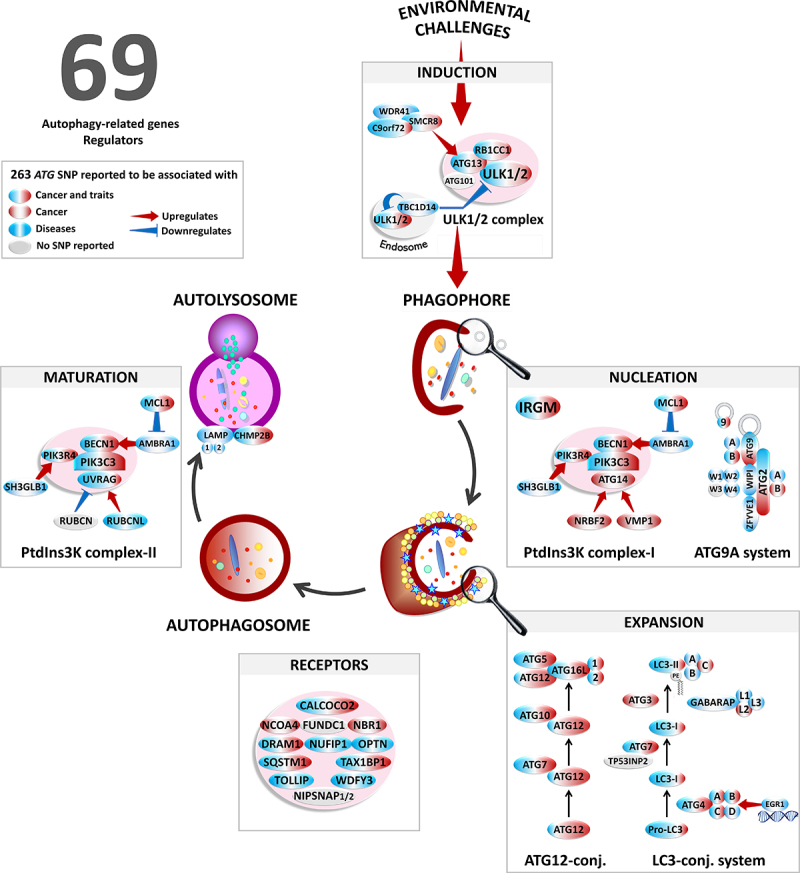
Figure 1.
Figure 1.
Overview of the autophagy pathway in response to environmental challenges. Schematic illustrating the molecular machinery of autophagy including the major autophagy-related proteins and complexes. Associations of ATG polymorphisms with cancers (red) and non-cancer diseases (blue).
Figure 2.
Figure 2.
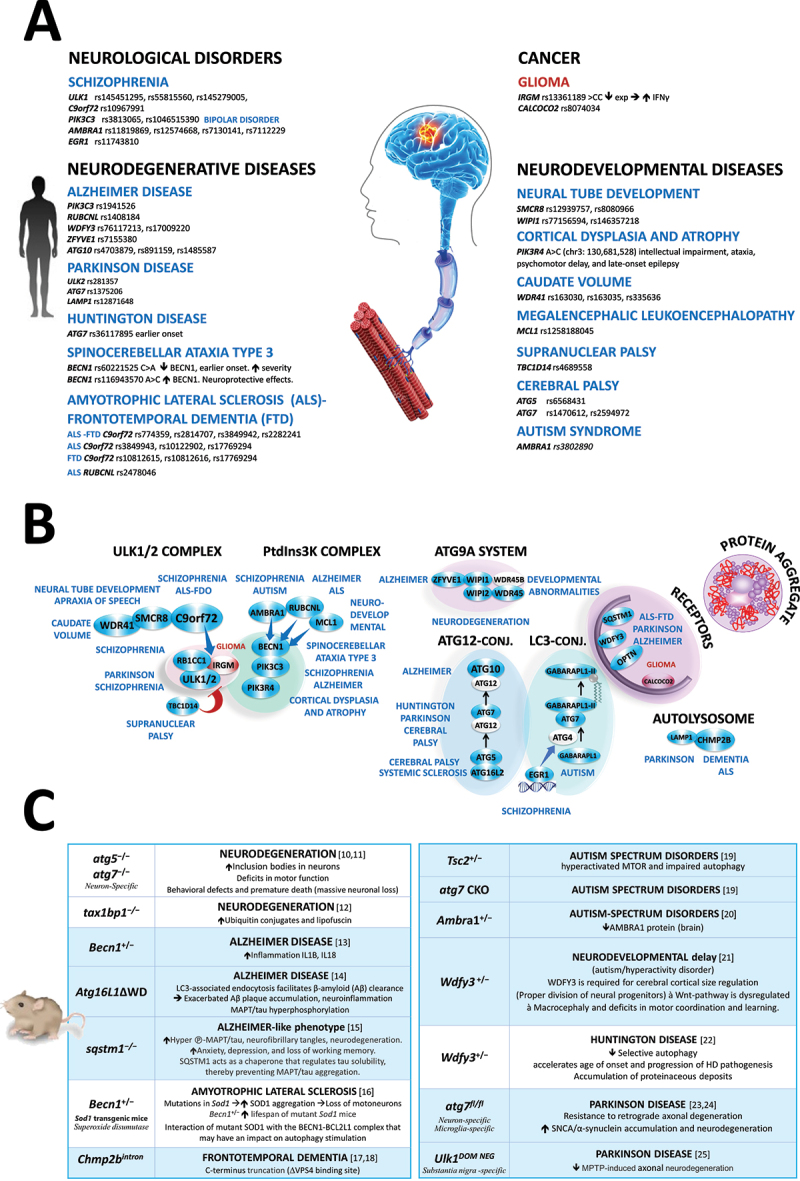
Deficiency in autophagy in human central nervous system diseases. (A) Summary of autophagy-related gene variations. (B) Steps of the autophagy pathway affected by SNPs. (C) Phenotype of autophagy-deficient mousemodels [10–25] p-MAPT: phosphorylated-MAPT/tau.
Figure 3.
Figure 3.
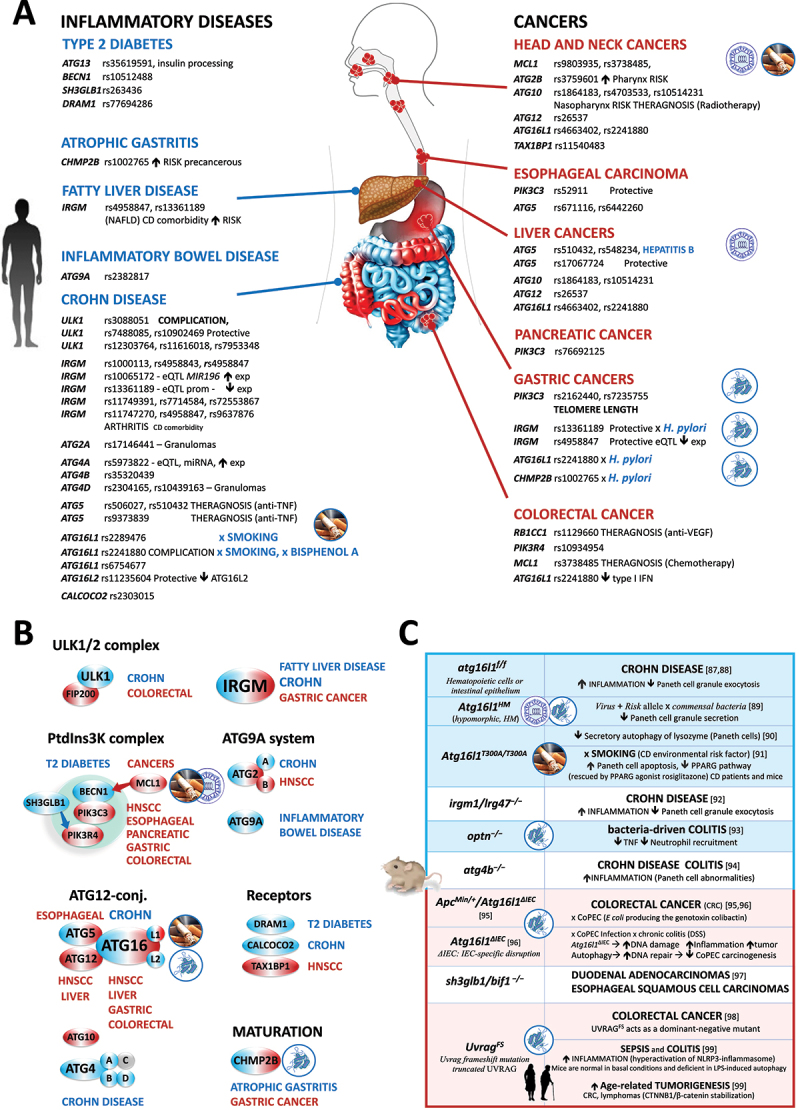
Deficiency in autophagy in human gastrointestinal disorders. (A) Summary of autophagy-related gene variations. (B) Steps of the autophagy pathway affected by SNPs. (C) Phenotypes of autophagy-deficient mouse models [87–93,93–99].
Figure 4.
Figure 4.
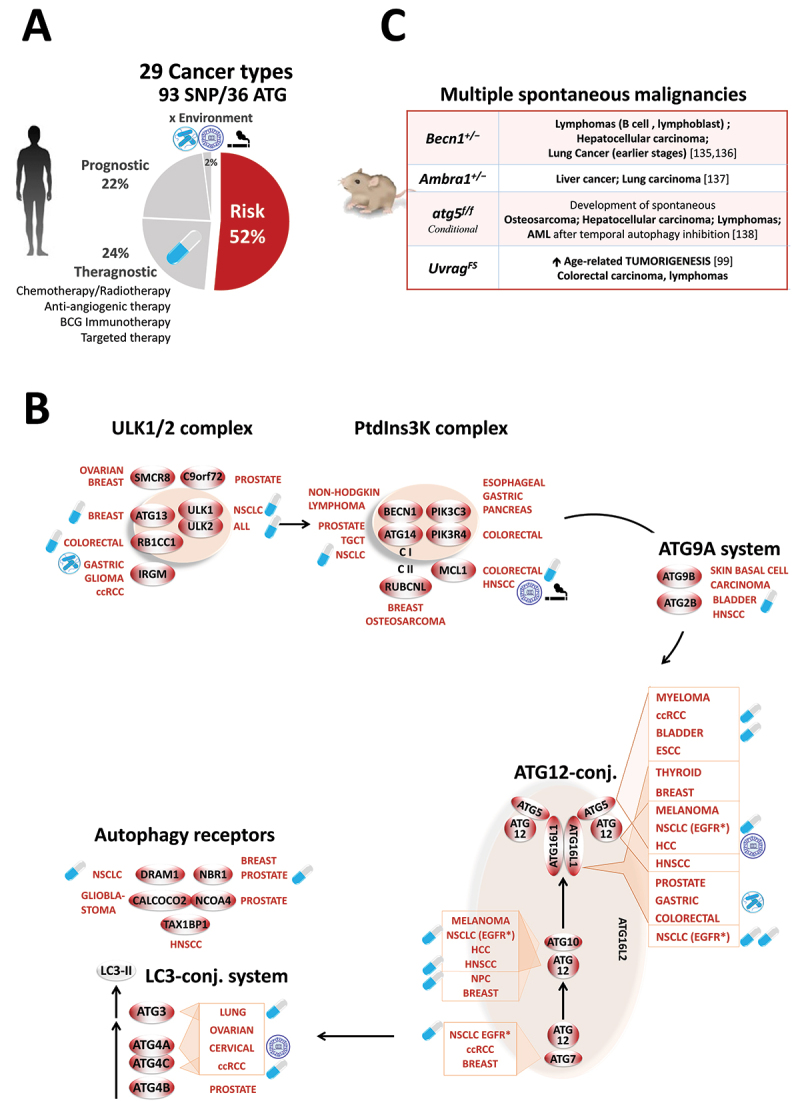
Landscape of ATG polymorphisms in human cancers. (A) Percentage of ATG polymorphisms for 29 cancer types in terms of theragnosis, prognosis, and risk, and relation with environmental factors. (B) Steps of the autophagy pathway affected by SNPs. ESCC, esophageal squamous cell carcinoma. (C) Phenotypes of autophagy-deficient mouse models [99,135–138].
Figure 5.
Figure 5.
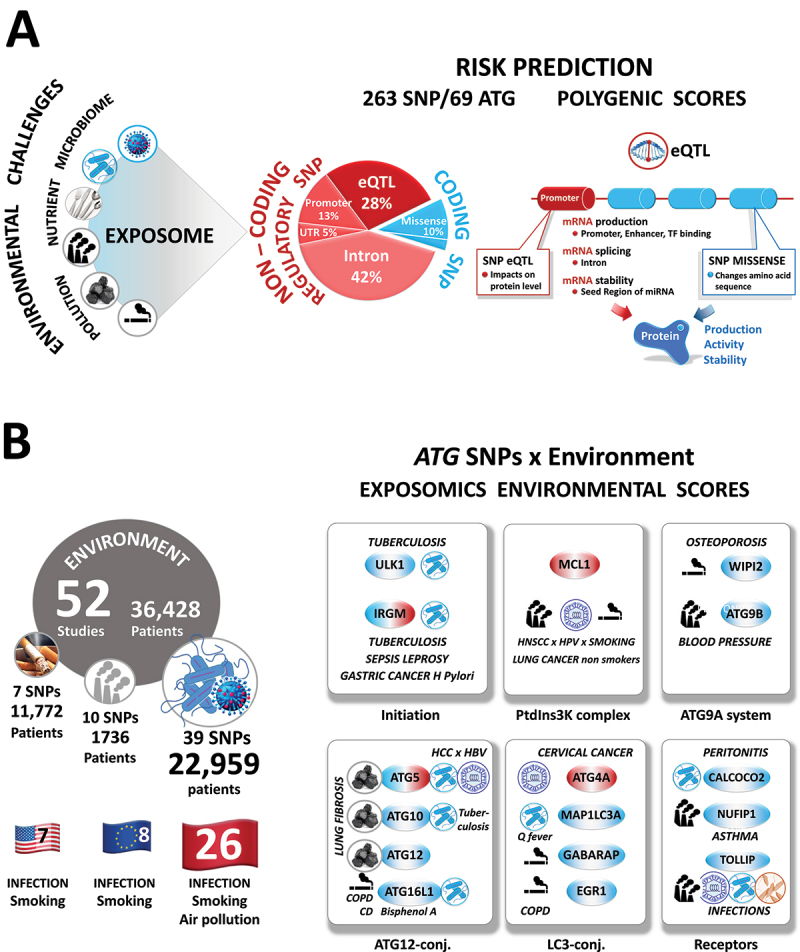
Biomarkers of exposure and, ultimately, of risk assessment and clinical outcome. (A) Right. Distribution (in percentage, left) and predicted functional consequences (right) of 219 coding and non-coding regulatory ATG SNPs. Left, Number of studies, totaling the number of patients, ATG genes, and SNP per Europe, United States, and Asia. Note that whereas 70 to 90% of the risk of developing a disease is due to the environment, only 13% of studies on autophagy gene SNPs have included the environment as a trigger or exacerbating factor. Likewise, air pollution is the fourth most prevalent deadly risk factor worldwide and, so far, most of the studies focused on infection. TF, transcription factor. Related to: (B) The concept of the exposome and atlas of the ‘autophagy gene × environmental’ interactions in the susceptibility of complex human diseases. Because of the long latency period, exposure to a causal agent/mixture typically occurs years to decades before disease diagnosis. The exposome is a unique marker that characterizes the totality of trace chemicals resulting from different routes (internal and external) and times of exposure over the lifetime of an individual.

References

    1. Rappaport SM, Smith MT.. Epidemiology. Environment and disease risks. Science. 2010. Oct 22;330(6003):460–461. doi: 10.1126/science.1192603. PubMed PMID: 20966241. - DOI - PMC - PubMed
    1. https://www.who.int/news-room/fact-sheets/detail/ambient-(outdoor)-air-q....
    1. Yin Z, Pascual C, Klionsky DJ.. Autophagy: machinery and regulation. Microb Cell. 2016. Dec 5;3(12):588–596. doi: 10.15698/mic2016.12.546. PubMed PMID: 28357331. - DOI - PMC - PubMed
    1. Smigielski EM, Sirotkin K, Ward M, et al. dbSNP: a database of single nucleotide polymorphisms. Nucleic Acids Res. 2000. Jan 1;28(1):352–355. doi: 10.1093/nar/28.1.352. PubMed PMID: 10592272. - DOI - PMC - PubMed
    1. Allot A, Peng Y, Wei C-H, et al. LitVar: a semantic search engine for linking genomic variant data in PubMed and PMC. Nucleic Acids Res. 2018. Jul 2;46(W1):W530–W536. doi: 10.1093/nar/gky355. PubMed PMID: 29762787. - DOI - PMC - PubMed

Publication types