


Cesarean scar pregnancy with expectant management
- PMID: 35384174
- PMCID: PMC9324103
- DOI: 10.1111/jog.15258
Cesarean scar pregnancy with expectant management
Abstract
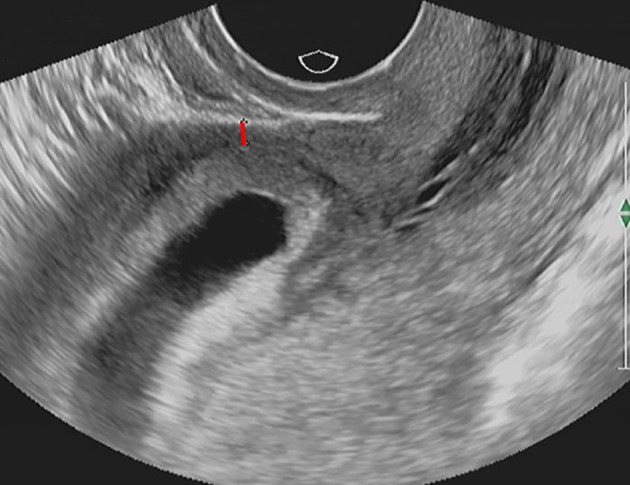
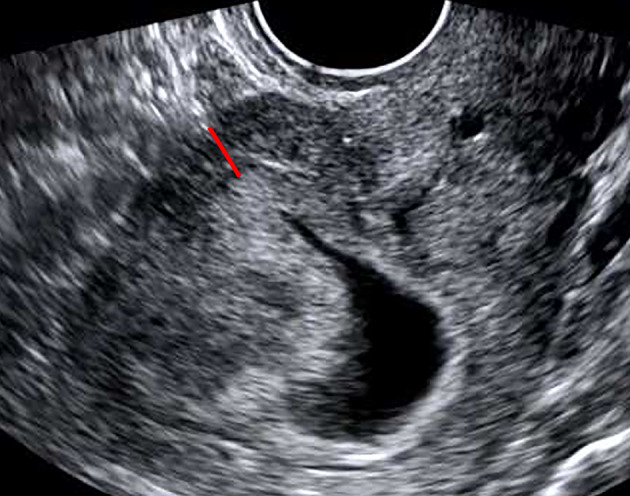
Aim: This study aimed to ascertain whether the lower anterior myometrial thickness (MT) between the bladder and the gestational sac in early pregnancy can be used to predict clinical outcomes in women with cesarean scar pregnancy (CSP) after expectant management.
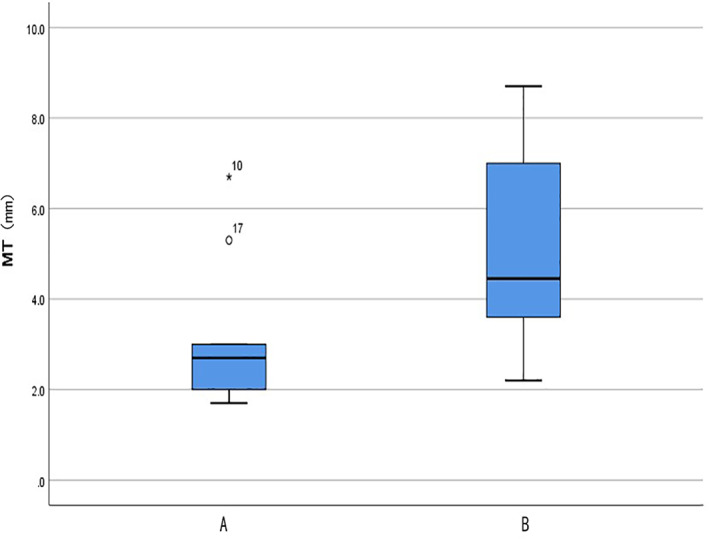
Methods: We retrospectively analyzed the clinical data and early pregnancy ultrasound images of 21 patients who received expectant management for CSP. Among them, 11 patients with serious complications during pregnancy, such as intraoperative blood loss ≥1000 mL or with severe forms of morbidly adherent placenta (MAP; placenta increta or placenta percreta), were assigned to group A. The remaining 10 patients without serious complications during pregnancy were assigned to group B. The difference in MT between groups A and B was analyzed using nonparametric Mann-Whitney U test.
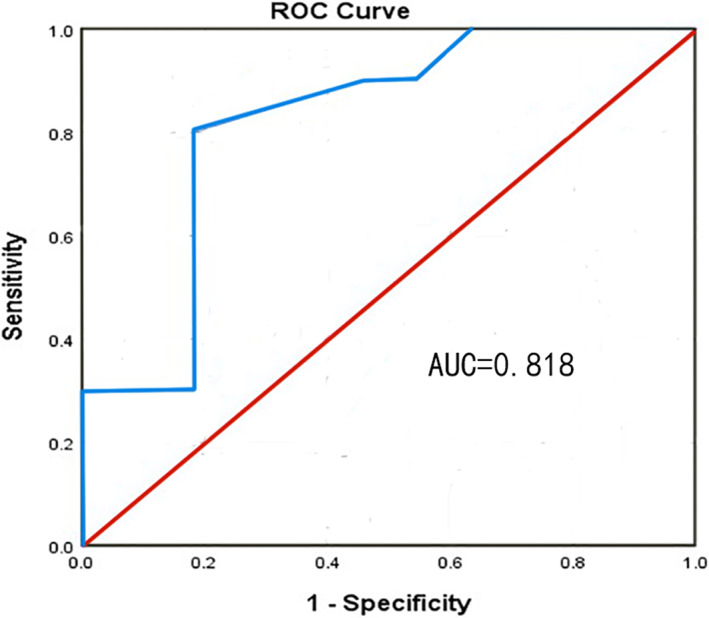
Results: There was a statistically significant difference in MT between the groups (U = 20.000, p = 0.013). The area under the receiver operating characteristics (ROC) curve was 0.818, and the optimal cut-off value for MT was 3.3 mm.
Conclusion: Lower anterior MT around the gestational sac was correlated with severe complications, such as massive intraoperative bleeding or severe forms of MAP in patients with CSP.
Keywords: cesarean scar pregnancy; expectant management; intraoperative blood loss; morbidly adherent placenta; ultrasound examination.
© 2022 The Authors. Journal of Obstetrics and Gynaecology Research published by John Wiley & Sons Australia, Ltd on behalf of Japan Society of Obstetrics and Gynecology.
Conflict of interest statement
None declared.
Figures
References
-
- Jayaram P, Okunoye G, Al Ibrahim AA, Ghani R, Kalache K. Expectant management of caesarean scar ectopic pregnancy: a systematic review. J Perinat Med. 2018;46:365–72. - PubMed
-
- Miller R, Timor‐Tritsch IE, Gyamfi‐Bannerman C. Society for Maternal‐Fetal Medicine (SMFM) consult series #49: cesarean scar pregnancy. Am J Obstet Gynecol. 2020;222:B2–b14. - PubMed
-
- Calì G, Timor‐Tritsch IE, Palacios‐Jaraquemada J, Monteaugudo A, Buca D, Forlani F, et al. Outcome of cesarean scar pregnancy managed expectantly: systematic review and meta‐analysis. Ultrasound Obstet Gynecol. 2018;51:169–75. - PubMed
-
- D'Antonio F, Timor‐Tritsch IE, Palacios‐Jaraquemada J, Monteagudo A, Buca D, Forlani F, et al. First‐trimester detection of abnormally invasive placenta in high‐risk women: systematic review and meta‐analysis. Ultrasound Obstet Gynecol. 2018;51:176–83. - PubMed
-
- Timor‐Tritsch IE, Monteagudo A, Cali G, Palacios‐Jaraquemada JM, Maymon R, Arslan AA, et al. Cesarean scar pregnancy and early placenta accreta share common histology. Ultrasound Obstet Gynecol. 2014;43:383–95. - PubMed
