


Impact of Covid-19 on clinical care and lived experience of systemic sclerosis: An international survey from EURORDIS-Rare Diseases Europe
- PMID: 35386739
- PMCID: PMC8892935
- DOI: 10.1177/2397198321999927
Impact of Covid-19 on clinical care and lived experience of systemic sclerosis: An international survey from EURORDIS-Rare Diseases Europe
Abstract
Introduction: Outcomes related to Covid-19 in systemic sclerosis patients could be influenced by internal organ involvement and/or immunosuppressive treatment, leading to efforts to shield patients from Covid-19 transmission. We examined the impact of Covid-19 on the lived experience of systemic sclerosis with regards to other aspects of daily living including occupation and emotional well-being.
Method: Individuals with systemic sclerosis or relatives/carers participated in an online survey, disseminated through international patient associations and social media pages, designed to examine the impact of Covid-19 on living with a rare disease.
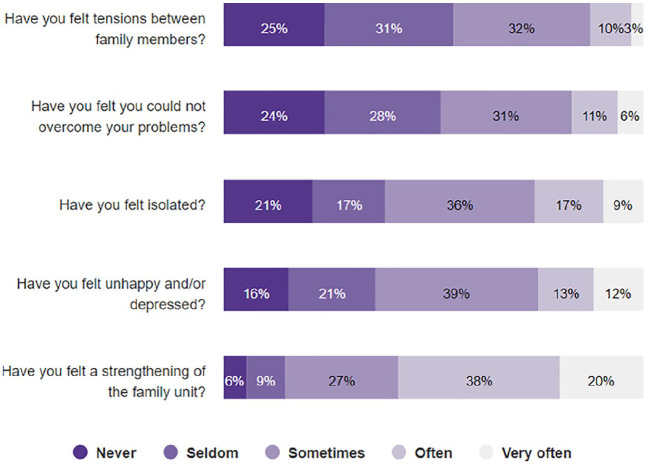
Results: Responses from 121 individuals (98% were patients with systemic sclerosis) from 14 countries were evaluable. Covid-19 was considered a probable/definite personal threat (93%) or threat for the individual they care for (100%). Approximately two-thirds of responders reported either cancellation or postponement/delay to appointments, diagnostic tests, medical therapies at home (e.g. infusions), surgery or transplant, psychiatry follow-up or rehabilitation services. Twenty-six percent reported at least one systemic sclerosis medicine/treatment had been unavailable, and 6% had to either stop taking usual medications or use an alternative. Most reported online consultations/telemedicine via phone (88%) and online (96%) as being 'fairly' or 'very' useful. Respondents reported tensions among family members (45%) and difficulty overcoming problems (48%). Restrictions on movement left around two-thirds feeling isolated (61%), unhappy and/or depressed (64%), although the majority (85%) reported a strengthening of the family unit.
Conclusion: Covid-19 has resulted in significant impact on the clinical-care and emotional well-being of systemic sclerosis patients. Changes to clinical care delivery have been well-received by patients including telemedicine consultations.
Keywords: Covid-19; Systemic sclerosis; clinical-care; emotional well-being; scleroderma; telemedicine.
© The Author(s) 2021.
Conflict of interest statement
Declaration of conflicting interests: The author(s) declared the following potential conflicts of interest with respect to the research, authorship and/or publication of this article: M.H. has received speaker honoraria (<$10,000) from Actelion pharmaceuticals. J.J.’s work at Genetic Alliance UK is supported through a partnership agreement with Alexion. J.P. has received speaker’s honoraria and research grant support (>$10,000) from Actelion pharmaceuticals. He has undertaken consultancy work for Actelion pharmaceuticals, Sojournix Pharma and Boehringer Ingelheim. The remaining author has no conflicts to declare.
Figures

References
-
- Bassel M, Hudson M, Taillefer SS, et al. Frequency and impact of symptoms experienced by patients with systemic sclerosis: results from a Canadian National Survey. Rheumatology 2011; 50(4): 762–767. - PubMed
-
- Denton CP, Khanna DK. Systemic sclerosis. Lancet 2017; 390(10103): 1685–1699. - PubMed
-
- Humbert M, Yaici A, de Groote P, et al. Screening for pulmonary arterial hypertension in patients with systemic sclerosis: clinical characteristics at diagnosis and long-term survival. Arthritis Rheum 2011; 63(11): 3522–3530. - PubMed
LinkOut - more resources
Full Text Sources