


Clinical Characterization and Possible Pathological Mechanism of Acute Myocardial Injury in COVID-19
- PMID: 35387441
- PMCID: PMC8979292
- DOI: 10.3389/fcvm.2022.862571
Clinical Characterization and Possible Pathological Mechanism of Acute Myocardial Injury in COVID-19
Abstract
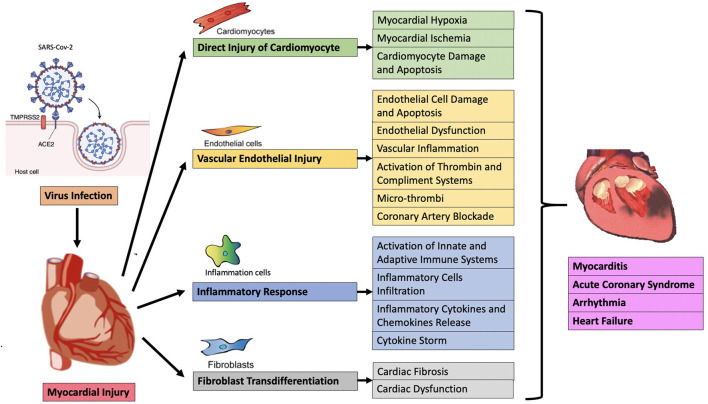
COVID-19 is a respiratory disease that can cause damage to multiple organs throughout the body. Cardiovascular complications related to COVID-19 mainly include acute myocardial injury, heart failure, acute coronary syndrome, arrhythmia, myocarditis. Among them, myocardial injury is the most common complication in COVID-19 hospitalized patients, and is associated with poor prognosis such as death and arrhythmias. There is a continuous relationship between myocardial injury and the severity of COVID-19. The incidence of myocardial injury is higher in critically ill patients and dead patients, and myocardial injury is more likely to occur in the elderly critically ill patients with comorbidities. Myocardial injury is usually accompanied by more electrocardiogram abnormalities, higher inflammation markers and more obvious echocardiographic abnormalities. According to reports, COVID-19 patients with a history of cardiovascular disease have a higher in-hospital mortality, especially in the elder patients. At present, the mechanism of myocardial injury in COVID-19 is still unclear. There may be direct injury of myocardial cells, systemic inflammatory response, hypoxia, prethrombotic and procoagulant state, myocardial interstitial fibrosis, interferon-mediated immune response and coronary artery plaque instability and other related factors, and angiotensin-converting enzyme-2 receptor may play a key role in the myocardial injury in COVID-19.
Keywords: COVID-19; angiotensin-converting enzyme-2 receptor; inflammation markers; myocardial injury; prognosis.
Copyright © 2022 Li, Wang, Yan, Zhang, Gong and Nie.
Conflict of interest statement
The authors declare that the research was conducted in the absence of any commercial or financial relationships that could be construed as a potential conflict of interest.
Figures
References
Publication types
LinkOut - more resources
Full Text Sources
