


Perceptions and attitudes around perinatal mental health in Bangladesh, India and Pakistan: a systematic review of qualitative data
- PMID: 35387619
- PMCID: PMC8988352
- DOI: 10.1186/s12884-022-04642-x
Perceptions and attitudes around perinatal mental health in Bangladesh, India and Pakistan: a systematic review of qualitative data
Abstract
Background: Perinatal mental health (PMH) is a worldwide public health issue crossing cultural boundaries. However, the prevalence of PMH conditions vary considerably. These disparities stem in part from poor understanding and stigma surrounding PMH which hinder pregnant women from seeking mental health care and may exacerbate their conditions. Bangladesh, India and Pakistan are South Asian countries with a higher burden of PMH conditions than in the Global North-West and very different social and cultural norms around gender and mental health. The aim of this systematic review (PROSPERO Ref: CRD42020167903) was to identify, synthesise and appraise the available literature on perceptions and attitudes of perinatal (pregnant and postpartum) women, their families and healthcare providers surrounding PMH in Bangladesh, India and Pakistan.
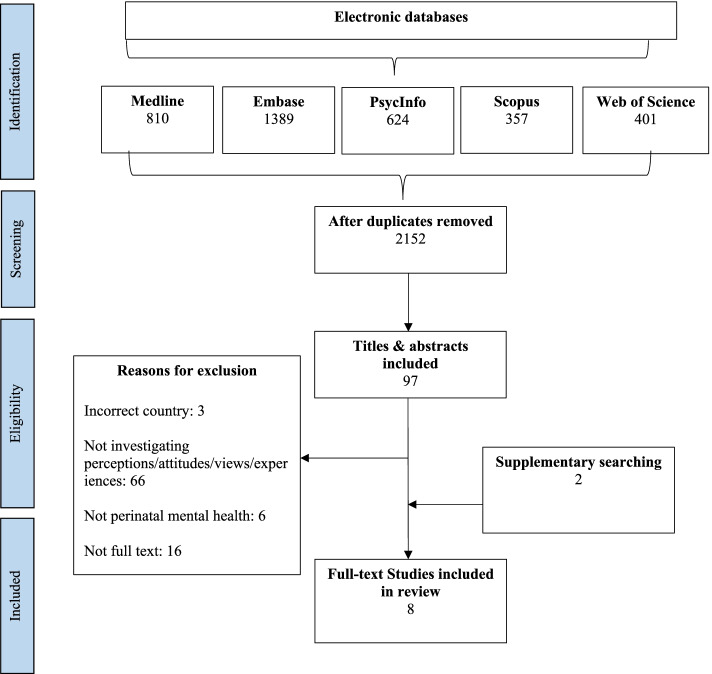
Methods: Five electronic databases, MEDLINE, Embase, PsycINFO, Scopus and Web of science, and grey literature were searched using predefined search terms. Qualitative or quantitative articles with a qualitative component reporting perceptions and attitudes surrounding PMH in Bangladesh, India and Pakistan were eligible for inclusion, if published in English between January 2000 and January 2021. The Critical Appraisal Skills Programme Qualitative Research Checklist and Newcastle-Ottawa Scale for cross-sectional studies were used to assess study quality. Findings were synthesised using thematic synthesis, as described by Thomas and Harden 2008.
Results: Eight studies were included. Five overarching themes comprising 17 sub-categories were identified. These descriptive themes were: perceived causes of PMH, perceived symptoms of PMH, perceptions of motherhood, accessing PMH care and emotional sharing and coping strategies. Sociocultural expectations underpin many of the themes identified in this review including the importance of familial and societal causes of PMH, emphasis on physical symptoms, sacredness of motherhood, lack of awareness, stigma, shame, limited resources allocated for mental health and lack of emotional sharing.
Conclusions: There is a complex range of perceptions and attitudes around PMH which influence women's experiences and access to PMH care. These findings will inform policy and practice through targeted interventions to tackle stigmatising attitudes and increasing education and training for healthcare providers.
Keywords: Attitudes; Perceptions; Perinatal mental health; South Asia.
© 2022. The Author(s).
Conflict of interest statement
All authors declare no competing interests.
References
-
- Cox JL. Perinatal mental disorder—a cultural approach. Int Rev Psychiatry. 1996;8(1):9–16. doi: 10.3109/09540269609037813. - DOI
Publication types
MeSH terms
Grants and funding
LinkOut - more resources
Full Text Sources
Medical
