


Prediction of metabolic and pre-metabolic syndromes using machine learning models with anthropometric, lifestyle, and biochemical factors from a middle-aged population in Korea
- PMID: 35387629
- PMCID: PMC8985311
- DOI: 10.1186/s12889-022-13131-x
Prediction of metabolic and pre-metabolic syndromes using machine learning models with anthropometric, lifestyle, and biochemical factors from a middle-aged population in Korea
Abstract
Background: Metabolic syndrome (MetS) is a complex condition that appears as a cluster of metabolic abnormalities, and is closely associated with the prevalence of various diseases. Early prediction of the risk of MetS in the middle-aged population provides greater benefits for cardiovascular disease-related health outcomes. This study aimed to apply the latest machine learning techniques to find the optimal MetS prediction model for the middle-aged Korean population.
Methods: We retrieved 20 data types from the Korean Medicine Daejeon Citizen Cohort, a cohort study on a community-based population of adults aged 30-55 years. The data included sex, age, anthropometric data, lifestyle-related data, and blood indicators of 1991 individuals. Participants satisfying two (pre-MetS) or ≥ 3 (MetS) of the five NECP-ATP III criteria were included in the MetS group. MetS prediction used nine machine learning models based on the following algorithms: Decision tree, Gaussian Naïve Bayes, K-nearest neighbor, eXtreme gradient boosting (XGBoost), random forest, logistic regression, support vector machine, multi-layer perceptron, and 1D convolutional neural network. All analyses were performed by sequentially inputting the features in three steps according to their characteristics. The models' performances were compared after applying the synthetic minority oversampling technique (SMOTE) to resolve data imbalance.
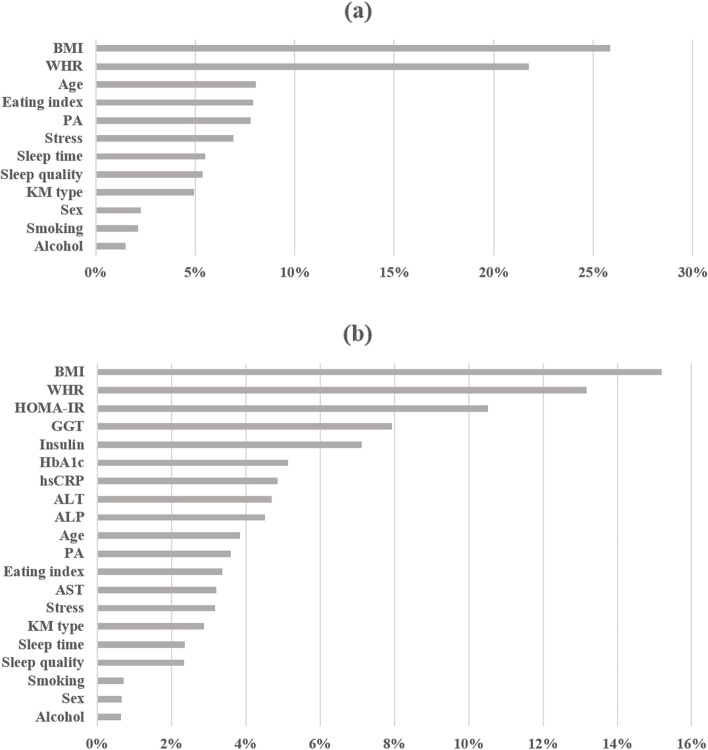
Results: MetS was detected in 33.85% of the subjects. Among the MetS prediction models, the tree-based random forest and XGBoost models showed the best performance, which improved with the number of features used. As a measure of the models' performance, the area under the receiver operating characteristic curve (AUC) increased by up to 0.091 when the SMOTE was applied, with XGBoost showing the highest AUC of 0.851. Body mass index and waist-to-hip ratio were identified as the most important features in the MetS prediction models for this population.
Conclusions: Tree-based machine learning models were useful in identifying MetS with high accuracy in middle-aged Koreans. Early diagnosis of MetS is important and requires a multidimensional approach that includes self-administered questionnaire, anthropometric, and biochemical measurements.
Keywords: Data sampling method; Feature importance; Machine learning; Metabolic syndrome; SMOTE.
© 2022. The Author(s).
Conflict of interest statement
The authors declare that they have no competing interests.
Figures
References
-
- Grundy SM, Cleeman JI, Daniels SR, Donato KA, Eckel RH, Franklin BA, et al. Diagnosis and management of the metabolic syndrome: an American Heart Association/National Heart, Lung, and Blood Institute Scientific Statement. Circulation. 2005;112:2735–2752. - PubMed
-
- Ansarimoghaddam A, Adineh HA, Zareban I, Iranpour S, HosseinSadeh A, Kh F. Prevalence of metabolic syndrome in Middle-East countries: meta-analysis of cross-sectional studies. Diabetes Metab Syndr. 2018;12:195–201. - PubMed
Publication types
MeSH terms
LinkOut - more resources
Full Text Sources
Medical
Research Materials
