


Dominican amber net-winged beetles suggest stable paleoenvironment as a driver for conserved morphology in a paedomorphic lineage
- PMID: 35388125
- PMCID: PMC8986798
- DOI: 10.1038/s41598-022-09867-6
Dominican amber net-winged beetles suggest stable paleoenvironment as a driver for conserved morphology in a paedomorphic lineage
Abstract
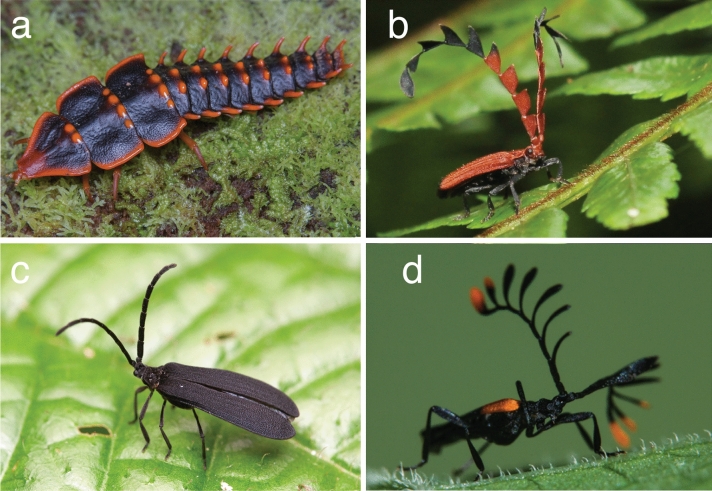
Paedomorphosis is a heterochronic syndrome in which adult individuals display features of their immature forms. In beetles, this phenomenon occurs widely in the superfamily Elateroidea, including the net-winged beetles (Lycidae), and, due to the usual flightlessness of paedomorphic females, it is hypothesized to cause speciation rates higher than in non-paedomorphic lineages. However, some fossils of paedomorphic lycids do not support this with palaeobiological data. Discovery of new Lycidae fossils attributed to the West Indian extant paedomorphic genus Cessator Kazantsev in the Dominican amber also suggests morphological stasis within this genus in the Greater Antilles. We describe Cessator anachronicus Ferreira and Ivie, sp. nov. based on adult males, as well as the first ever recorded fossil net-winged beetle larva of the same genus. We propose that the relatively young age of the studied fossils combined with the stable conditions in the forest floor of the Greater Antilles through the last tens of million years could explain the exceptionally conserved morphology in the net-winged beetles affected by the paedomorphic syndrome.
© 2022. The Author(s).
Conflict of interest statement
The authors declare no competing interests.
Figures


References
-
- Reilly SM, Wiley EO, Meinhardt DJ. An integrative approach to heterochrony: The distinction between interspecific and intraspecific phenomena. Biol. J. Linn. Soc. 1997;60:119–143.
-
- McNamara KJ. Heterochrony: The evolution of development. Evol. Educ. Outreach. 2012;5:203–218.
-
- Bocakova M, Bocak L, Hunt T, Teravainen M, Vogler AP. Molecular phylogenetics of Elateriformia (Coleoptera): Evolution of bioluminescence and neoteny. Cladistics. 2007;23:477–496.
-
- McMahon DP, Hayward A. Why grow up? A perspective on insect strategies to avoid metamorphosis. Ecol. Entomol. 2016;41:505–515.
Publication types
MeSH terms
Substances
Grants and funding
LinkOut - more resources
Full Text Sources
