


Peripartum hysterectomy due to severe postpartum hemorrhage: A hospital-based study
- PMID: 35388907
- PMCID: PMC9564671
- DOI: 10.1111/aogs.14358
Peripartum hysterectomy due to severe postpartum hemorrhage: A hospital-based study
Abstract
Introduction: A peripartum hysterectomy is typically performed as a lifesaving procedure in obstetrics to manage severe postpartum hemorrhage. Severe hemorrhages that lead to peripartum hysterectomies are mainly caused by uterine atony and placenta accreta spectrum disorders. In this study, we aimed to estimate the incidence, risk factors, causes and management of severe postpartum hemorrhage resulting in peripartum hysterectomies, and to describe the complications of the hysterectomies.
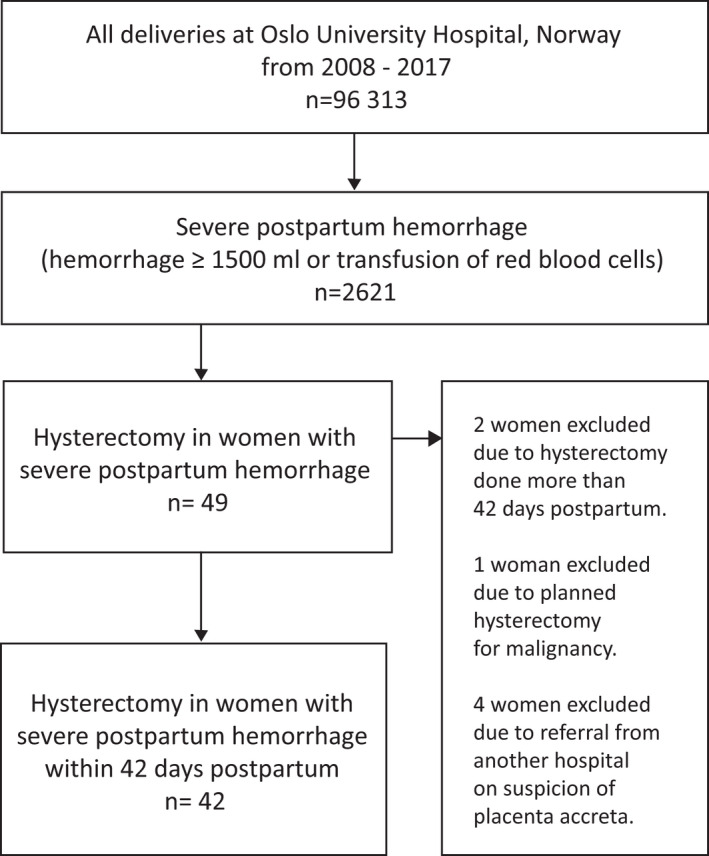
Material and methods: Eligible women had given birth at gestational week 23+0 or later and had a postpartum hemorrhage ≥1500 mL or a blood transfusion, due to postpartum hemorrhage, at Oslo University Hospital, Norway, between 2008 and 2017. Among the eligible women, this study included those who underwent a hysterectomy within the first 42 days after delivery. The Norwegian Medical Birth Registry provided the reference group. We used Poisson regression to estimate adjusted incidence rate ratios with 95% confidence intervals to identify clinical factors associated with peripartum hysterectomy.
Results: The incidence of hysterectomies with severe postpartum hemorrhage was 0.44/1000 deliveries (42/96313). Among the women with severe postpartum hemorrhage, 1.6% ended up with a hysterectomy (42/2621). Maternal age ≥40, previous cesarean section, multiple pregnancy and placenta previa were associated with a significantly higher risk of hysterectomy. Placenta accreta spectrum disorders were the most frequent cause of hemorrhage that resulted in a hysterectomy (52%, 22/42) and contributed to most of the complications following the hysterectomy (11/15 women with complications).
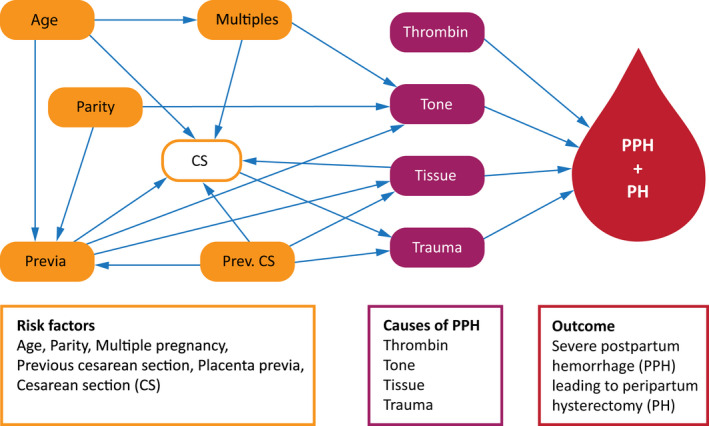
Conclusions: The rate of peripartum hysterectomies at Oslo University Hospital was low, but was higher than previously reported from Norway. Risk factors included high maternal age, previous cesarean section, multiple pregnancy and placenta previa, well known risk factors for placenta accreta spectrum disorders and severe postpartum hemorrhage. Placenta accreta spectrum disorders were the largest contributor to hysterectomies and complications.
Keywords: cesarean section; maternal near miss; peripartum hysterectomy; placenta accreta spectrum disorders; placenta previa; severe postpartum hemorrhage.
© 2022 The Authors. Acta Obstetricia et Gynecologica Scandinavica published by John Wiley & Sons Ltd on behalf of Nordic Federation of Societies of Obstetrics and Gynecology (NFOG).
Conflict of interest statement
Lill T. Nyfløt has received payment for lectures on postpartum hemorrhage from CSL Behring. None of the other authors has any conflict of interest.
Figures
References
-
- Say L, Souza JP, Pattinson RC. Maternal near miss‐‐towards a standard tool for monitoring quality of maternal health care. Best Pract Res Clin Obstet Gynaecol 2009;23:287–96, Maternal near miss – towards a standard tool for monitoring quality of maternal health care. - PubMed
-
- World Health Organization . Trends in maternal mortality: 1990 to 2015 Geneva, Switzerland: World Health Organization; 2015 [Available from: http://www.who.int/reproductivehealth/publications/monitoring/maternal‐m....
-
- Knight M. Peripartum hysterectomy in the UK: management and outcomes of the associated haemorrhage. BJOG. 2007;114:1380‐1387. - PubMed
MeSH terms
LinkOut - more resources
Full Text Sources
