


Regulation of Drug Transport Proteins-From Mechanisms to Clinical Impact: A White Paper on Behalf of the International Transporter Consortium
- PMID: 35390174
- PMCID: PMC9398928
- DOI: 10.1002/cpt.2605
Regulation of Drug Transport Proteins-From Mechanisms to Clinical Impact: A White Paper on Behalf of the International Transporter Consortium
Abstract
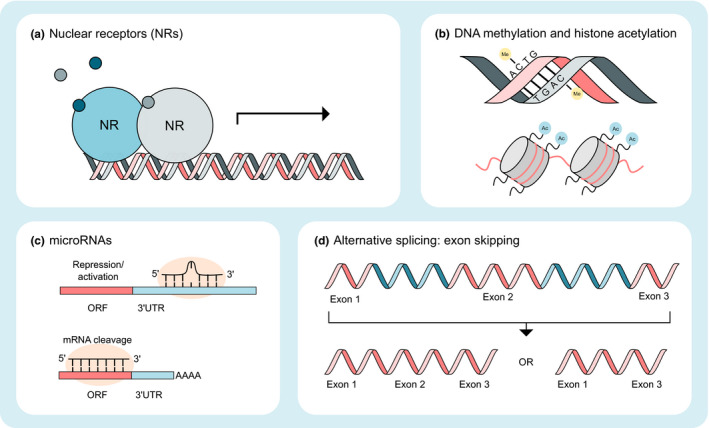
Membrane transport proteins are involved in the absorption, disposition, efficacy, and/or toxicity of many drugs. Numerous mechanisms (e.g., nuclear receptors, epigenetic gene regulation, microRNAs, alternative splicing, post-translational modifications, and trafficking) regulate transport protein levels, localization, and function. Various factors associated with disease, medications, and dietary constituents, for example, may alter the regulation and activity of transport proteins in the intestine, liver, kidneys, brain, lungs, placenta, and other important sites, such as tumor tissue. This white paper reviews key mechanisms and regulatory factors that alter the function of clinically relevant transport proteins involved in drug disposition. Current considerations with in vitro and in vivo models that are used to investigate transporter regulation are discussed, including strengths, limitations, and the inherent challenges in predicting the impact of changes due to regulation of one transporter on compensatory pathways and overall drug disposition. In addition, translation and scaling of in vitro observations to in vivo outcomes are considered. The importance of incorporating altered transporter regulation in modeling and simulation approaches to predict the clinical impact on drug disposition is also discussed. Regulation of transporters is highly complex and, therefore, identification of knowledge gaps will aid in directing future research to expand our understanding of clinically relevant molecular mechanisms of transporter regulation. This information is critical to the development of tools and approaches to improve therapeutic outcomes by predicting more accurately the impact of regulation-mediated changes in transporter function on drug disposition and response.
© 2022 The Authors. Clinical Pharmacology & Therapeutics published by Wiley Periodicals LLC on behalf of American Society for Clinical Pharmacology and Therapeutics.
Conflict of interest statement
K.L.R.B. is co‐inventor of the sandwich‐cultured hepatocyte technology for quantification of biliary excretion (B‐CLEAR) and related technologies, which have been licensed exclusively to Qualyst Transporter Solutions, acquired by BioIVT. R.E. is an employee of Johnson & Johnson and may own stock or stock options of Johnson & Johnson. C.Y.L. is an employee of Amgen and may be a stockholder of Amgen. S.N. is an employee of Certara UK Ltd. and stockholder of Certara. S.H.S. is an employee of AstraZeneca and holds AstraZeneca stock. All other authors declared no competing interests for this work.
Figures
Comment in
-
More Than Pharmacokinetics: Transporters in Clinical Pharmacology.Clin Pharmacol Ther. 2022 Sep;112(3):423-426. doi: 10.1002/cpt.2710. Clin Pharmacol Ther. 2022. PMID: 35989454 No abstract available.
References
-
- Keogh, J. , Hagenbuch, B. , Rynn, C. , Stieger, B. & Nicholls, G. Chapter 1. Membrane transporters: fundamentals, function and their role in ADME. In Drug Transporters: Role and Importance in ADME and Drug Development Vol. 1, 1–56 (The Royal Society of Chemistry, Cambridge, 2016).
-
- Wakabayashi, Y. , Kipp, H. & Arias, I.M. Transporters on demand: intracellular reservoirs and cycling of bile canalicular ABC transporters. J. Biol. Chem. 281, 27669–27673 (2006). - PubMed
Publication types
MeSH terms
Substances
Grants and funding
LinkOut - more resources
Full Text Sources
