


The impact of COVID-19 on rheumatology training-results from the COVID-19 Global Rheumatology Alliance trainee survey
- PMID: 35392427
- PMCID: PMC8982766
- DOI: 10.1093/rap/rkac001
The impact of COVID-19 on rheumatology training-results from the COVID-19 Global Rheumatology Alliance trainee survey
Abstract
Objective: The aim was to evaluate the impact of the coronavirus disease 2019 (COVID-19) pandemic on the clinical experiences, research opportunities and well-being of rheumatology trainees.
Methods: A voluntary, anonymous, Web-based survey was administered in English, Spanish or French from 19 August 2020 to 5 October 2020. Adult and paediatric rheumatology trainees were invited to participate via social media and email. Using multiple-choice questions and Likert scales, the perceptions of trainees regarding the impact of the COVID-19 pandemic on patient care and redeployment, learning and supervision, research and well-being were assessed.
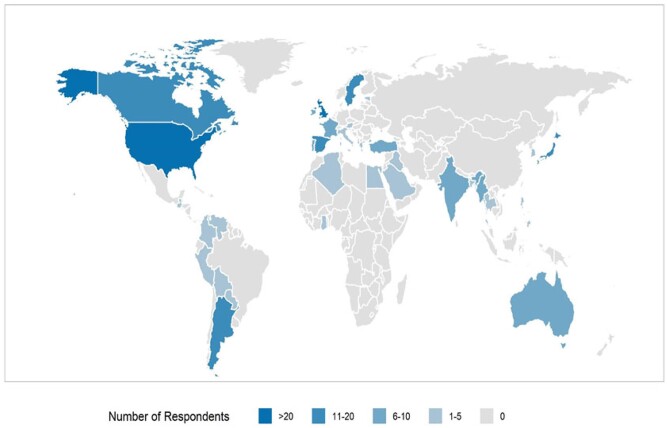
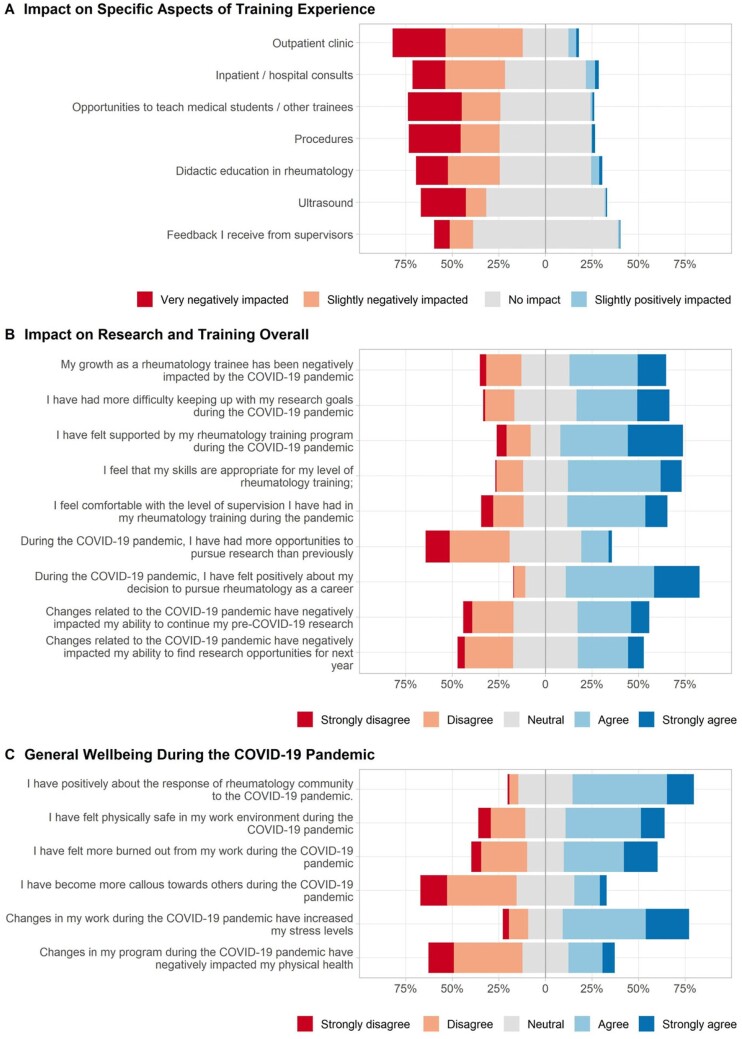
Results: There were 302 respondents from 33 countries, with 83% in adult rheumatology training. An increase in non-rheumatology clinical work was reported by 45%, with 68% of these having been redeployed to COVID-19. Overall, trainees reported a negative impact on their learning opportunities during rheumatology training, including outpatient clinics (79%), inpatient consultations (59%), didactic teaching (55%), procedures (53%), teaching opportunities (52%) and ultrasonography (36%). Impacts on research experiences were reported by 46% of respondents, with 39% of these reporting that COVID-19 negatively affected their ability to continue their pre-pandemic research. Burnout and increases in stress were reported by 50% and 68%, respectively. Physical health was negatively impacted by training programme changes in 25% of respondents.
Conclusion: The COVID-19 pandemic has had a substantial impact on rheumatology training and trainee well-being. Our study highlights the extent of this impact on research opportunities and clinical care, which are highly relevant to future curriculum planning and the clinical learning environment.
Keywords: COVID-19; Medical Education; Rheumatology Fellowship.
© The Author(s) 2022. Published by Oxford University Press on behalf of the British Society for Rheumatology.
Figures
References
-
- Gallagher TH, Schleyer AM.. “We signed up for this!” — student and trainee responses to the Covid-19 pandemic. N Engl J Med 2020;382:e96. - PubMed