


Parental mosaicism for apparent de novo genetic variants: Scope, detection, and counseling challenges
- PMID: 35394072
- PMCID: PMC9995893
- DOI: 10.1002/pd.6144
Parental mosaicism for apparent de novo genetic variants: Scope, detection, and counseling challenges
Abstract
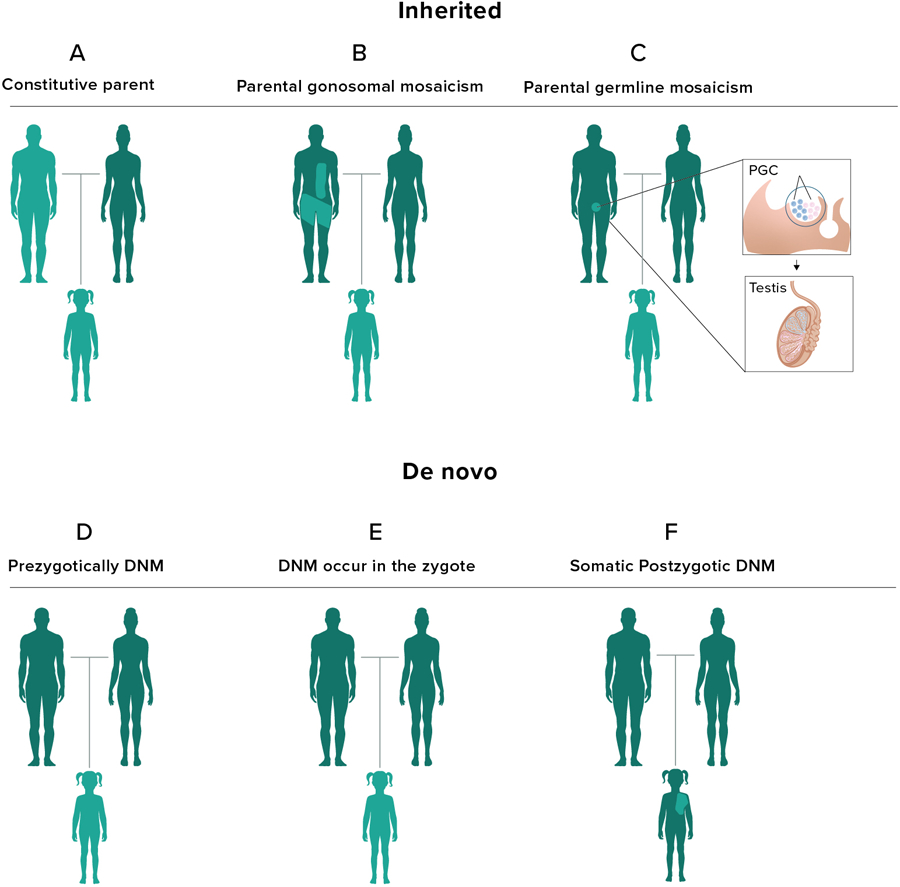
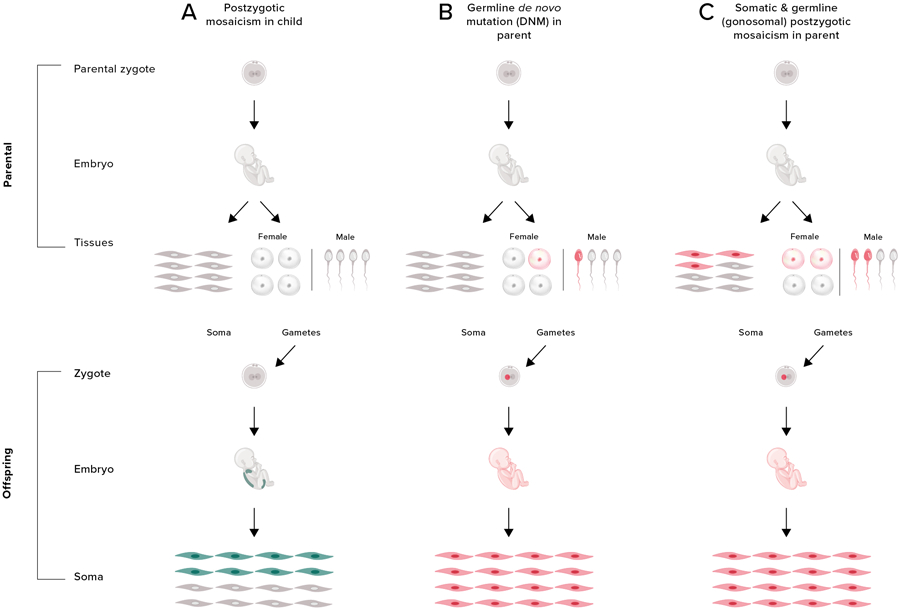
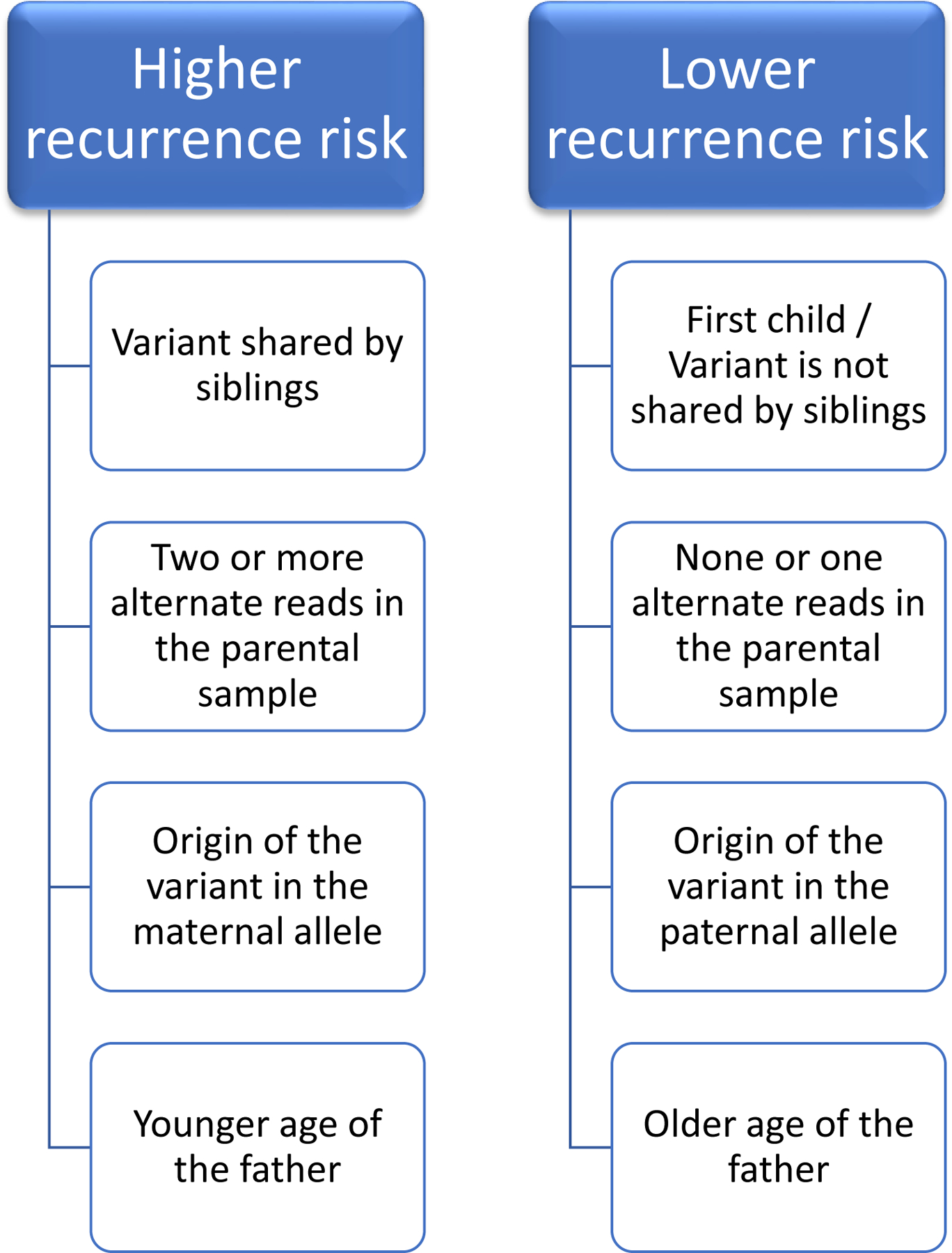
The disease burden of de novo mutations (DNMs) has been evidenced only recently when the common application of next-generation sequencing technologies enabled their reliable and affordable detection through family-based clinical exome or genome sequencing. Implementation of exome sequencing into prenatal diagnostics revealed that up to 63% of pathogenic or likely pathogenic variants associated with fetal structural anomalies are apparently de novo, primarily for autosomal dominant disorders. Apparent DNMs have been considered to primarily occur as germline or zygotic events, with consequently negligible recurrence risks. However, there is now evidence that a considerable proportion of them are in fact inherited from a parent mosaic for the variant. Here, we review the burden of DNMs in prenatal diagnostics and the influence of parental mosaicism on the interpretation of apparent DNMs and discuss the challenges with detecting and quantifying parental mosaicism and its effect on recurrence risk. We also describe new bioinformatic and technological tools developed to assess mosaicism and discuss how they improve the accuracy of reproductive risk counseling when parental mosaicism is detected.
Keywords: De novo mutation; mosaicism; prenatal diagnosis; recurrence risk; variants.
© 2022 John Wiley & Sons Ltd.
Conflict of interest statement
Conflicts of interests:
The authors declare no conflicts of interest
Figures
References
-
- Lannoy N, Hermans C. Genetic mosaicism in haemophilia: A practical review to help evaluate the risk of transmitting the disease. Haemophilia 2020;26(3):375–383. - PubMed
-
- Lupski JR. Genome Mosaicism—One Human, Multiple Genomes. Science 2013;341(6144):358–359. - PubMed
-
- Erickson RP. Somatic gene mutation and human disease other than cancer: an update. Mutat Res 2010;705(2):96–106. - PubMed
Publication types
MeSH terms
Grants and funding
- T32 GM007526/GM/NIGMS NIH HHS/United States
- P50HD103555/Eunice Kennedy Shriver National Institute of Child Health and Human Development
- R01HD055651/Eunice Kennedy Shriver National Institute of Child Health and Human Development
- R01 HD055651/HD/NICHD NIH HHS/United States
- T32 GM07526-44/GM/NIGMS NIH HHS/United States
LinkOut - more resources
Full Text Sources
