Review
. 2022 Apr 7;29(4):503-514.
doi: 10.1016/j.stem.2022.03.012.

Progress in multicellular human cardiac organoids for clinical applications

Affiliations
Review

Progress in multicellular human cardiac organoids for clinical applications

Hyeonyu Kim et al. Cell Stem Cell. .

Abstract

Advances in self-organizing cardiac organoids to recapitulate human cardiogenesis have provided a powerful tool for unveiling human cardiac development, studying cardiovascular diseases, testing drugs, and transplantation. Here, we highlight the recent remarkable progress on multicellular cardiac organoids and review the current status for their practical applications. We then introduce key readouts and tools for assessing cardiac organoids for clinical applications, address major challenges, and provide suggestions for each assessment method. Lastly, we discuss the current limitations of cardiac organoids as miniature models of the human heart and suggest a direction for moving forward toward building the mini-heart from cardiac organoids.


Conflict of interest statement

Declaration of interests J.C.W. is a cofounder of Greenstone Biosciences, and G.V.-N. is a cofounder of Tara Biosystems. R.D.K. is a cofounder of AIM Biotech and receives research support from Biogen and Amgen. However, J.C.W., G.V.-N., and R.D.K. have no competing interests, as the work presented here is independent. The other authors report no conflicts.

Figures
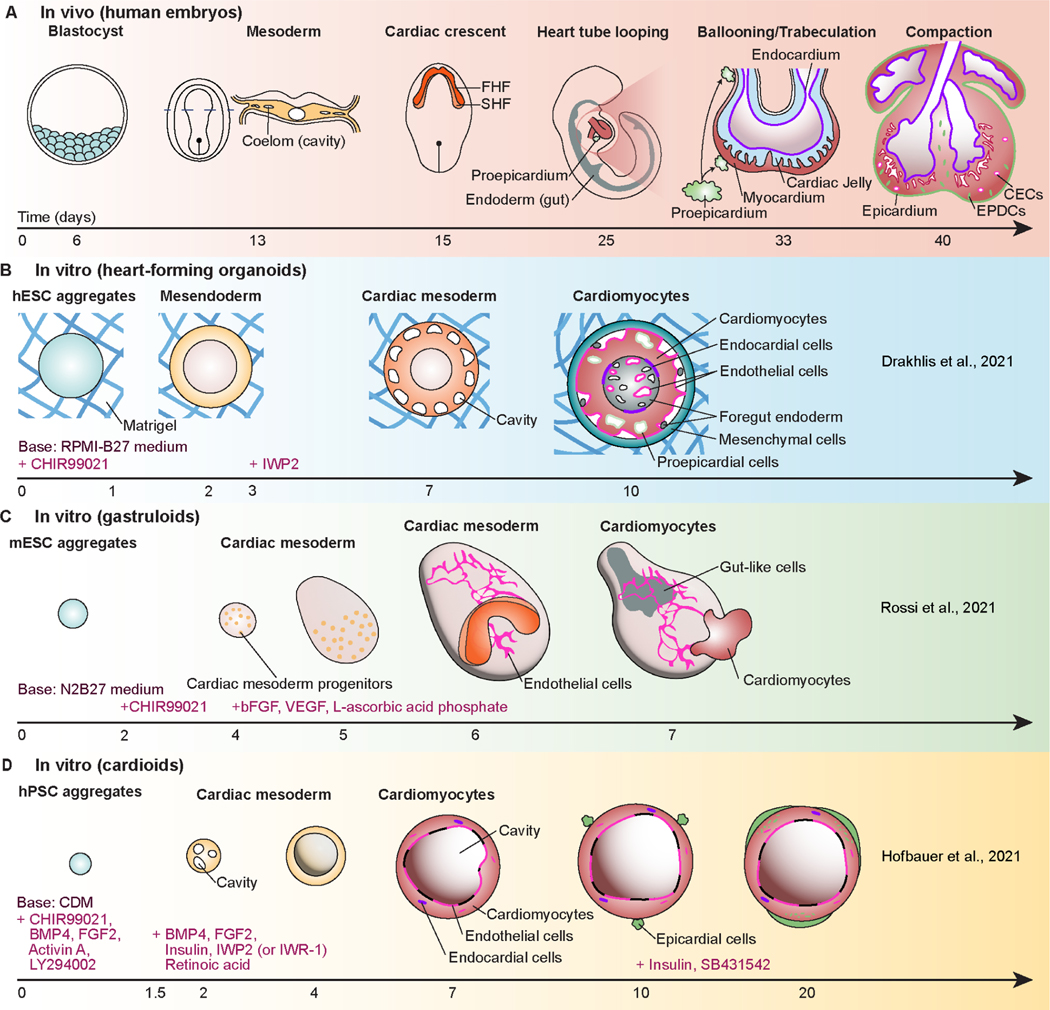
Figure 1.
Figure 1.. Comparison of recently reported cardiac organoids in vitro with cardiac development in vivo.
(A) Early cardiac development of human embryos (first 40 days); FHF: first heart field; SHF: second heart field; EPDCs: epicardial-derived cells; CECs: coronary endothelial cells. (B) Heart-forming organoids mimicking an interplay with foregut endoderm during development; RPMI-B27 medium: Roswell Park Memorial Institute 1640 medium containing B-27 supplement; IWR-2: inhibitor of Wnt production 2. (C) Self-assembled gastruloids with cardiac crescent- and heart tube-like regions; N2B27 medium: a half-half mixture of Dulbecco’s modified essential medium/Ham’s F-12 medium containing N2 supplement and Neurobasal medium containing B-27 supplement; bFGF: basic fibroblast growth factor; VEGF: vascular endothelial growth factor. (D) Chamber-like cardioids with endocardium, myocardium, and epicardium-like layers; BMP4: bone morphogenetic protein 4, FGF2: fibroblast growth factor 2.
Figure 2.
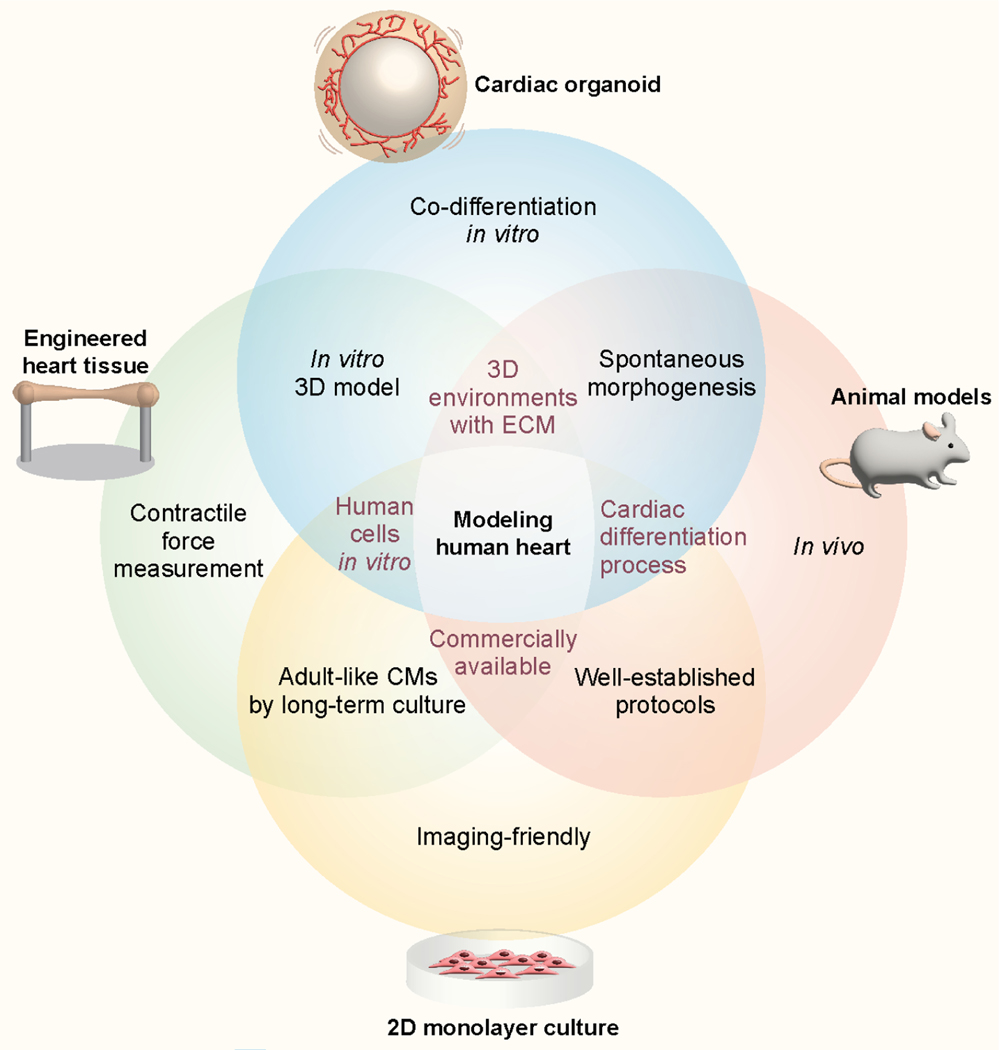
Figure 2.. The intersections and unique advantages of cardiac organoids and human heart models for drug testing and disease modelling.
Compared to 2D monolayer cultures, animal models, and engineered heart tissues, cardiac organoids can uniquely provide a platform to investigate spontaneous 3D cardiogenesis through co-differentiation under well-controlled in vitro conditions.
Figure 3.
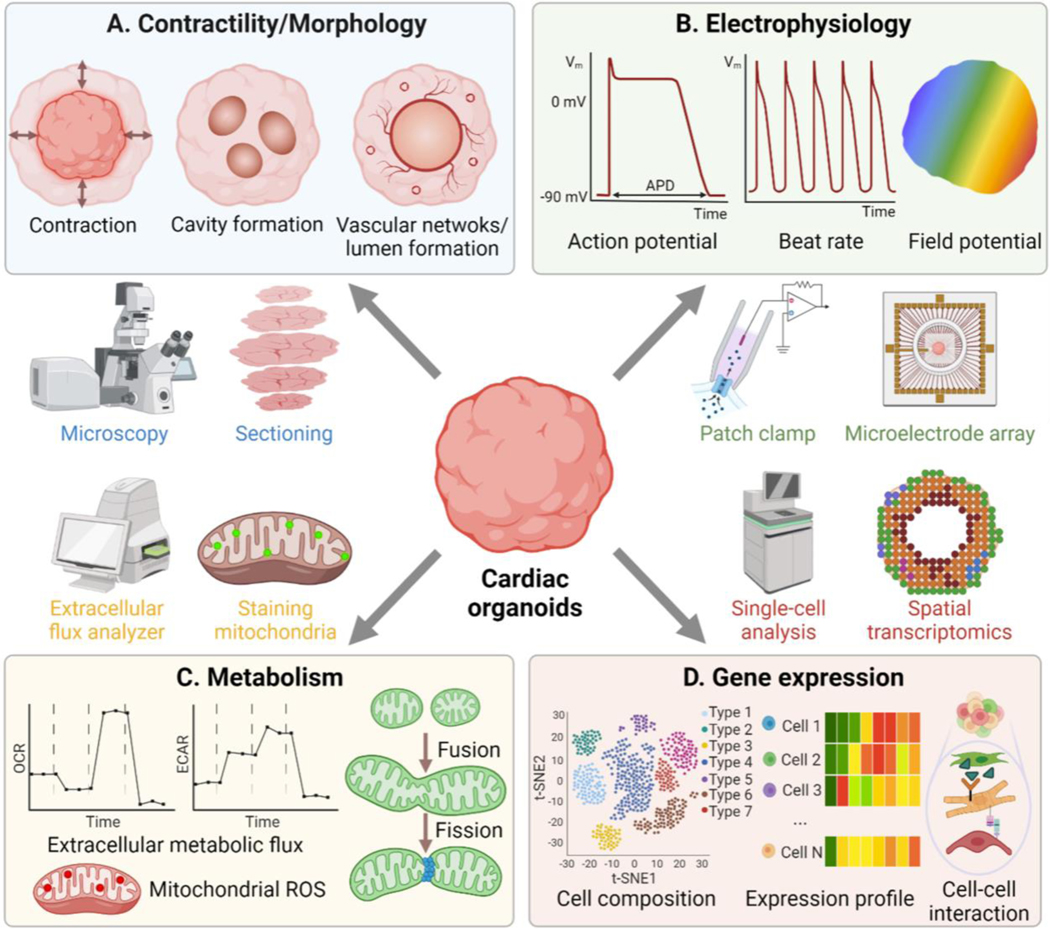
Figure 3.. Readouts and methods to assess cardiac functions.
(A) contractility/morphology; (B) electrophysiology; (C) metabolism; (D), gene expression. OCR: oxyzen consumption rate; ECAR: extracellular acidification rate; ROS: reactive oxygen species.

References

    1. Abilez OJ, Tzatzalos E, Yang H, Zhao M-T, Jung G, Zöllner AM, Tiburcy M, Riegler J, Matsa E, Shukla P, et al. (2018). Passive Stretch Induces Structural and Functional Maturation of Engineered Heart Muscle as Predicted by Computational Modeling. Stem Cells 36, 265–277. - PMC - PubMed
    1. Asp M, Giacomello S, Larsson L, Wu C, Fürth D, Qian X, Wärdell E, Custodio J, Reimegård J, Salmén F, et al. (2019). A Spatiotemporal Organ-Wide Gene Expression and Cell Atlas of the Developing Human Heart. Cell 179, 1647–1660.e19. - PubMed
    1. Behrens AN, Iacovino M, Lohr JL, Ren Y, Zierold C, Harvey RP, Kyba M, Garry DJ, and Martin CM (2013). Nkx2–5 Mediates Differential Cardiac Differentiation Through Interaction with Hoxa10. Stem Cells Dev. 22, 2211–2220. - PMC - PubMed
    1. Cakir B, Xiang Y, Tanaka Y, Kural MH, Parent M, Kang Y-J, Chapeton K, Patterson B, Yuan Y, He C-S, et al. (2019). Engineering of human brain organoids with a functional vascular-like system. Nat. Methods 16, 1169–1175. - PMC - PubMed
    1. Cao J, Packer JS, Ramani V, Cusanovich DA, Huynh C, Daza R, Qiu X, Lee C, Furlan SN, Steemers FJ, et al.. (2017). Comprehensive single-cell transcriptional profiling of a multicellular organism. Science (80-. ). 357, 661–667. - PMC - PubMed

Publication types

LinkOut - more resources