


Collaboration Leading to Addiction Treatment and Recovery from Other Stresses (CLARO): process of adapting collaborative care for co-occurring opioid use and mental disorders
- PMID: 35395811
- PMCID: PMC8991671
- DOI: 10.1186/s13722-022-00302-9
Collaboration Leading to Addiction Treatment and Recovery from Other Stresses (CLARO): process of adapting collaborative care for co-occurring opioid use and mental disorders
Abstract
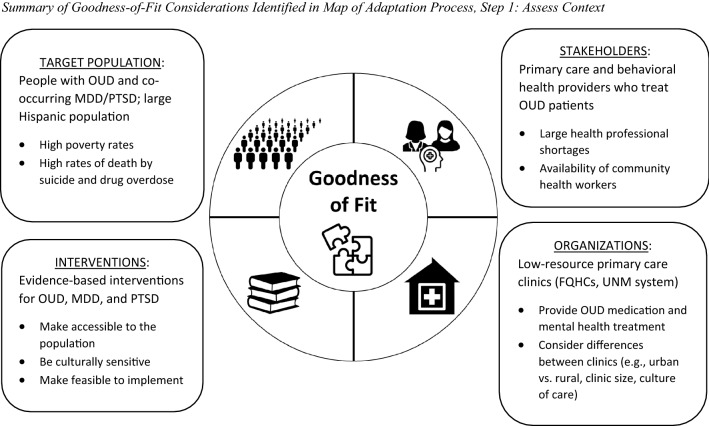
Background: Opioid use disorders (OUD), co-occurring with either depression and/or PTSD, are prevalent, burdensome, and often receive little or low-quality care. Collaborative care is a service delivery intervention that uses a team-based model to improve treatment access, quality, and outcomes in primary care patients, but has not been evaluated for co-occurring OUD and mental health disorders. To address this treatment and quality gap, we adapted collaborative care for co-occurring OUD and mental health disorders.
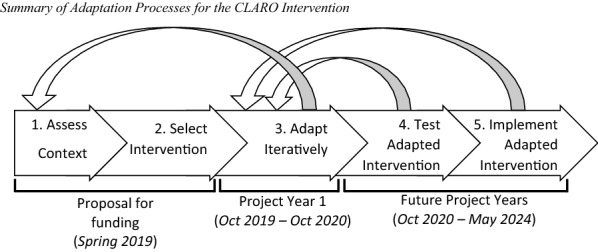
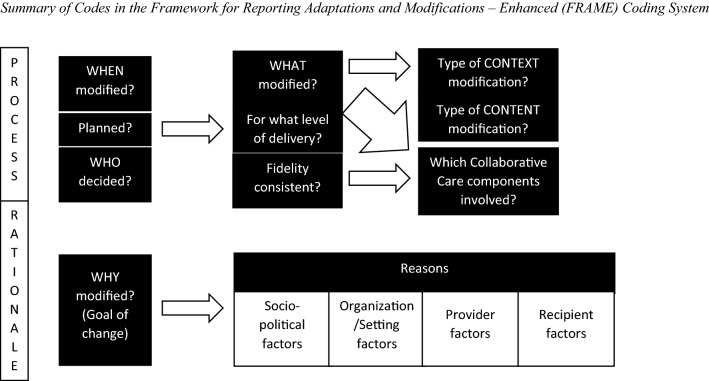
Methods: Our adapted model is called Collaboration Leading to Addiction Treatment and Recovery from Other Stresses (CLARO). We used the five-step Map of Adaptation Process (McKleroy in AIDS Educ Prev 18:59-73, 2006) to develop the model. For each step, our stakeholder team of research and clinical experts, primary care partners, and patients provided input into adaptation processes (e.g., adaptation team meetings, clinic partner feedback, patient interviews and beta-testing). To document each adaptation and our decision-making process, we used the Framework for Reporting Adaptations and Modifications-Enhanced (Wiltsey Stirman in Implement Sci 14:1-10, 2019).
Results: We documented 12 planned fidelity-consistent adaptations to collaborative care, including a mix of content, context, and training/evaluation modifications intended to improve fit with the patient population (co-occurring disorders) or the New Mexico setting (low-resource clinics in health professional shortage areas). Examples of documented adaptations include use of community health workers as care coordinators; an expanded consultant team to support task-shifting to community health workers; modified training protocols for Problem-Solving Therapy and Written Exposure Therapy to incorporate examples of treating patients for depression or PTSD with co-occurring OUD; and having care coordinators screen for patients' social needs.
Conclusions: We completed the first three steps of the Map of Adaptation Process, resulting in a variety of adaptations that we believe will make collaborative care more acceptable and feasible in treating co-occurring OUD and mental health disorders. Future steps include evaluating the effectiveness of CLARO and documenting reactive and/or planned adaptations to the model that occur during its implementation and delivery. Trial registration NCT04559893, NCT04634279. Registered 08 September 2020, https://clinicaltrials.gov/ct2/show/NCT04559893.
Keywords: Adaptation; Collaborative care; Community health workers; Depression; Opioid use disorder; Post-traumatic stress disorder; Primary care behavioral health.
© 2022. The Author(s).
Conflict of interest statement
None.
Figures

References
-
- Compton WM, Thomas YF, Stinson FS, Grant BF. Prevalence, correlates, disability, and comorbidity of DSM-IV drug abuse and dependence in the United States: results from the national epidemiologic survey on alcohol and related conditions. Arch Gen Psychiatry. 2007;64(5):566–576. doi: 10.1001/archpsyc.64.5.566. - DOI - PubMed
Publication types
MeSH terms
Substances
Associated data
Grants and funding
LinkOut - more resources
Full Text Sources
Medical
Miscellaneous
