


Mechanical control of innate immune responses against viral infection revealed in a human lung alveolus chip
- PMID: 35396513
- PMCID: PMC8993817
- DOI: 10.1038/s41467-022-29562-4
Mechanical control of innate immune responses against viral infection revealed in a human lung alveolus chip
Abstract
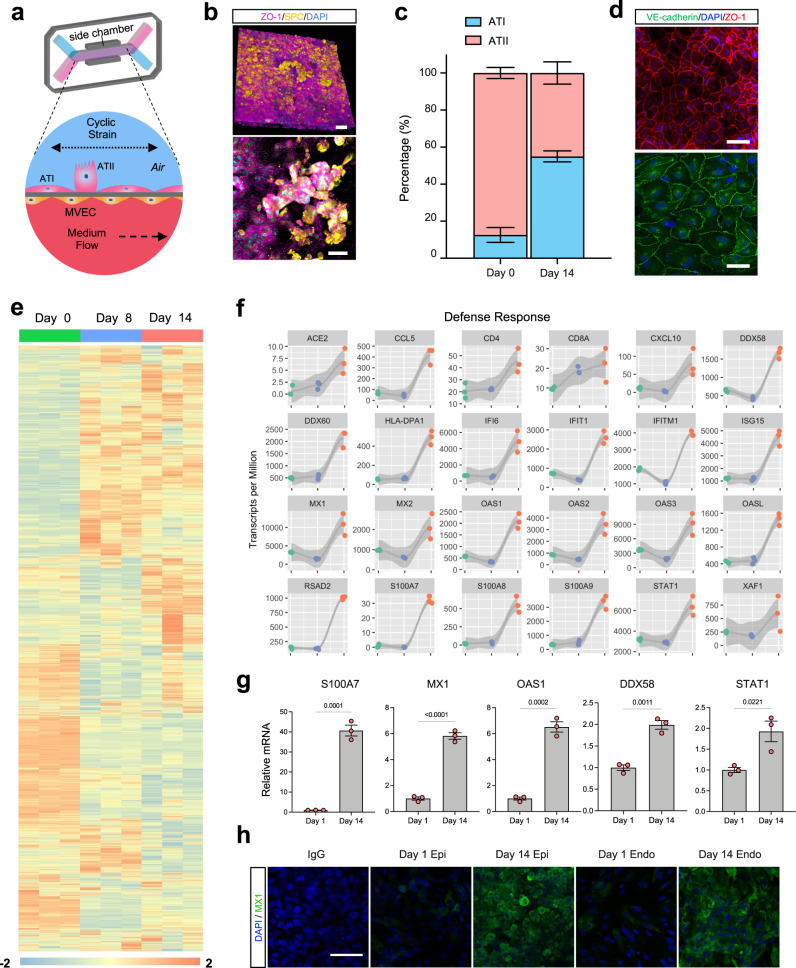
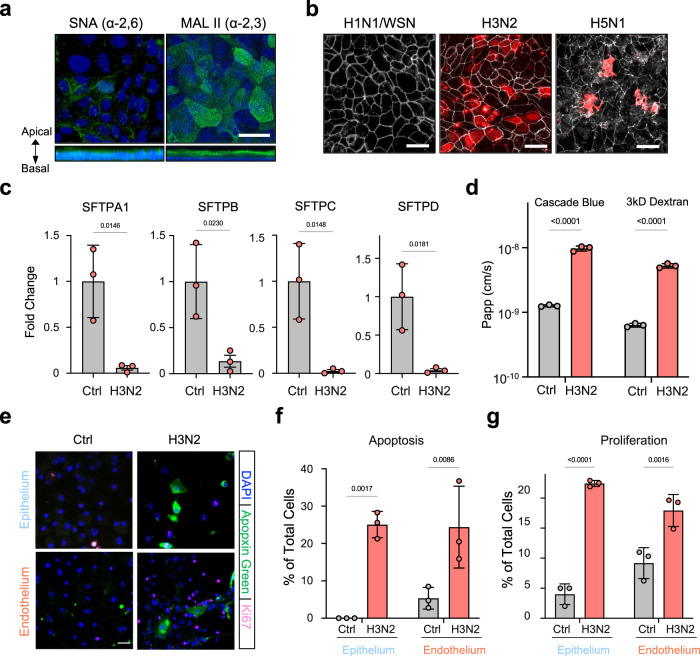
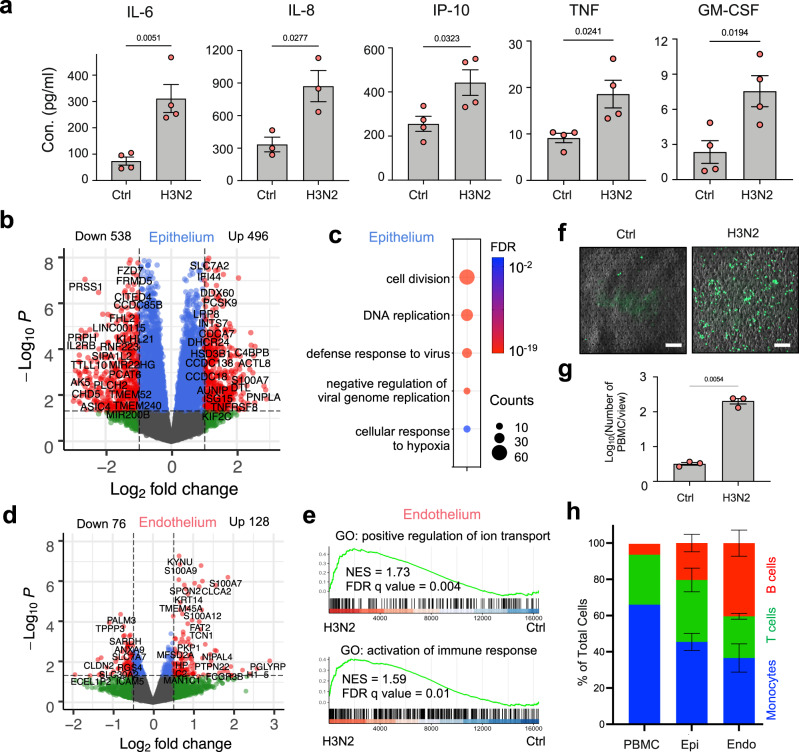
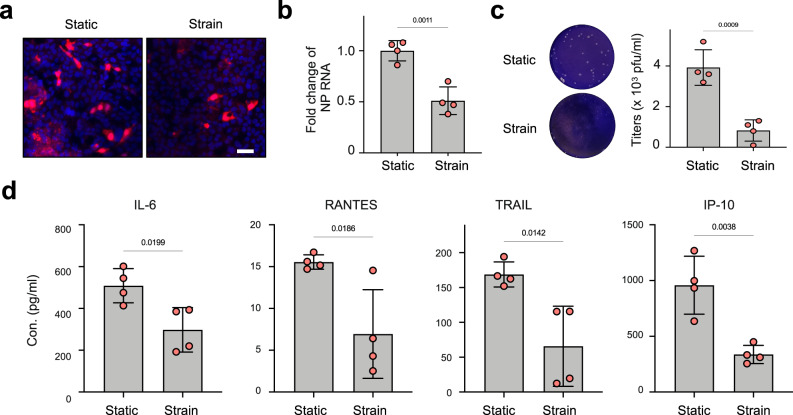
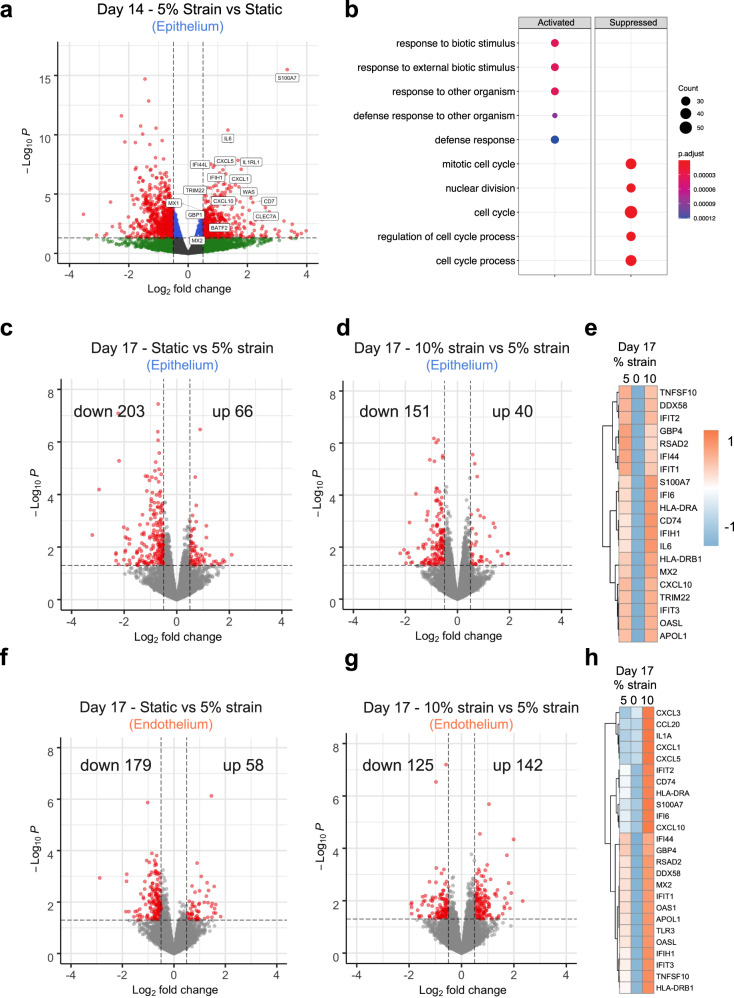
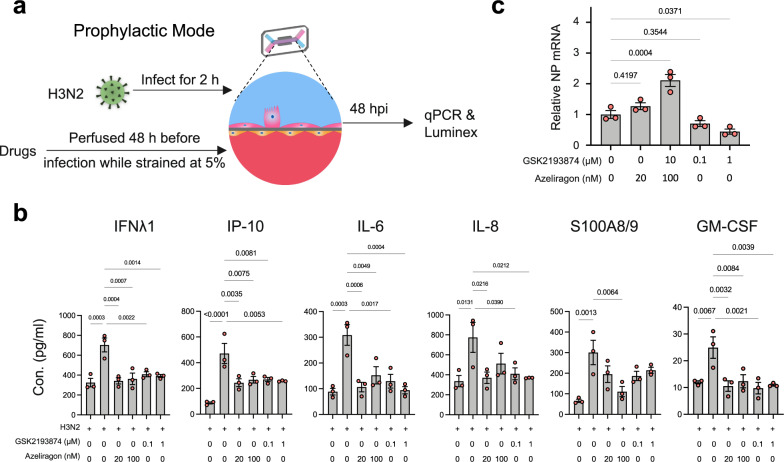
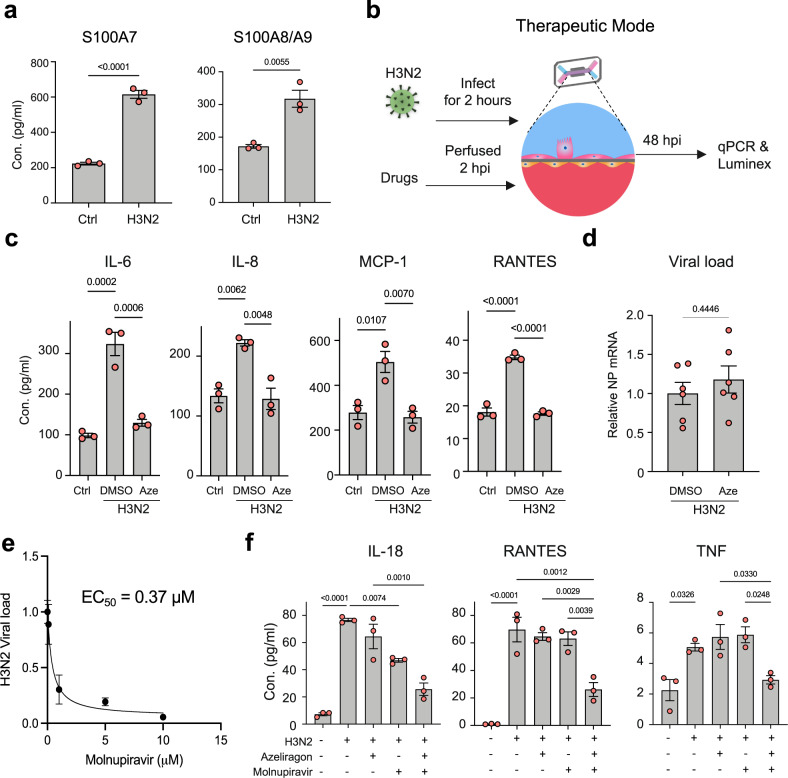
Mechanical breathing motions have a fundamental function in lung development and disease, but little is known about how they contribute to host innate immunity. Here we use a human lung alveolus chip that experiences cyclic breathing-like deformations to investigate whether physical forces influence innate immune responses to viral infection. Influenza H3N2 infection of mechanically active chips induces a cascade of host responses including increased lung permeability, apoptosis, cell regeneration, cytokines production, and recruitment of circulating immune cells. Comparison with static chips reveals that breathing motions suppress viral replication by activating protective innate immune responses in epithelial and endothelial cells, which are mediated in part through activation of the mechanosensitive ion channel TRPV4 and signaling via receptor for advanced glycation end products (RAGE). RAGE inhibitors suppress cytokines induction, while TRPV4 inhibition attenuates both inflammation and viral burden, in infected chips with breathing motions. Therefore, TRPV4 and RAGE may serve as new targets for therapeutic intervention in patients infected with influenza and other potential pandemic viruses that cause life-threatening lung inflammation.
© 2022. The Author(s).
Conflict of interest statement
D.E.I. is a founder, board member, SAB chair, and holds equity in Emulate Inc.; D.E.I., H.B. L.S., R.P., and A.J. are inventors on relevant patent applications hold by Harvard University (US 63/135,834 & US 63/187,498). The other authors declare no competing interests.
Figures

References
-
- Hannezo E, Heisenberg CP. Mechanochemical feedback loops in development and disease. Cell. 2019;178:12–25. - PubMed
-
- Li J, et al. The strength of mechanical forces determines the differentiation of alveolar epithelial cells. Dev. Cell. 2018;44:297–312.e295. - PubMed
-
- Lopez-Alonso, I. et al. Preventing loss of mechanosensation by the nuclear membranes of alveolar cells reduces lung injury in mice during mechanical ventilation. Sci. Transl. Med.10.1126/scitranslmed.aam7598 (2018). - PubMed
MeSH terms
Substances
Grants and funding
LinkOut - more resources
Full Text Sources
Medical
Molecular Biology Databases
