


Assessment of risk factors and molecular biomarkers in children with supernumerary teeth: a single-center study
- PMID: 35397562
- PMCID: PMC8994298
- DOI: 10.1186/s12903-022-02151-z
Assessment of risk factors and molecular biomarkers in children with supernumerary teeth: a single-center study
Abstract
Background: Supernumerary teeth are considered one of the commonly observed dental anomalies in children. Several theories have been proposed to explain the presence of supernumerary teeth, including environmental and genetic factors. This study aimed to identify the different risk factors and molecular biomarkers in patients presented with supernumerary teeth.
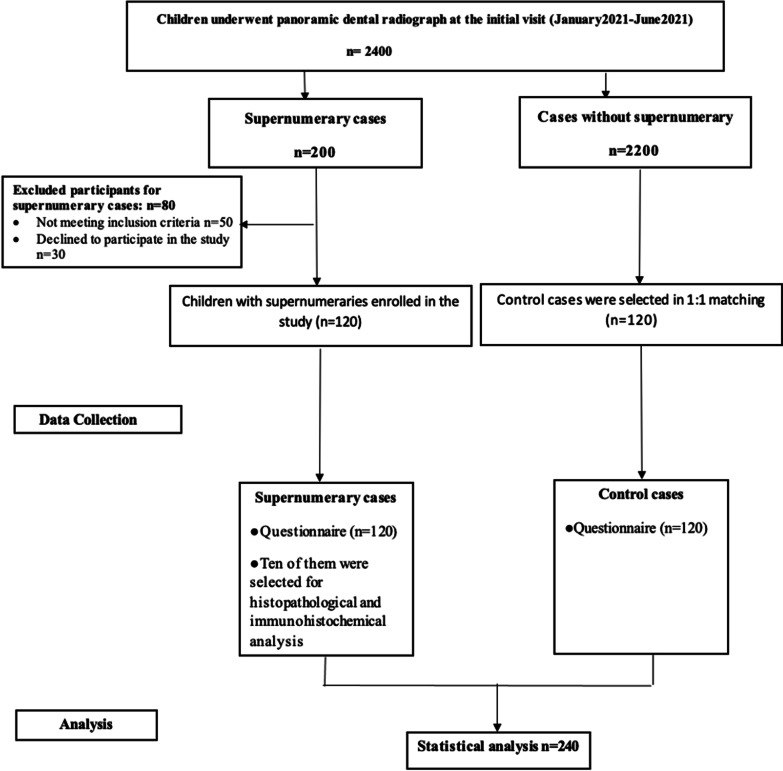
Methods: This case-control study included 240 children, 6 to 12-year-old. They were divided into a test group (n = 120 children presented with supernumerary teeth) and a control group (n = 120 children with no supernumerary teeth). Questionnaires were distributed to assess demographics and exposure to several environmental factors. Ten extracted supernumerary teeth from the test group were processed for histopathological analysis.
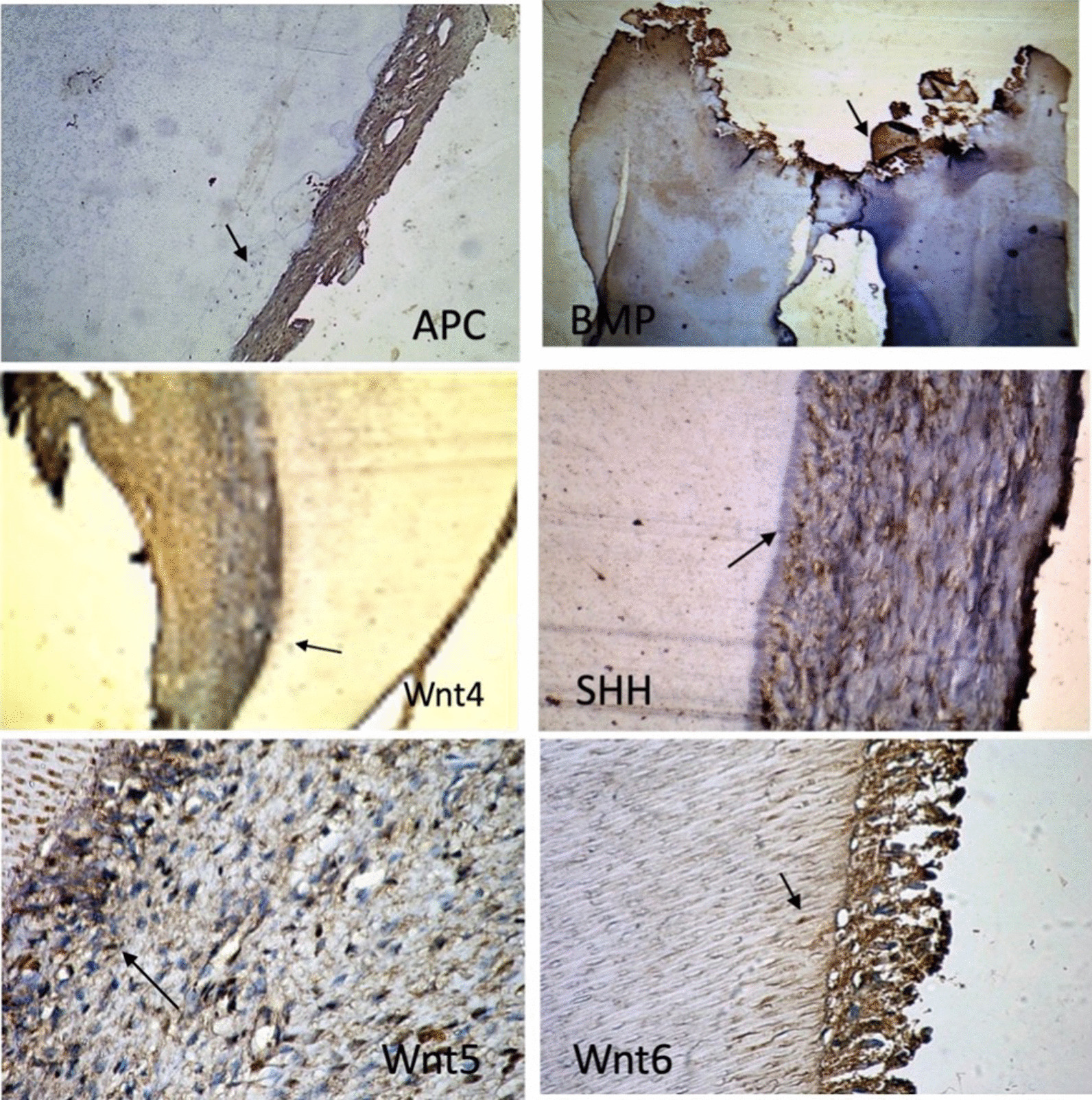
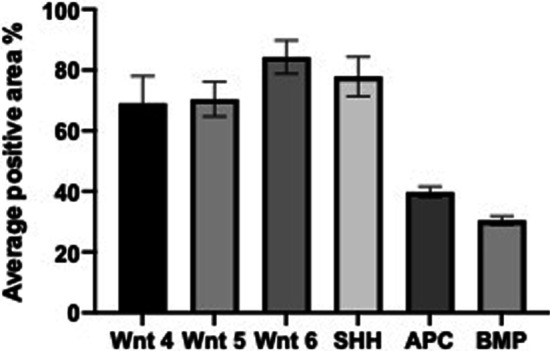
Results: Male gender, dental history of severe oral infection or medical history of chemotherapy treatment, previous history of taking medication or illness during pregnancy, family history of neoplastic disorders, use of electronic devices, and living beside agricultural fields or industrial areas were found to be statistically significant associated with the risk of supernumerary teeth development. Immunohistochemistry panel revealed that supernumerary teeth showed enhanced expression of wingless (Wnt) and sonic hedgehog (SHH) proteins as well as a reduced expression of adenomatous polyposis coli (APC) protein, denoting molecular derangement in a group of pathways classically believed to be involved in its pathogenesis.
Conclusions: Males were more frequently affected by supernumerary teeth than females. Several risk factors were notably correlated with the existence of supernumerary teeth. Additionally, molecular biomarkers assessment demonstrated a high expression level of pro-tumorigenic proteins such as Wnt and SHH in patients with supernumerary teeth.
Keywords: Environmental factors; Molecular biomarkers; Supernumerary teeth.
© 2022. The Author(s).
Conflict of interest statement
The authors declare that they have no competing interests.
Figures
References
-
- American Academy of Pediatric Dentistry. Management of the developing dentition and occlusion in pediatric dentistry. The Reference Manual of Pediatric Dentistry. Chicago, Ill.: Pediatr Dent 2021:408–25.
-
- Karayilmaz H, Kirzioğlu Z, Saritekin A. Characteristics of nonsyndromic supernumerary teeth in children and adolescents. Turk J Med Sci. 2013;43:1013–1018.
-
- Finkelstein T, Shapira Y, Pavlidi AM, Schonberger S, Blumer S, Sarne O, Shpack N. Prevalence and characteristics of supernumerary teeth in Israeli orthodontic patients. J Clin Pediatr Dent. 2019;43:244–251. - PubMed
-
- Ma X, Jiang Y, Ge H, Yao Y, Wang Y, Mei Y, Wang D. Epidemiological, clinical, radiographic characterization of non-syndromic supernumerary teeth in Chinese children and adolescents. Oral Dis. 2021;27(4):981–992. - PubMed
Publication types
MeSH terms
Substances
LinkOut - more resources
Full Text Sources
